
Sweat itself doesn’t cause acne — but what happens when sweat, oil, bacteria, and friction get trapped against your skin after a workout absolutely does. The good news: sweat acne is one of the most preventable types of breakouts once you understand what’s actually triggering it.
This guide walks through why post-workout breakouts happen, how to treat them, and the exact routine dermatology-backed sources recommend to stop them from coming back.
Quick Summary Box
- Who this guide is for: Anyone who breaks out on the face, chest, or back after exercising or sweating heavily
- Best overall approach: Rinse off within 30 minutes of sweating + a salicylic acid or benzoyl peroxide cleanser
- Budget option: Drugstore salicylic acid body wash
- Key takeaway: Timing your post-sweat skincare matters more than any single product
- Reading time: ~8 minutes
Who Should Read This (And Who Shouldn’t)
This guide is for you if:
- You notice breakouts on your forehead, chest, back, or shoulders after workouts
- You work out in tight or synthetic clothing regularly
- You sweat heavily in humid climates or during sports
This guide may not be the right fit if:
- Your breakouts appear regardless of activity level — this may be hormonal or a different acne type, and a dermatologist visit is the better next step
- You’re dealing with painful, cystic bumps that don’t resemble typical acne — this could be folliculitis, which sometimes needs prescription treatment
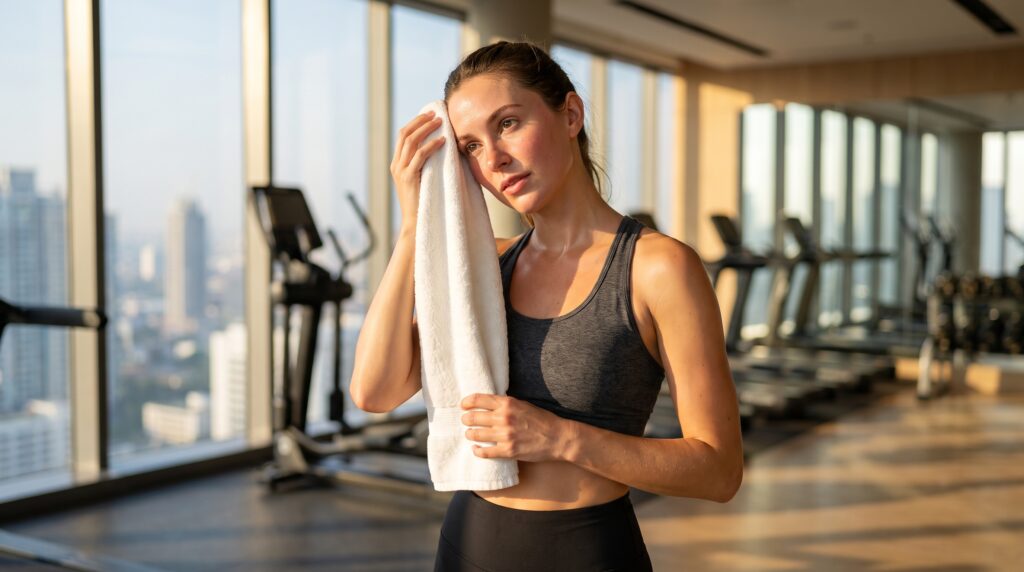
Why Does Sweat Cause Breakouts?
Sweat isn’t the direct culprit — it’s what sweat does when it mixes with oil, bacteria, and dead skin cells and gets trapped under tight clothing or left on the skin too long. This combination clogs pores and irritates hair follicles, leading to what’s commonly called “sweat acne” or acne mechanica.
Main triggers:
- Friction from tight clothing rubbing against sweaty skin
- Occlusion — sweat and oil trapped under fabric with no airflow
- Delayed cleansing — sweat sitting on skin for hours after activity
- Shared equipment — bacteria transfer from gym mats and machines
- Heavy pre-workout products — sunscreen or makeup mixing with sweat and clogging pores
Expert Tip: The 30-minute rule matters most. Sweat left on skin for over 30 minutes is far more likely to clog pores than sweat rinsed off quickly.
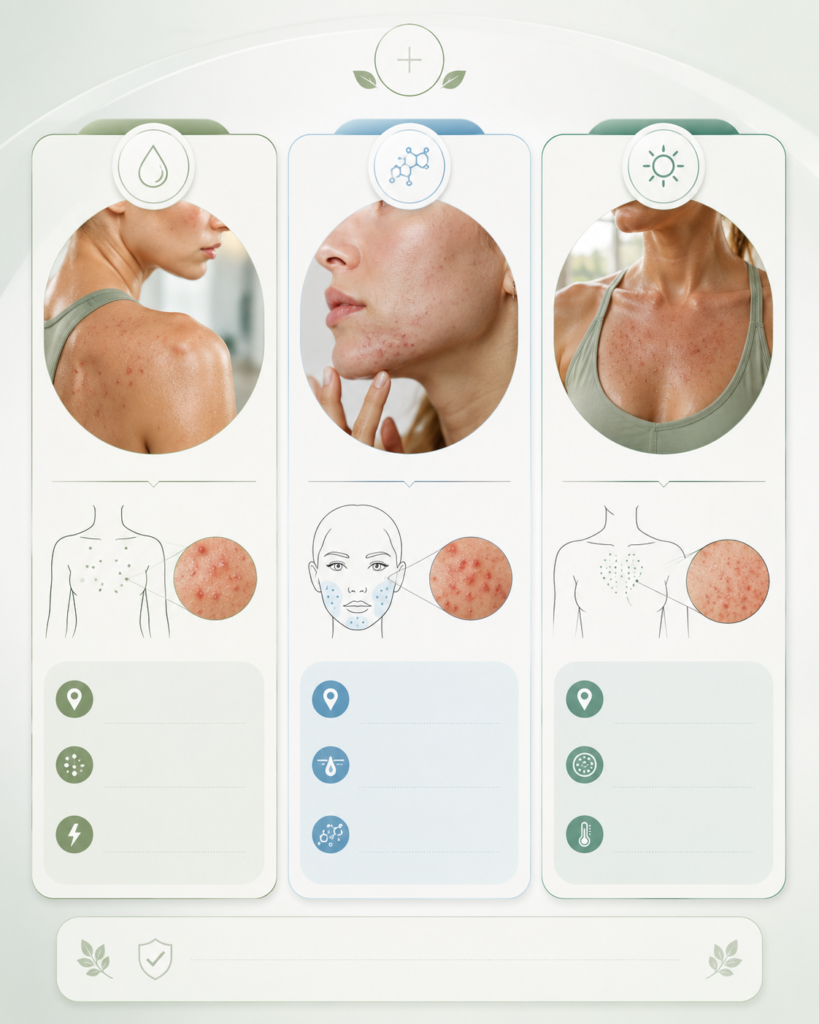
Sweat Acne vs. Regular Acne vs. Heat Rash
| Condition | Where It Appears | What It Looks Like | Main Cause |
|---|---|---|---|
| Sweat Acne (Acne Mechanica) | Chest, back, forehead, under straps | Small red bumps, whiteheads | Friction + trapped sweat/oil |
| Hormonal Acne | Jawline, chin | Deeper, cystic bumps | Hormonal fluctuation |
| Heat Rash | Neck, chest, folds of skin | Tiny itchy red bumps, no pus | Blocked sweat ducts |
| Folliculitis | Anywhere with hair follicles | Uniform small bumps around hairs | Bacterial/fungal infection |
Quick Answer: If breakouts consistently show up after workouts and clear somewhat with faster post-sweat cleansing, it’s likely sweat-related acne mechanica, not hormonal acne.
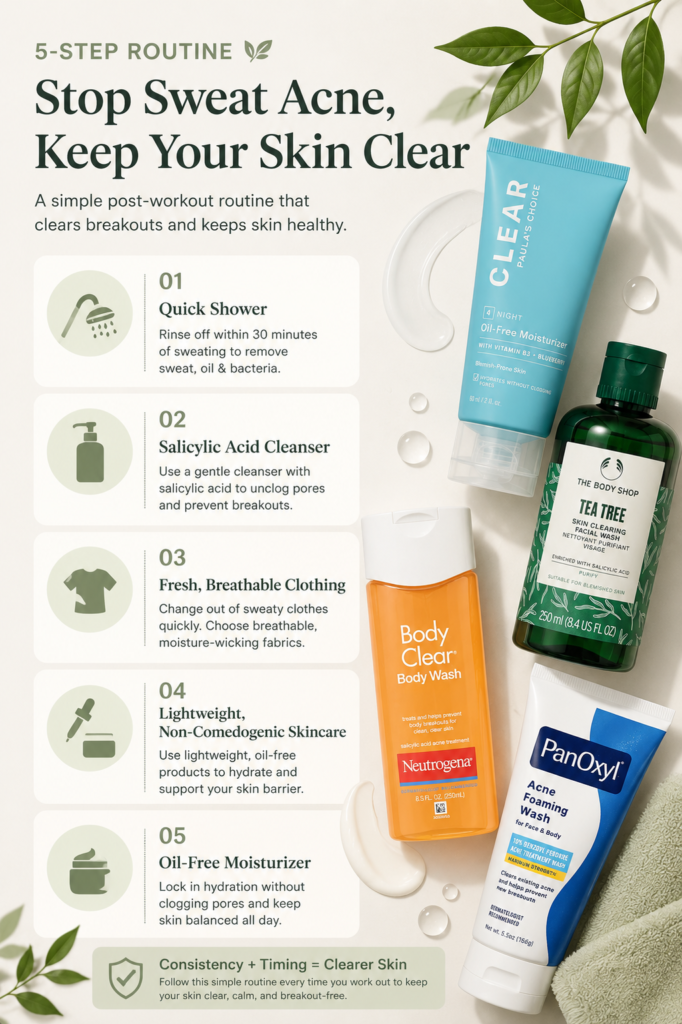
The Sweat Acne Treatment Routine That Works
Step 1: Rinse Within 30 Minutes
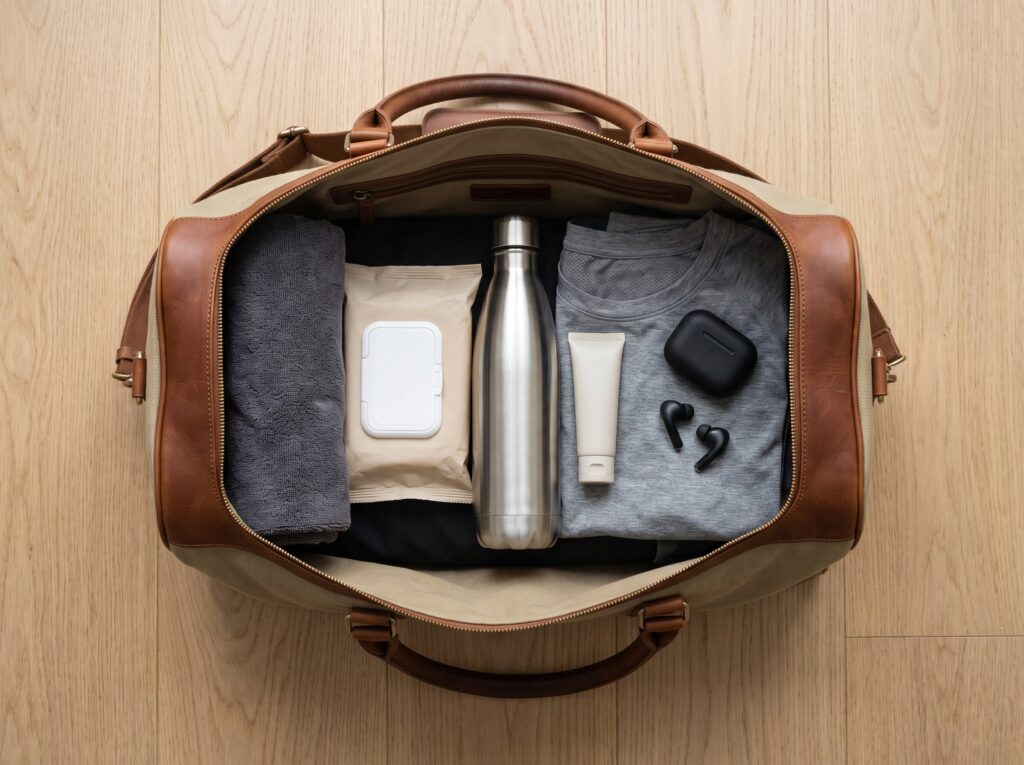
Don’t sit in sweaty clothes after a workout. If a full shower isn’t possible, use micellar water or cleansing wipes on affected areas immediately.
Step 2: Use an Acne-Fighting Cleanser
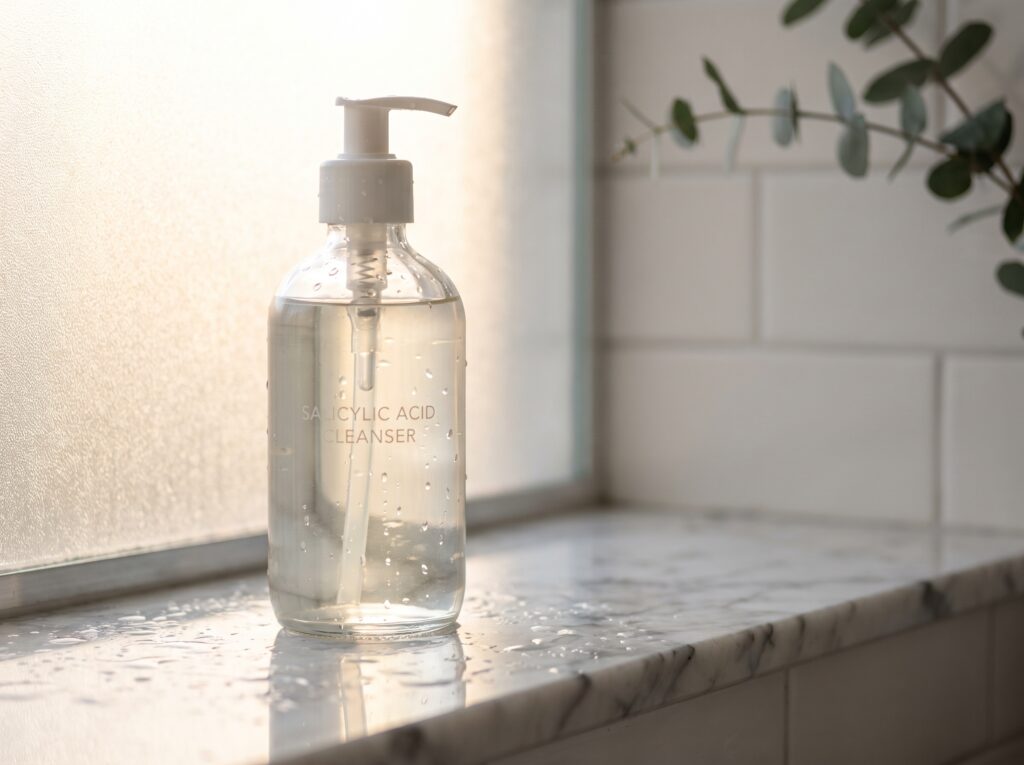
Look for salicylic acid (unclogs pores) or benzoyl peroxide (kills acne-causing bacteria) in a body wash or facial cleanser.
Step 3: Change Out of Wet Clothes Immediately
Damp fabric against skin is one of the biggest drivers of breakouts. Change into dry, breathable clothing as soon as possible.
Step 4: Avoid Heavy Products Before Exercise
Skip thick sunscreens or makeup before workouts. Choose lightweight, non-comedogenic formulas instead.
Step 5: Moisturize After Cleansing
Stripping the skin too aggressively can backfire, triggering more oil production. A light, oil-free moisturizer keeps the skin barrier balanced.
Expert Tip: Layer treatment, not products. Adding five new products at once makes it impossible to know what’s working — and can irritate already-inflamed skin.
Common Mistakes That Make Sweat Acne Worse
- Over-washing: Scrubbing skin repeatedly throughout the day strips the barrier and increases oil production
- Wearing the same gym clothes twice without washing: Bacteria builds up fast in synthetic fabrics
- Popping breakouts: Increases inflammation and scarring risk
- Ignoring the back and chest: Most routines focus only on the face, but body acne needs the same attention
- Skipping sunscreen entirely out of fear of clogging pores: Choose a non-comedogenic, oil-free formula instead of skipping protection
Myth vs. Fact
Myth: Sweating more “detoxes” the skin and prevents breakouts. Fact: Sweat itself doesn’t detox skin — it’s the cleanup after sweating that determines whether pores clog or clear.
Myth: You should avoid moisturizer if you’re breaking out. Fact: Skipping moisturizer can trigger the skin to overproduce oil, worsening breakouts.
Myth: Sweat acne only affects the face. Fact: It’s just as common — often more common — on the chest, back, and shoulders due to tight clothing.
Best Ingredients for Sweat Acne (Comparison Table)
| Ingredient Type | Best For | Skin Type | Fragrance-Free Options | Notes |
|---|---|---|---|---|
| Salicylic Acid Cleanser | Unclogging pores, blackheads | Oily, combination | Yes, widely available | Best for regular preventive use |
| Benzoyl Peroxide Wash | Active, inflamed breakouts | Normal to oily | Yes | Can bleach fabric — use with white towels |
| Tea Tree Oil Cleanser | Mild, natural antibacterial support | Normal, sensitive-adjacent | Yes | Gentler, good for maintenance |
| Niacinamide Serum | Calming redness, oil control | All skin types, including sensitive | Yes | Good post-cleanse step, not a stand-alone treatment |
| Oil-Free Moisturizer | Barrier repair without clogging | All skin types | Widely available | Essential — don’t skip this step |
Quick Answer: For active breakouts, benzoyl peroxide tends to work faster; for prevention and sensitive skin, salicylic acid or niacinamide is gentler long-term.
Prevention Tips for the Gym and Beyond
- Choose moisture-wicking, breathable fabrics over tight synthetic blends
- Wash gym clothes after every single use — not every few uses
- Keep a small cleansing wipe or micellar water in your gym bag
- Avoid touching your face with hands or towels shared at the gym
- Wipe down gym equipment before and after use to reduce bacteria transfer
Expert Tip: Fabric choice matters as much as skincare. Cotton-blend or moisture-wicking technical fabric reduces the friction and trapped moisture that trigger breakouts far more than any single product change.
Frequently Asked Questions
Does sweat directly cause acne? No. Sweat itself doesn’t clog pores, but trapped sweat combined with oil, bacteria, and friction does.
How soon after a workout should I shower? Ideally within 30 minutes. If a shower isn’t possible, cleanse the affected areas with a wipe or micellar water.
Can tight gym clothes cause acne? Yes — tight, non-breathable fabric increases friction and traps sweat against the skin, both common triggers.
Is sweat acne permanent? No. It typically improves significantly within a few weeks of consistent post-workout skincare and clothing changes.
Should I stop working out if I have sweat acne? No — the goal is adjusting your routine around workouts, not avoiding exercise.
Key Takeaways
- Sweat doesn’t directly cause acne — trapped sweat, oil, and friction do
- Rinsing within 30 minutes of sweating significantly reduces breakouts
- Salicylic acid and benzoyl peroxide are the most effective treatment ingredients
- Tight, synthetic clothing worsens sweat acne more than most people realize
- Don’t skip moisturizer — stripping skin can backfire
- Body acne (chest, back) needs the same attention as facial acne
- Most sweat acne improves within a few weeks of consistent care
Trust Signals
- Last Updated: July 2026
- Fact Checked: Yes
- Research Based: Compiled from dermatological best practices and publicly available guidance from recognized skin health organizations
- Reviewed for Accuracy: Yes
Sources & References
- American Academy of Dermatology (aad.org)
- Mayo Clinic (mayoclinic.org)
- Cleveland Clinic (clevelandclinic.org)
- National Institutes of Health (nih.gov)
Conclusion
Sweat acne is frustrating, but it responds well to a few consistent habits: rinsing quickly, choosing the right cleanser, and giving skin room to breathe. Small changes to your post-workout routine — not a complete skincare overhaul — are usually enough to see clearer skin within a few weeks.