
Summer changes everything about your skin — and your routine needs to change with it. Heat, humidity, UV exposure, and sweat all push your skin into a different state than it’s in during winter, which is why the moisturizer that worked perfectly in January can suddenly feel like a mask in July.
This guide walks through exactly what to do, in what order, and why — so you’re not just following steps, but understanding what your skin actually needs when temperatures rise.
Quick Summary Box
- Who this guide is for: Anyone whose skin gets oilier, more congested, sunburned, or dehydrated once the weather heats up.
- Best overall approach: A lightweight, gel-based routine built around a mineral or broad-spectrum SPF 30–50 sunscreen, reapplied every 2 hours outdoors.
- Budget-friendly approach: A simple 3-step routine — gentle cleanser, oil-free moisturizer, daily SPF — costs very little and still covers the essentials.
- Key takeaway: Summer skincare isn’t about doing more — it’s about doing the right, lighter-weight version of your routine, with sun protection non-negotiable.
- Estimated reading time: 9–11 minutes

Why Your Skin Needs a Different Routine in Summer
Your skin doesn’t behave the same way at 90°F as it does at 40°F. Higher temperatures increase blood flow to the skin’s surface and stimulate the sebaceous (oil) glands, which is why most people notice more shine and more breakouts in summer — even people who consider themselves “dry skin” the rest of the year.
At the same time, sun exposure, sweating, and air conditioning all pull moisture out of the skin, which means it’s entirely possible to be oily and dehydrated at once. That combination confuses a lot of people into using the wrong products, which is exactly what causes the mid-summer breakouts and irritation most articles don’t fully explain.
Expert Tip: If your skin feels oily but tight or flaky underneath the shine, you’re dealing with dehydration — not excess “wetness.” The fix is a lighter moisturizer, not skipping moisturizer altogether.
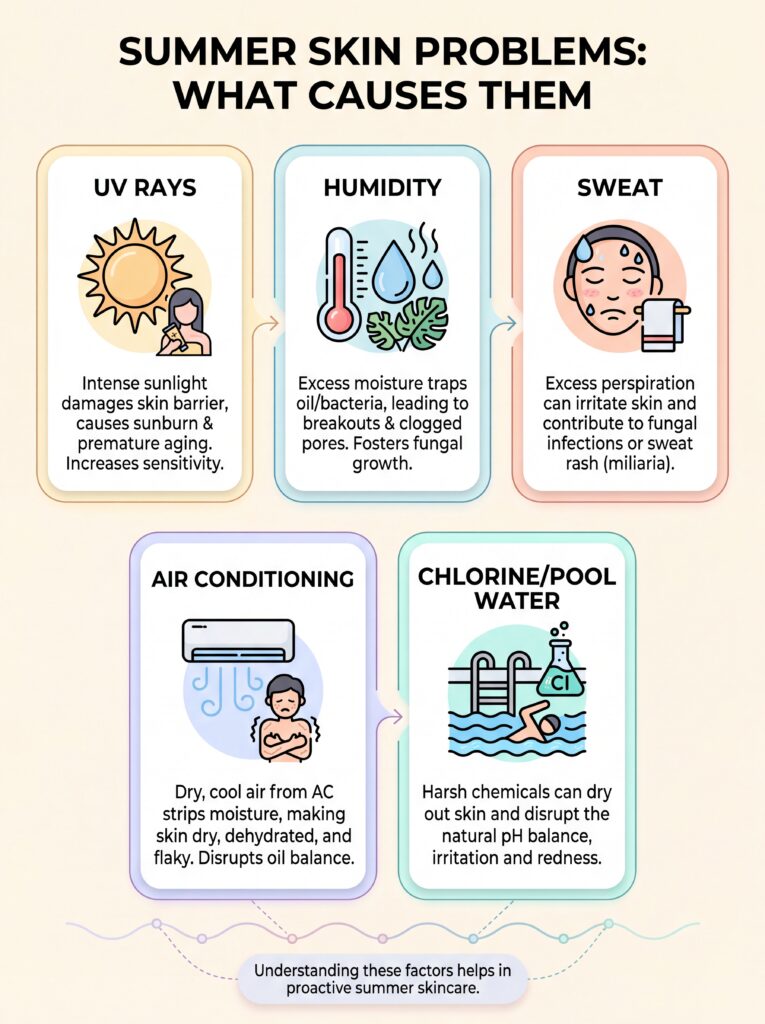
What Causes Summer Skin Problems
A few physiological factors are doing most of the work here:
- UV radiation breaks down collagen and triggers melanin production (tanning is technically damage response, not a “healthy glow”).
- Higher humidity increases sebum production, leading to clogged pores and breakouts.
- Sweat mixes with oil and bacteria, which can irritate the skin and worsen acne, especially along the hairline and jaw.
- Air conditioning dries out indoor air, which paradoxically dehydrates skin even during hot months.
- Chlorine and saltwater from pools and beaches strip the skin’s natural barrier.
The Science: What’s Actually Happening to Your Skin
Two mechanisms explain almost everything about “summer skin”:
- Increased Transepidermal Water Loss (TEWL): Heat and sun exposure weaken the skin’s outer barrier, causing water to evaporate faster than usual — this is why skin can feel both oily and dehydrated.
- UV-Induced Oxidative Stress: UV rays generate free radicals in the skin, which accelerate fine lines, dark spots, and collagen breakdown. This is the single biggest reason dermatologists consistently rank daily SPF as the most important anti-aging step — more impactful than any serum.
Expert Tip: Antioxidants like vitamin C help neutralize free radicals before they damage collagen, which is why a vitamin C serum pairs so well with SPF in a summer AM routine.
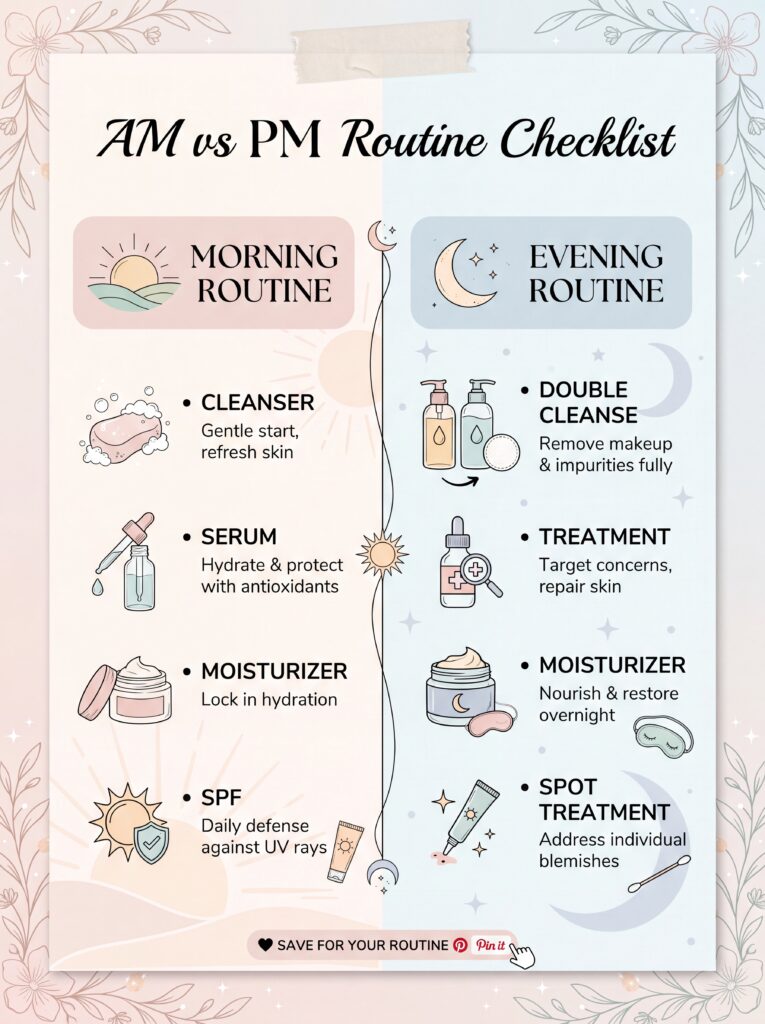
Your Summer Morning Routine (Step-by-Step)
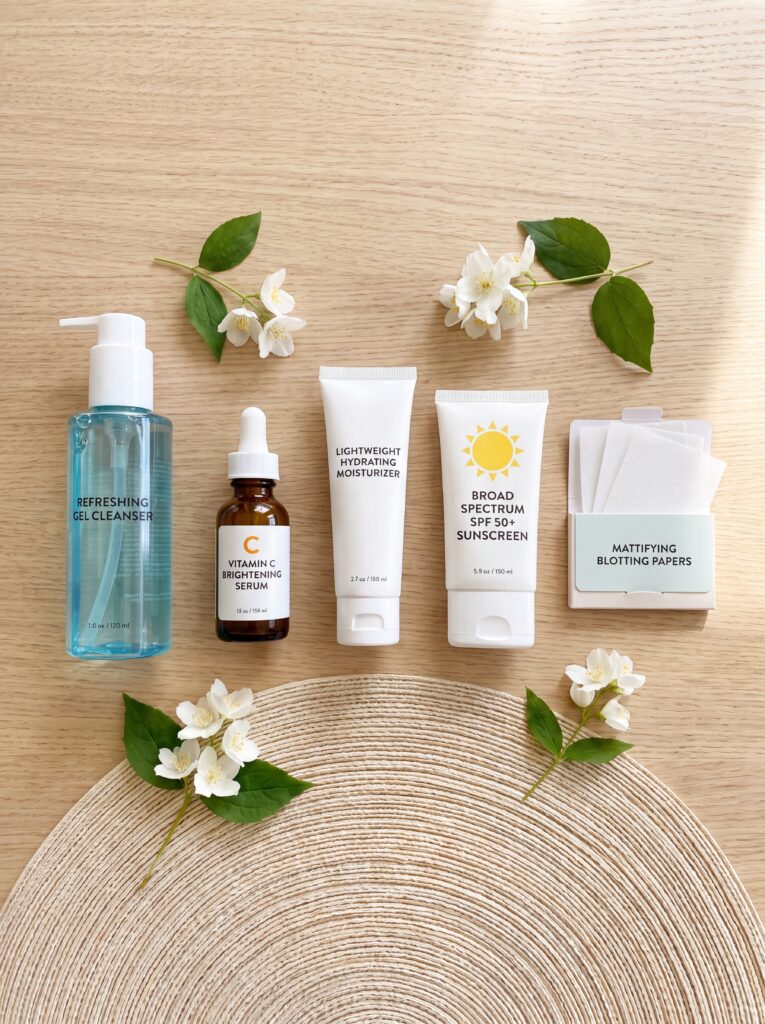
- Gentle cleanse. Use a lightweight, non-stripping cleanser — even if you didn’t wear anything overnight, a quick rinse removes sweat and oil buildup.
- Antioxidant serum (optional but recommended). A vitamin C or niacinamide serum helps protect against UV-related free radical damage and can visibly reduce oiliness (niacinamide specifically regulates sebum).
- Lightweight, oil-free moisturizer. Gel-creams or water-based lotions hydrate without adding extra shine.
- Broad-spectrum SPF 30–50. This is the step people skip most — and the one that matters most. Apply generously, don’t rub it in too thin.
- Optional: setting spray or blotting sheets for midday touch-ups if you’re outdoors most of the day.
Your Summer Evening Routine (Step-by-Step)
- Double cleanse if you wore sunscreen or makeup. An oil-based cleanser followed by a gentle foaming cleanser fully removes SPF residue, which can otherwise clog pores overnight.
- Treat, if needed. This is when to use actives like retinoids or exfoliating acids (AHAs/BHAs) — never in the morning under sun exposure, since they increase photosensitivity.
- Hydrate. A slightly richer night moisturizer is fine even in summer, since you’re not layering it under makeup or sunscreen.
- Spot treatment, if you’re dealing with a breakout, applied as the last step.
Expert Tip: If you use retinoids, summer is when photosensitivity risk is highest — always keep them in your PM routine only, and never skip SPF the next morning.
Adjusting Your Routine by Skin Type
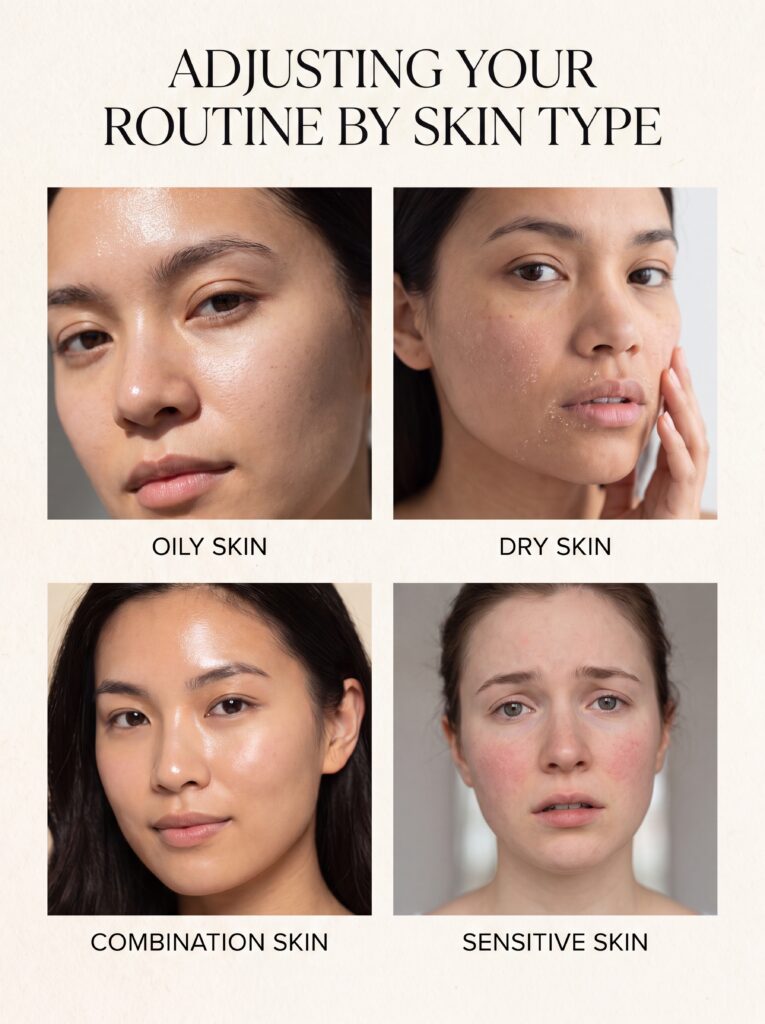
Oily / Acne-Prone Skin Switch to a foaming or gel cleanser, use oil-free and “non-comedogenic” labeled products, and choose a matte-finish, mineral sunscreen. Niacinamide serums help control shine without over-drying.
Dry Skin You still need a lighter moisturizer than winter, but don’t skip it — look for hydrating ingredients like hyaluronic acid and glycerin rather than heavy occlusive balms, which can trap heat and sweat.
Combination Skin Consider multi-masking or applying a lighter product on the T-zone and a slightly richer one on the cheeks. Gel-cream moisturizers usually work well across the whole face.
Sensitive Skin Fragrance-free, mineral (zinc oxide or titanium dioxide) sunscreens are gentler than chemical filters and less likely to trigger heat-related irritation or breakouts.
Common Summer Skincare Mistakes to Avoid
- Skipping moisturizer because skin already feels oily (this often makes oiliness worse, not better).
- Using the same rich, heavy cream from winter under makeup and sunscreen.
- Applying sunscreen once in the morning and assuming it lasts all day (it needs reapplication every 2 hours outdoors).
- Over-exfoliating to “control” oil, which damages the skin barrier and increases sensitivity to sun.
- Forgetting SPF on ears, neck, and hands — some of the most commonly sunburned and prematurely aged areas.
Warning Box: Chemical exfoliants (AHAs/BHAs) and retinoids increase photosensitivity. Using them without diligent daily SPF significantly raises the risk of sunburn and hyperpigmentation.
Buying Guide: What to Look for in Each Product Type
Rather than chasing specific brands, focus on the category of product that matches your skin’s summer needs:
- Cleanser: Gel or foaming formula, sulfate-free, fragrance-free if sensitive.
- Moisturizer: Oil-free, “gel-cream” texture, hyaluronic acid or glycerin as key hydrators.
- Sunscreen: Broad-spectrum, SPF 30 minimum (50 for extended outdoor time), mineral filters for sensitive/acne-prone skin.
- Antioxidant Serum: Vitamin C or niacinamide, applied before moisturizer and sunscreen.
Expert Tip: “Non-comedogenic” and “oil-free” on a label are more useful indicators for summer than “matte,” which sometimes just means added silicone-based filler.
Product Comparison Table
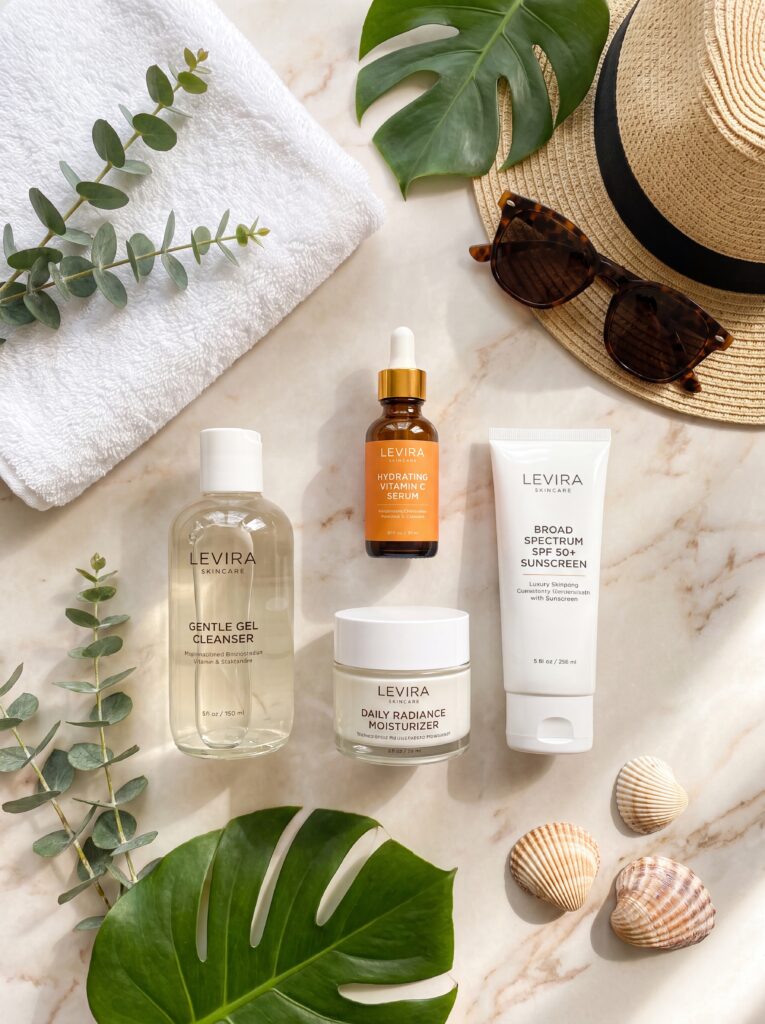
| Product Type | Best For | Skin Type | Key Ingredients | Fragrance-Free | Price Range | Overall Rating |
|---|---|---|---|---|---|---|
| Gel Cleanser | Daily summer cleansing | Oily, Combination | Salicylic acid, Aloe | Often | $8–$20 | ⭐⭐⭐⭐☆ |
| Gel-Cream Moisturizer | Lightweight hydration | All types | Hyaluronic acid, Glycerin | Varies | $12–$35 | ⭐⭐⭐⭐⭐ |
| Mineral Sunscreen SPF 50 | Daily sun protection | Sensitive, Acne-Prone | Zinc oxide, Titanium dioxide | Usually | $15–$40 | ⭐⭐⭐⭐⭐ |
| Niacinamide Serum | Oil control + barrier support | Oily, Combination | Niacinamide, Zinc PCA | Often | $10–$30 | ⭐⭐⭐⭐☆ |
| Vitamin C Serum | Antioxidant protection | All types (patch test sensitive skin) | Ascorbic acid, Ferulic acid | Varies | $15–$45 | ⭐⭐⭐⭐☆ |
Pros & Cons of a Lightweight Summer Routine
Pros
- Reduces clogged pores and breakouts
- Feels more comfortable in heat and humidity
- Layers better under sunscreen and makeup
- Encourages more consistent SPF reapplication
Cons
- May require buying separate summer/winter products
- Lightweight formulas can run out faster (more frequent application)
- Some “oil-free” claims still contain pore-clogging silicones — checking ingredient lists still matters
Common Myths & Facts
Myth: Oily skin doesn’t need moisturizer. Fact: Skipping moisturizer can trigger the skin to produce even more oil to compensate for dryness.
Myth: You only need sunscreen on sunny days. Fact: Up to 80% of UV rays pass through clouds, so daily SPF matters regardless of visible sunshine.
Myth: A higher SPF number means you can reapply less often. Fact: SPF measures protection strength, not duration — reapplication every two hours is still necessary regardless of SPF number.
Myth: Darker skin tones don’t need sunscreen. Fact: All skin tones are susceptible to UV damage, hyperpigmentation, and skin cancer, though visible sunburn may be less obvious on deeper tones.
Frequently Asked Questions
How often should I reapply sunscreen in summer? Every two hours when outdoors, and immediately after swimming or heavy sweating.
Should I use a different moisturizer in summer than winter? Generally yes — a lighter, gel-based formula tends to work better in heat and humidity than a heavy winter cream.
Can I skip moisturizer if my skin is oily in summer? No — skipping it often increases oil production. Choose an oil-free, lightweight formula instead.
Is SPF 30 enough for summer? SPF 30 blocks about 97% of UVB rays and is considered the minimum recommended level; SPF 50 offers marginally more protection for extended outdoor exposure.
Do I need a separate routine for the beach or pool? Reapply water-resistant sunscreen more frequently, and cleanse thoroughly afterward to remove chlorine or salt residue.
Key Takeaways
- Summer skin tends to be oilier and more dehydrated at the same time — don’t treat it as just “oily.”
- Switch to lighter, gel-based cleansers and moisturizers rather than skipping steps.
- Broad-spectrum SPF 30–50, reapplied every two hours, is the single most impactful step.
- Save retinoids and exfoliating acids for your evening routine due to increased sun sensitivity.
- Non-comedogenic, oil-free labels matter more than “matte” claims.
- Sunscreen is needed daily, cloudy or not, and on all skin tones.
- Double cleansing at night removes SPF and sweat buildup that can clog pores.
Trust Signals
- Last Updated: July 2026
- Fact Checked: Yes
- Research Based: Compiled from established dermatological guidance and publicly available consumer health resources
- Reviewed for Accuracy: Yes

Conclusion
A great summer skincare routine isn’t complicated — it’s about lightening up what you’re already using and being consistent about sun protection. Swap heavy creams for gel-based formulas, keep actives like retinoids in your evening routine, and treat SPF as non-negotiable rather than optional. Small, consistent adjustments will do more for your skin over the next few months than any single “miracle” product.
Sources & References
- American Academy of Dermatology (AAD) — Sunscreen and sun protection guidance
- Mayo Clinic — Skin care and sun damage information
- National Institutes of Health (NIH) — Skin barrier and UV exposure research
- Cleveland Clinic — Seasonal skincare guidance
- National Eczema Association — Sensitive skin and barrier care recommendations
(Note: Always verify current guidance directly on these organizations’ official websites before publishing, as recommendations can be updated over time.)
Recommended Next Reads
- Best Moisturizer for Summer 2026: Top Picks by Skin Type
- Best Sunscreen for Sensitive Skin: A Dermatology-Informed Buying Guide
- How to Repair Your Skin Barrier: A Complete, Science-Backed Guide
- Why Is My Skin So Oily? The Real Reasons (And What Actually Helps)
- Dry Skin? Here’s What Dermatologists Actually Recommend