
Summer skin has different needs than winter skin, and the moisturizer sitting in your bathroom cabinet from January probably isn’t built for July heat. Between rising humidity, sweat, and more time in the sun, a heavy cream that felt perfect in the cold can leave your face feeling greasy, clogged, or shiny by noon.
The good news: you almost certainly still need a moisturizer, even if your skin gets oily in the heat. You just need the right kind. This guide walks through exactly what to look for, breaks down the best options by skin type, and clears up the biggest myths about summer hydration — so you’re not guessing at the drugstore shelf.

Quick Summary Box
- Who this guide is for: Anyone whose current moisturizer feels too heavy, greasy, or pore-clogging once temperatures rise — all skin types included.
- Best overall recommendation: A water-based gel-cream with hyaluronic acid and ceramides (see comparison table below).
- Budget recommendation: Neutrogena Hydro Boost Water Gel.
- Key takeaway: Summer doesn’t mean skipping moisturizer — it means switching texture, not skipping the step.
- Estimated reading time: 9 minutes
Who Should Read This Guide (and Who Shouldn’t)
This guide is for you if:
- Your current moisturizer feels heavy, tacky, or greasy by midday
- You have oily or combination skin and have been told (incorrectly) that you don’t need moisturizer
- You’re building a simpler, lighter summer routine
- You want product options across different budgets
This guide may not fully apply if:
- You have a diagnosed skin condition like eczema, rosacea, or psoriasis — you should follow your dermatologist’s specific product recommendations rather than general guidance
- You’re currently using prescription-strength retinoids or acids, which often require dermatologist-guided moisturizer pairing
- You live in a very dry, low-humidity climate even in summer, where a slightly richer formula may still serve you better than an ultra-light gel
Expert Tip: If you’re unsure which category you fall into, the American Academy of Dermatology recommends starting with a fragrance-free, non-comedogenic formula and adjusting texture based on how your skin behaves over a two-week trial.
Why Summer Skin Needs a Different Moisturizer
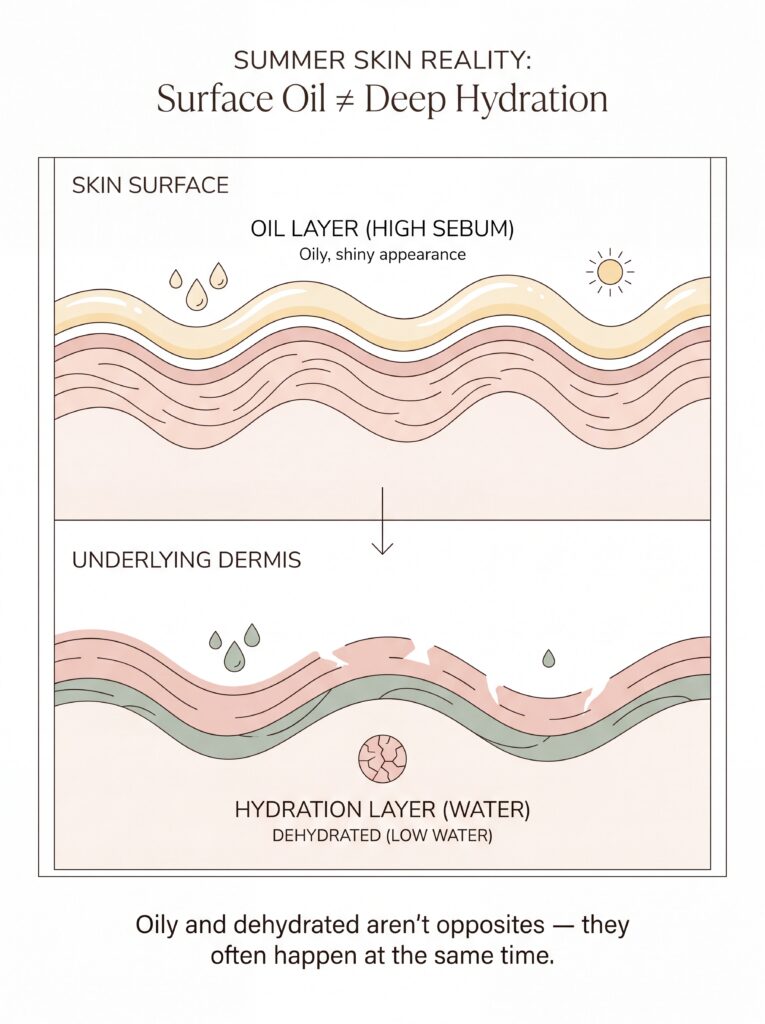
Heat and humidity change how your skin behaves in two ways at once. Sweat and higher oil production can make skin feel slick, while air conditioning, sun exposure, and increased water loss through sweating can still leave skin dehydrated underneath. That combination — oily on the surface, thirsty underneath — is exactly why so many people either over-moisturize with heavy creams or skip moisturizer altogether, and both choices tend to backfire.
<cite index=”8-1″>A water-based formula feels lighter on the skin than a lotion, while creams are thicker and contain more oil than lotions or gels</cite>, according to the American Academy of Dermatology. That’s the core logic behind every recommendation in this guide: match the texture to the season, not just the ingredient list.
<cite index=”8-1″>Skipping moisturizer in the summer can actually cause skin to dry out</cite>, which is a surprise to a lot of people who assume humidity does the hydrating job for them. Humidity affects the air around you — it doesn’t replace what your skin barrier needs to function properly.
Expert Tip: If your skin gets oily by early afternoon, that’s often a sign of dehydration, not over-hydration. Skin that lacks water tends to overproduce oil to compensate — so the fix is usually a lighter moisturizer, not none at all.
What to Look For in a Summer Moisturizer
Not every “lightweight” label on a bottle actually means lightweight. Here’s what actually matters when you’re reading an ingredient list in the store.
- Texture first: Gels and gel-creams spread thin and absorb fast, making them the best starting point for hot weather.
- Hyaluronic acid: A humectant that pulls water into skin without adding oil — works for nearly every skin type.
- Niacinamide: Helps regulate oil production and calm redness; <cite index=”2-1″>dermatologists typically recommend formulas with 2% to 5% niacinamide for visible oil control without irritation</cite>.
- Ceramides: These support the skin barrier so it can hold onto hydration instead of losing it to sweat and heat.
- “Non-comedogenic” on the label: This means the formula is designed not to clog pores — <cite index=”14-1″>the American Academy of Dermatology recommends making sure a moisturizer is labeled non-comedogenic, especially for anyone prone to breakouts</cite>.
- Fragrance-free: Not always essential, but worth prioritizing if you have sensitive or reactive skin, since fragrance is one of the most common irritant triggers in summer when skin is already stressed by heat and sweat.
Common Myths & Facts
| Myth | Fact |
|---|---|
| Oily skin doesn’t need moisturizer in summer | <cite index=”8-1″>Skipping moisturizer can trigger the skin to dry out and overproduce oil to compensate</cite> |
| Humidity means your skin is automatically hydrated | Humidity affects the air, not your skin barrier’s internal water balance |
| Heavier cream = better protection | Heavier creams can trap sweat and oil against skin, increasing breakout risk in heat |
| Any SPF moisturizer replaces sunscreen | Low-SPF moisturizers (often under 30) are a bonus layer, not a full replacement for dedicated sunscreen |
Expert Tip: When comparing two moisturizers, check where an active ingredient sits on the ingredient list. Ingredients are listed by concentration, so if niacinamide or hyaluronic acid appears near the top, it’s doing meaningful work — not just added for the marketing claim.
The Best Moisturizers for Summer, by Skin Type
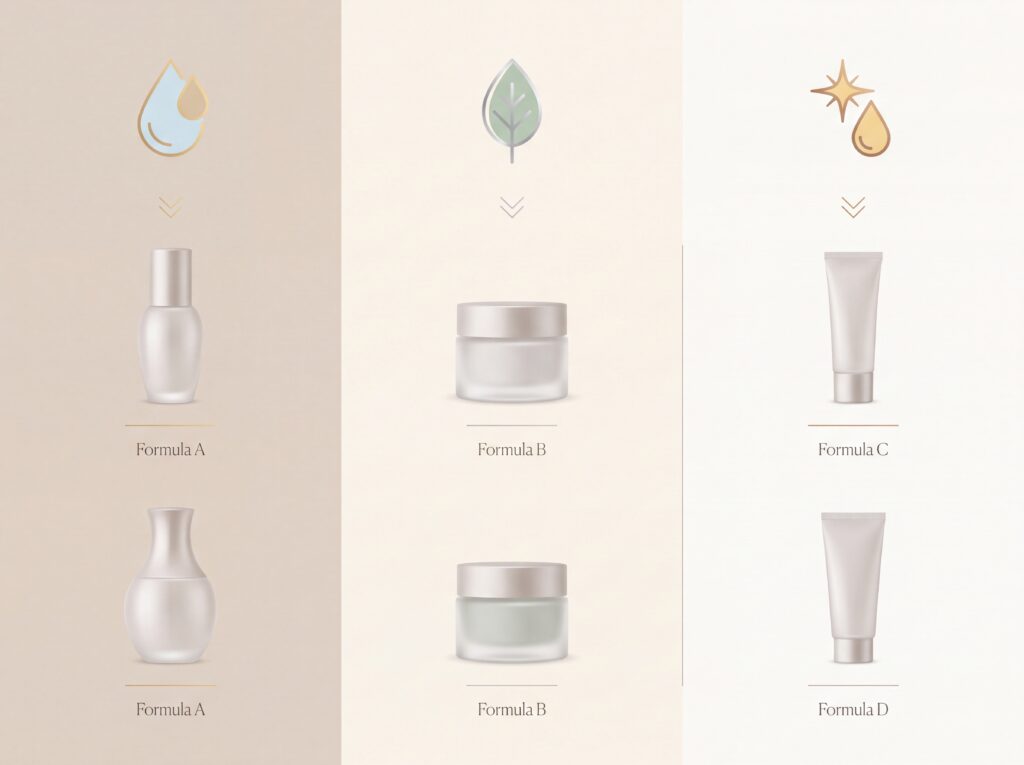
Below is a quick-reference comparison, followed by a closer look at who each option is really built for.
| Product | Best For | Skin Type | Key Ingredients | Fragrance-Free | Price Range | Rating |
|---|---|---|---|---|---|---|
| CeraVe Oil Control Moisturizing Gel-Cream | Oil control + breakout-prone skin | Oily, acne-prone | Niacinamide, ceramides, hyaluronic acid | Yes | $ | ⭐⭐⭐⭐½ |
| Neutrogena Hydro Boost Water Gel | Budget hydration | Normal to oily | Hyaluronic acid | Yes | $ | ⭐⭐⭐⭐ |
| La Roche-Posay Toleriane Double Repair Matte | Combination/acne-prone skin | Combination, oily | Ceramides, niacinamide | Yes | $$ | ⭐⭐⭐⭐½ |
| belif True Cream Aqua Bomb | Shine control in heat | Oily, combination | Antarcticine, glacial glycoprotein | Minimal (botanical) | $$ | ⭐⭐⭐⭐ |
| Tatcha The Water Cream | Best overall / glow finish | All skin types, esp. combination | Hyaluronic acid, Japanese wild rose | Minimal (botanical) | $$$ | ⭐⭐⭐⭐½ |
| Vanicream Moisturizing Lite Lotion | Sensitive or reactive skin | Sensitive, dry-to-normal | Minimal ingredient list | Yes | $ | ⭐⭐⭐⭐½ |
Best for Oily or Acne-Prone Skin: CeraVe Oil Control Moisturizing Gel-Cream
This one leans on niacinamide and ceramides together — <cite index=”5-1″>niacinamide helps with oil control while ceramides and hyaluronic acid support hydration, making it a reasonable fit for combination, oily, or breakout-prone skin</cite>. It’s a solid pick if you’ve been avoiding moisturizer altogether out of fear of breakouts.
Who should buy it: Anyone whose skin gets shiny fast or breaks out easily. Who should avoid it: Very dry skin types may find it too light to use alone.
Best Budget Pick: Neutrogena Hydro Boost Water Gel
A drugstore staple built almost entirely around hyaluronic acid, which explains why it’s become a cult favorite for hot-weather hydration without the price tag of prestige brands.
Who should buy it: Budget-conscious shoppers who still want a genuinely lightweight gel texture. Who should avoid it: People needing barrier-repair ingredients like ceramides for compromised or very sensitive skin.
Best for Combination or Breakout-Prone Skin: La Roche-Posay Toleriane Double Repair Matte
Built around a ceramide-and-niacinamide combination with a matte finish, which makes it a practical middle ground between “too rich” and “too stripped” for combination skin.
Who should buy it: People with an oily T-zone and drier cheeks who’ve struggled to find one product that works for both. Who should avoid it: Very dry skin types who need more emollient richness.
Best for Shine Control: belif True Cream Aqua Bomb
<cite index=”7-1″>Made for oily and shine-prone skin, this gel-based formula keeps skin fresh for hours using moisture-binding ingredients without added oil</cite>.
Who should buy it: Anyone who wants a genuinely mattifying finish that still hydrates. Who should avoid it: Those who prefer a dewy rather than matte finish.
Best Overall: Tatcha The Water Cream
<cite index=”7-1″>This water-based cream is designed to hydrate with a light, water-burst feel and a glowy, non-greasy finish</cite>, which is why it consistently shows up as a top pick for most skin types in hot weather.
Who should buy it: People wanting a premium, all-purpose formula that works across combination and normal skin. Who should avoid it: Strict budget shoppers, since it sits at a higher price point than drugstore alternatives.
Best for Sensitive Skin: Vanicream Moisturizing Lite Lotion
A minimalist, fragrance-free formula designed to reduce the risk of irritation — a smart choice if your skin tends to react to actives or fragrance, especially when sweat and sun exposure already have it on edge.
Who should buy it: Sensitive, reactive, or easily irritated skin. Who should avoid it: Those specifically seeking oil-control or anti-aging actives, since the formula prioritizes gentleness over added ingredients.
🖼️ IMAGE #3
Do You Need SPF in Your Moisturizer Too?
This is one of the most common points of confusion, so it’s worth addressing directly. <cite index=”9-1″>A face moisturizer with SPF can act as a “bonus” layer of sun protection, but many moisturizer-SPF combinations carry a lower SPF rating — sometimes as low as SPF 15</cite>, according to a medical aesthetician interviewed by Houston Methodist. <cite index=”9-1″>The American Academy of Dermatology recommends using a sunscreen with an SPF of at least 30</cite>, so if your moisturizer’s SPF doesn’t meet that number, it shouldn’t be treated as your only sun protection.
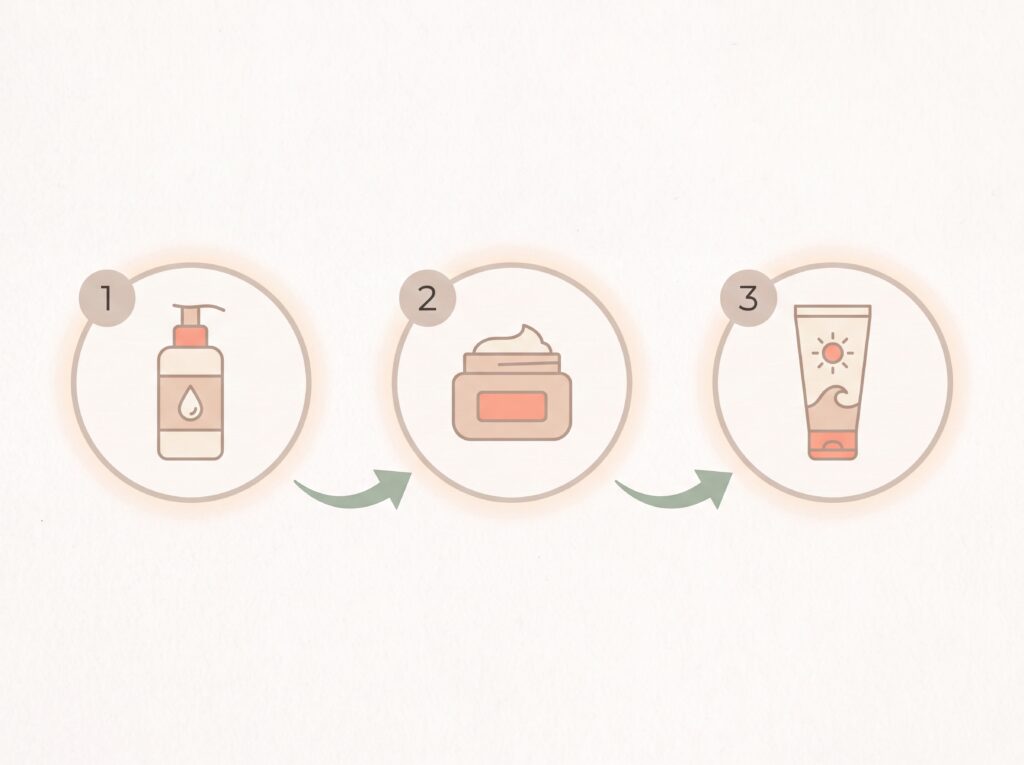
The safer approach for most people: apply a dedicated moisturizer for hydration, then layer a broad-spectrum SPF 30+ sunscreen on top before heading outside. <cite index=”10-1″>The American Academy of Dermatology recommends following a basic routine that includes a cleanser, moisturizer, and sunscreen as three distinct steps</cite>, applied in that order.
Quick Tips Box
- Apply moisturizer to slightly damp skin for better absorption
- Wait roughly a minute before applying sunscreen on top, so each product settles
- Reapply sunscreen every two hours if you’re outdoors — your moisturizer doesn’t need reapplication throughout the day
- If you have oily skin, apply moisturizer first, then a non-comedogenic sunscreen, to avoid clogging pores
Warning Box: Don’t assume a tinted moisturizer or BB cream with a listed SPF number is giving you full protection unless you’re applying the full recommended amount — most people apply far less than what’s needed to hit the SPF rating on the label.
Common Mistakes People Make in Summer
- Switching to “no moisturizer at all” instead of a lighter one — this often backfires by triggering more oil production
- Using the same rich winter cream year-round — leads to clogged pores and midday shine
- Relying on SPF moisturizer as a full sunscreen replacement — check the SPF number before assuming it’s enough
- Skipping moisturizer after sweating or swimming — sweat and chlorine can both strip the skin barrier, making hydration more important, not less
- Over-exfoliating in summer — combined with sun exposure, this can increase sensitivity and irritation
Expert Tip: If you switch products for summer, give your skin roughly two weeks before judging results. Skin needs time to adjust to a new texture and ingredient profile, especially if you’re moving from a cream to a gel formula.
Step-by-Step: Building a Simple Summer Routine
- Cleanse with a gentle, non-stripping cleanser
- Apply a lightweight gel or gel-cream moisturizer while skin is slightly damp
- Wait about a minute
- Apply broad-spectrum SPF 30+ sunscreen
- Reapply sunscreen every two hours if you’re outdoors, especially after sweating or swimming
Key Takeaways
- Summer calls for a lighter texture, not skipping moisturizer entirely
- Gel and gel-cream formulas outperform heavy creams in hot, humid weather
- Niacinamide, hyaluronic acid, and ceramides are the ingredients worth prioritizing
- Non-comedogenic labeling matters most for oily and acne-prone skin
- Moisturizer and sunscreen are separate steps — don’t rely on a low-SPF moisturizer alone
- Give a new product about two weeks before judging whether it’s working
- Sensitive skin should prioritize fragrance-free, minimal-ingredient formulas
Trust Signals
- Last Updated: July 2026
- Fact Checked: Yes, against publicly available dermatology sources
- Research Based: Sourced from the American Academy of Dermatology and other cited health organizations
- Reviewed for Accuracy: This article was cross-checked against current dermatology guidance at the time of publishing; it is not a substitute for personalized advice from a board-certified dermatologist
Frequently Asked Questions
Do I need moisturizer in summer if my skin is oily? Yes. <cite index=”8-1″>Skipping moisturizer in summer can cause skin to dry out</cite>, and dehydrated skin often responds by producing more oil, not less. A lightweight, non-comedogenic gel is the better fix than skipping the step entirely.
Should I use a heavier or lighter moisturizer in summer? <cite index=”8-1″>Lighter, water-based formulas generally feel less heavy than lotions or creams</cite>, making them the better default for warm, humid months — though very dry skin types may still need slightly more richness.
Can I skip moisturizer and just use sunscreen? No. Moisturizer and sunscreen serve different functions — <cite index=”10-1″>a full skincare routine typically includes a cleanser, moisturizer, and sunscreen as separate steps</cite>, and sunscreen alone doesn’t address hydration or barrier support.
What’s the difference between a gel and a cream moisturizer? <cite index=”8-1″>Creams are thicker and contain more oil than lotions or gels</cite>, which is why gels tend to feel lighter and absorb faster — a better match for hot weather and oilier skin types.
How do I know if my moisturizer is too heavy for summer? If your skin feels greasy within an hour of applying, looks shinier than usual by midday, or you’re noticing more breakouts than usual, it’s a sign to switch to a lighter, gel-based formula.
Sources & References
- Best Sunscreen for Sensitive Skin: A Dermatology-Informed Buying Guide
- How to Repair Your Skin Barrier: A Complete, Science-Backed Guide
- Why Is My Skin So Oily? The Real Reasons (And What Actually Helps)
- The Ordinary Glycolic Acid 7% Toner:Does It Really Work?
- La Roche-Posay Toleriane Purifying Foaming Cleanser Review
This article is for general educational purposes and is not a substitute for personalized advice from a board-certified dermatologist.
Recommended Next Reads
- How to Layer Skincare Products Correctly (Order Matters)
- Non-Comedogenic vs. Oil-Free: What’s the Real Difference?
- The Best Sunscreens for Oily, Acne-Prone Skin
- A Beginner’s Guide to Building a Skincare Routine
- Niacinamide vs. Hyaluronic Acid: Which Do You Actually Need?
🖼️ IMAGE #6 — CLOSING/CONCLUSION IMAGE
Conclusion
The best moisturizer for summer isn’t about finding one universal product — it’s about matching texture and ingredients to how your skin actually behaves in heat and humidity. For most people, that means moving toward a gel or gel-cream formula built around hyaluronic acid, niacinamide, or ceramides, and pairing it with a proper broad-spectrum sunscreen rather than relying on a low-SPF moisturizer alone. Start with the pick that matches your skin type from the table above, give it a couple of weeks, and adjust from there.