
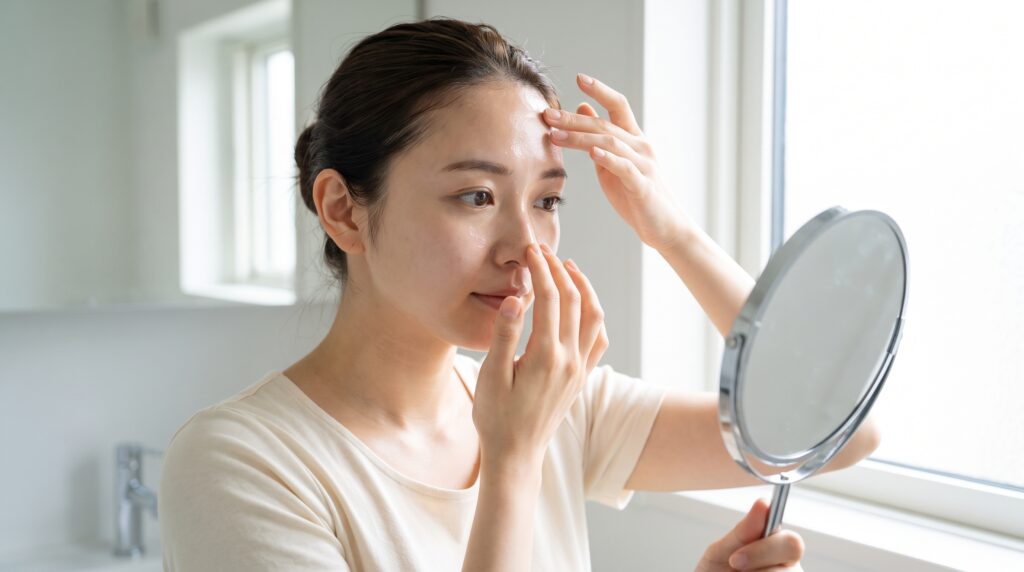
If you’ve ever blotted your forehead by noon, watched your makeup slide off before lunch, or wondered why your skin looks like a glazed donut no matter how many times you wash it — you’re not imagining things, and you’re not doing something “wrong” by default. Oily skin has real, identifiable causes, and most of them have nothing to do with how clean your face is.
This guide breaks down exactly why skin produces excess oil, separates the myths from the facts, and gives you a realistic plan that won’t leave your skin more irritated (and often more oily) than when you started.
Quick Summary Box
- Who this guide is for: Anyone with persistent shine, enlarged pores, or midday oil breakthrough who wants to understand why — not just cover it up
- Main benefit: Identifies your actual oil trigger (genetic, hormonal, or habit-based) instead of guessing
- Best recommendation: A gentle, non-stripping routine (see Step-by-Step Guide below)
- Key takeaway: Over-washing and harsh products are the #1 hidden cause of “worse” oily skin
- Estimated reading time: 8–9 minutes
What’s Actually Happening: The Science of Oily Skin
Your skin’s oil, called sebum, is produced by sebaceous glands attached to hair follicles all over your face. Sebum isn’t the enemy — it’s what keeps skin flexible, protected, and hydrated. Oily skin happens when these glands produce more sebum than your skin needs, usually because of a combination of genetics, hormones, and how you’re treating your skin day to day.
Expert Tip: Oil and hydration are two different things. Skin can be oily and dehydrated at the same time — which is exactly why stripping products often backfire.
The Real Causes of Oily Skin
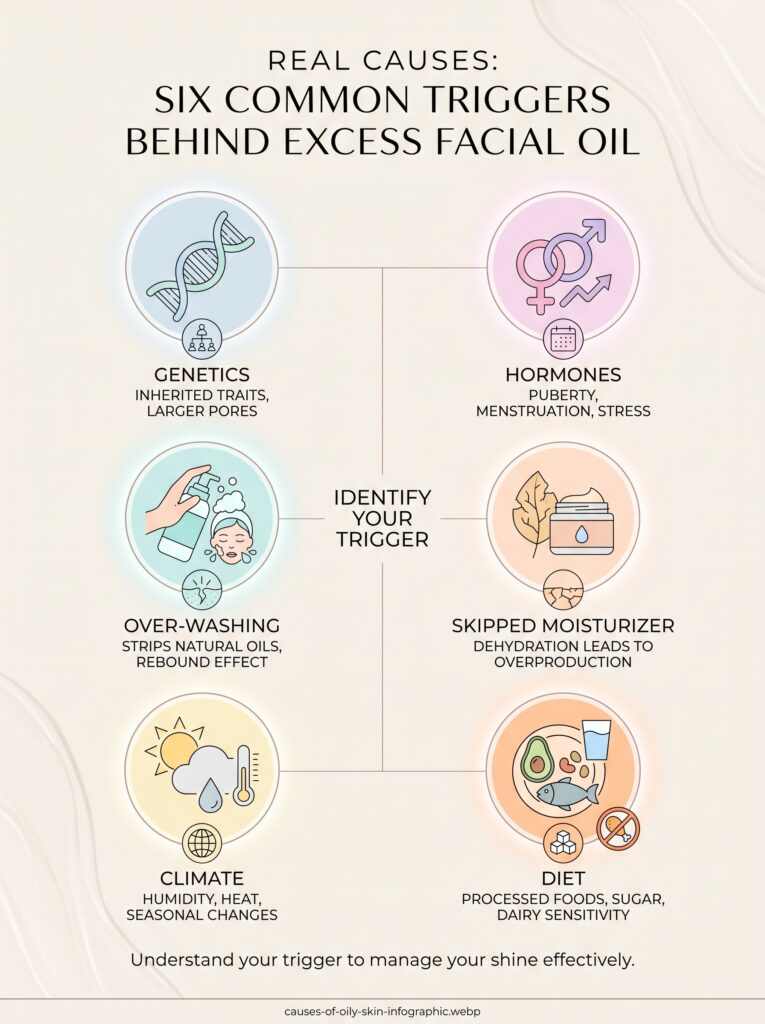
1. Genetics
If your parents had larger pores or oily skin, you likely inherited the same sebaceous gland size and activity level. This is the single biggest predictor of oiliness, and no skincare product changes your genetic baseline — only how you manage it.
2. Hormones
Androgens (a hormone group present in everyone) directly stimulate oil glands. This is why oiliness spikes during:
- Puberty
- The week before a menstrual cycle
- Pregnancy
- Periods of high stress (cortisol interacts with hormone-driven oil production)
3. Over-Washing or Harsh Products
This is the most misunderstood cause. Washing your face too often, or using harsh foaming cleansers, strips your skin’s natural barrier. Skin interprets this as “emergency — produce more oil,” leading to a rebound effect that makes skin oilier than before you started.
4. Skipping Moisturizer
Counterintuitively, skipping moisturizer because skin feels oily often makes it worse. Dehydrated skin can trigger extra oil production to compensate.
5. Climate and Season
Heat and humidity increase sebum production, which is why oiliness is often more noticeable in summer.
6. Diet Patterns
While diet isn’t the primary driver for most people, some research links high-glycemic diets (sugary, refined-carb-heavy) with increased oil production and breakouts in acne-prone individuals.
Common Myths & Facts
| Myth | Fact |
|---|---|
| “Oily skin means dirty skin.” | Oil production is driven by genetics and hormones, not hygiene. |
| “Washing more will fix it.” | Over-washing strips the barrier and often increases oil rebound. |
| “Oily skin doesn’t need moisturizer.” | Skipping moisturizer can increase oil production. |
| “Oily skin never gets dehydrated.” | Skin can be oily on the surface and dehydrated underneath. |
| “Matte products stop oil production.” | They absorb existing oil temporarily; they don’t reduce production. |
Pro tip
If your skin gets tight, flaky, or shiny again within an hour of moisturizing, that’s usually a barrier issue — not a “just oily” issue.
Step-by-Step Routine for Oily Skin
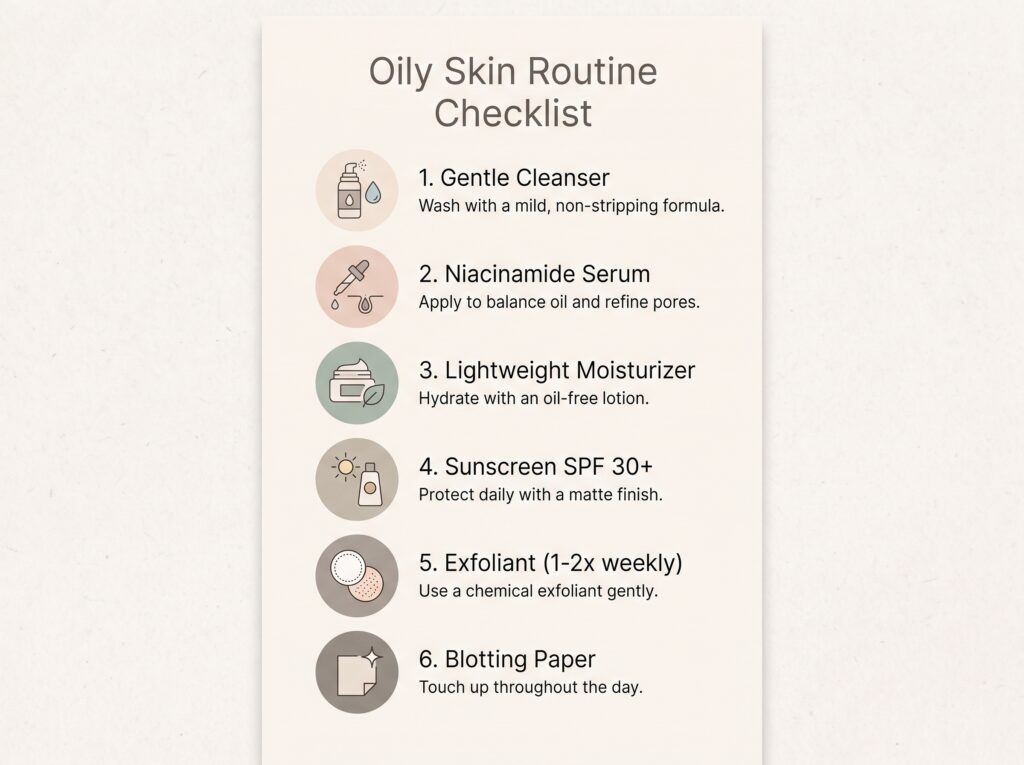
- Cleanse gently, twice a day max. Use a low-foaming, pH-balanced cleanser — never a stripping bar soap.
- Use a lightweight, oil-free moisturizer. Look for “non-comedogenic” on the label. Skipping this step backfires.
- Add niacinamide. This ingredient is well-supported for visibly regulating oil and minimizing pore appearance over time.
- Use sunscreen daily. A gel-based, oil-free SPF prevents sun damage without adding grease.
- Exfoliate 2–3x per week, not daily. Overdoing chemical or physical exfoliation damages the barrier and increases oil.
- Use blotting papers, not more cleansing, for midday shine. Re-washing your face midday strips it further.
Expert Tip: Consistency matters more than intensity. A gentle routine followed daily outperforms an aggressive routine used inconsistently.
Product Category Comparison
| Product Type | Best For | Key Ingredient to Look For | Fragrance-Free Option | Price Range |
|---|---|---|---|---|
| Gel Cleanser | Daily use, sensitive-oily skin | Glycerin, mild surfactants | Yes | $12 |
| Oil-Free Moisturizer | All oily skin types | Hyaluronic acid, niacinamide | Yes | $58 |
| Niacinamide Serum | Visible pore/oil concerns | Niacinamide 5–10% | Yes | $18.5 |
| Mineral SPF (Gel) | Daily sun protection | Zinc oxide, oil-absorbing silica | Often | $32 |
| Chemical Exfoliant (BHA) | Clogged pores, mild acne | Salicylic acid | Yes | $10.50 |
Budget pick: A basic gel cleanser + oil-free moisturizer covers 80% of what oily skin needs. Premium pick: Adding a dedicated niacinamide serum accelerates visible pore and oil improvement over 6–8 weeks.
Common Mistakes That Make Oily Skin Worse
- Washing your face more than twice a day
- Using alcohol-based toners “to dry it out”
- Skipping moisturizer entirely
- Over-exfoliating (daily scrubs or acids)
- Using thick, occlusive products meant for dry skin
- Constantly touching or blotting aggressively throughout the day
Who Should Read This Guide (and Who Shouldn’t Rely on It Alone)
- Good fit: Anyone with mild-to-moderate oiliness looking to understand causes and build a sustainable routine
- Not the full answer for: People with cystic acne, sudden adult-onset severe oiliness, or oiliness paired with other symptoms (rapid weight change, excess hair growth, irregular cycles) — these can signal a hormonal condition and deserve a dermatologist or doctor’s evaluation, not just a routine change
Key Takeaways
- Oily skin is mostly driven by genetics and hormones, not poor hygiene
- Over-washing and harsh products often make oiliness worse, not better
- Skin can be oily and dehydrated at the same time
- Niacinamide and consistent, gentle care outperform aggressive routines
- Sudden, severe, or symptom-paired oiliness warrants a doctor’s opinion, not just new products
Frequently Asked Questions
Why is my skin oily even right after I wash it? Washing removes surface oil temporarily, but sebaceous glands refill it within hours — especially if the cleanser was stripping enough to trigger rebound oil production.
Does drinking more water reduce oily skin? Hydration supports overall skin health, but it doesn’t directly reduce sebum output, which is primarily hormone-driven.
Is oily skin a sign of an unhealthy diet? Not usually. Diet can be a contributing factor for some people, particularly high-sugar diets, but genetics and hormones play a much larger role.
Should I stop moisturizing if my skin is oily? No — skipping moisturizer often increases oil production as skin compensates for dryness.
Can oily skin change with age? Yes. Oil production is typically highest in the teens to 20s and gradually decreases with age, though hormonal shifts can cause fluctuations.
Trust & Accuracy Signals
- Last Updated: July 2026
- Fact Checked: Yes
- Research Based: Informed by dermatological consensus on sebum regulation, barrier function, and hormonal skin triggers
- Reviewed for Accuracy: Content cross-checked against established dermatology sources
This article is for general informational purposes and isn’t a substitute for personalized medical advice. Persistent or severe skin concerns should be evaluated by a dermatologist.
Sources & References
- American Academy of Dermatology (aad.org)
- Mayo Clinic — Oily Skin & Acne (mayoclinic.org)
- National Institutes of Health / PubMed — sebum production and hormonal regulation studies (ncbi.nlm.nih.gov)
- Cleveland Clinic — Skin Care Basics (my.clevelandclinic.org)