
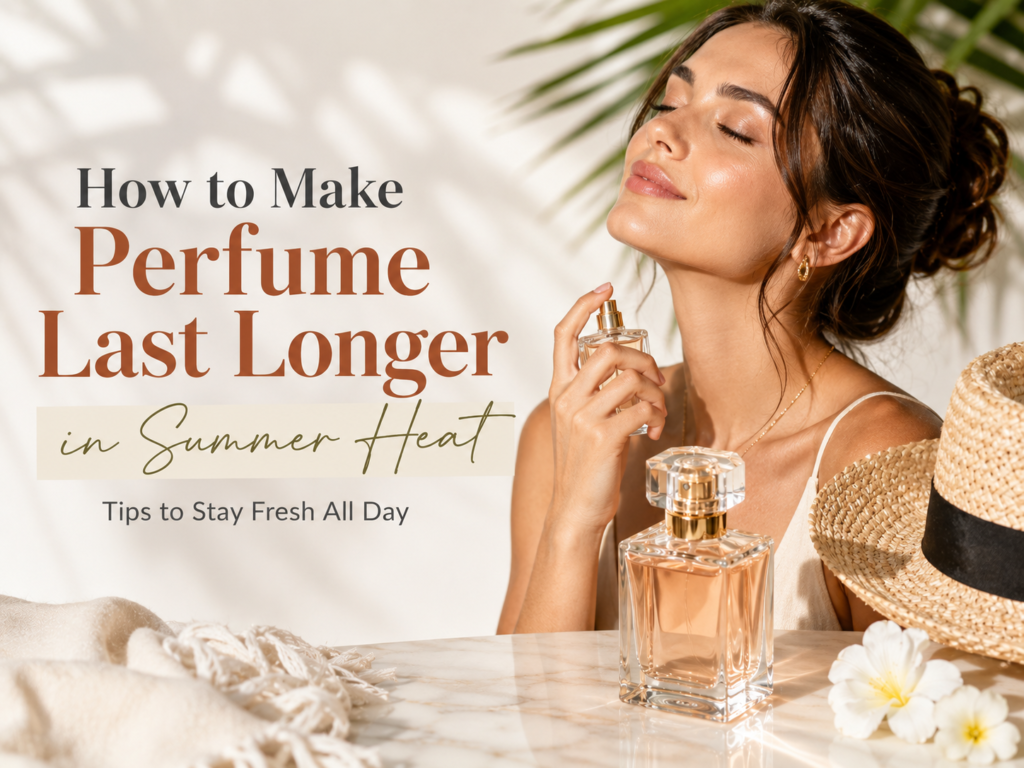
You spray your favorite perfume in the morning. By noon, it is gone. This is not your imagination — and it is not a bad bottle of perfume either.
Heat genuinely changes how fragrance behaves on your skin. Once you understand why, fixing it is much simpler than buying a new perfume every season.
Why Heat Kills Your Perfume So Fast
Perfume is made of fragrance oils suspended in alcohol and water. When it hits warm skin, those molecules evaporate faster which is why a scent can smell stronger at first in summer, but fade much sooner overall.
Pulse points your wrists, neck, and inner elbows naturally run warmer than the rest of your body. That is usually a good thing for fragrance, since heat helps a scent project. But in summer, that same heat works against you, burning off the top notes within an hour or two.
Sweat adds another layer to the problem. As perspiration mixes with fragrance on the skin, it can dilute the scent and wash it away faster than dry skin would.
Products
The Real Fix: Moisturized Skin
Here is the part most people skip. Dry skin does not hold fragrance well. Perfume needs something to cling to and a hydrated, slightly oily skin surface gives fragrance molecules exactly that.
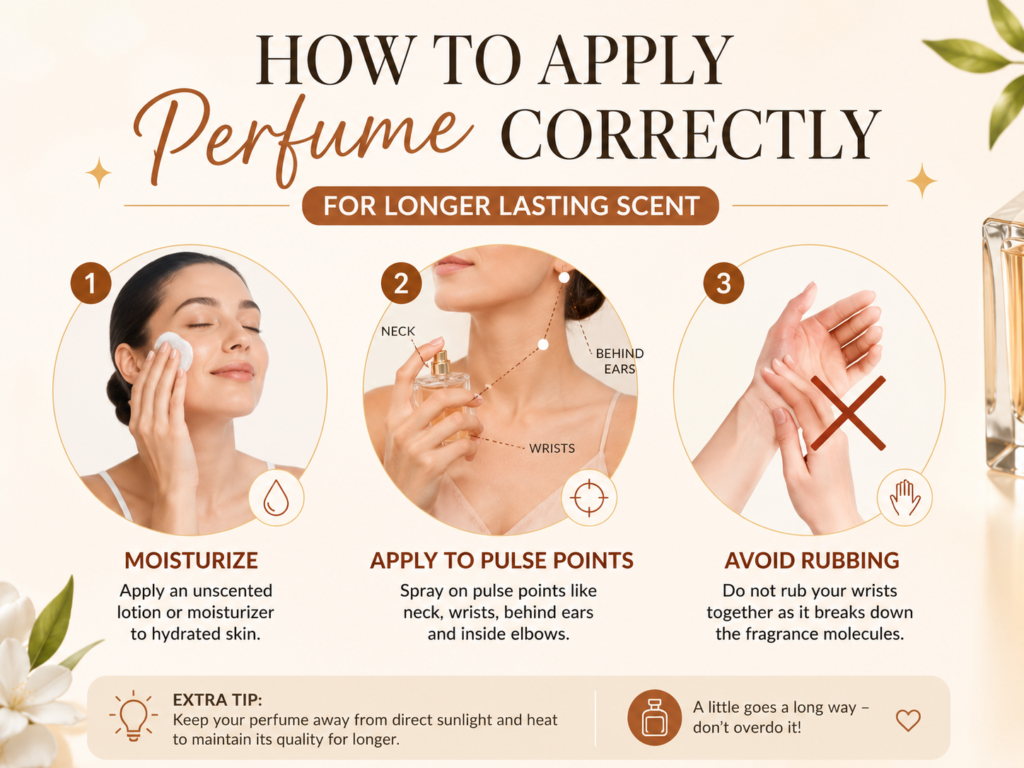
Fragrance specialists consistently recommend the same simple routine: apply an unscented or matching lotion right after showering, while skin is still slightly damp, and then spray your perfume directly on top.
This single step extends wear time more than almost anything else you can do.
The Vaseline Trick That Actually Works
If you want fragrance to last even longer, there is an old beauty trick worth knowing: a thin layer of Vaseline or Aquaphor on your pulse points before you spray.
The petroleum jelly creates a slightly tacky surface that gives perfume molecules something to hold onto far more than dry skin alone. Apply a small amount to your wrists, neck, and inner elbows, then spray your perfume directly over it.
This works because both Vaseline and Aquaphor are occlusive they seal moisture and anything applied on top of the skin’s surface, which is exactly what a fading fragrance needs.
🔗 We have covered this in detail in our Aquaphor Healing Ointment review — including how it works as a skin barrier sealant, which is the same science behind this fragrance trick.
Other Small Changes That Make a Big Difference
Avoid rubbing your wrists together. It feels natural after spraying, but the friction breaks down the top notes of your fragrance almost immediately.
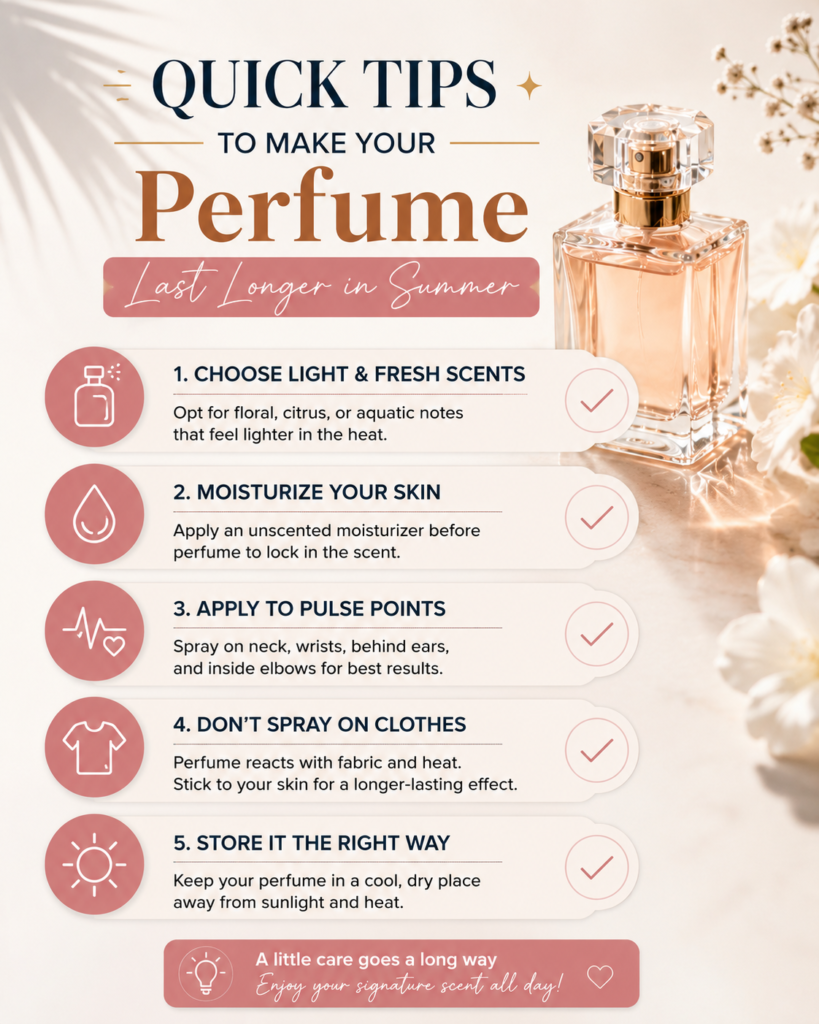
Spray your clothes, not just your skin. Fabric holds onto fragrance far longer than skin does. A light mist on a shirt or scarf will often outlast the same spray on your wrist.
Try your hair. Hair acts as a natural fragrance diffuser. A very light mist not a heavy spray can carry scent for hours.
Choose a stronger concentration. Eau de parfum contains a higher percentage of fragrance oil than eau de toilette, which means it naturally lasts longer in heat. If your current scent fades too fast every summer, check the bottle you may want to size up to a parfum or extrait version if your favorite brand offers one.
Carry a travel size. Fragrance experts often recommend simply re-spritzing in the afternoon rather than fighting the heat. A small bottle in your bag solves the problem without overthinking it.
Where |And Where Not| to Apply It
Pulse points are still the classic choice wrists, neck, inner elbows. But in direct summer sun, consider moving your application slightly. Areas exposed to constant sunlight can actually change the chemical makeup of a fragrance over the day, and may irritate skin.
A simple workaround: apply behind your knees, along your collarbone under clothing, or on the inside of your elbow instead of directly on sun-exposed wrists and neck.
The Bottom Line
Your perfume is not failing you in summer heat and dry skin are working against it. Moisturize before you spray, give your fragrance something to hold onto with a barrier balm like Vaseline or Aquaphor, avoid rubbing your wrists, and do not be afraid to reapply.
Small changes. Same bottle. A scent that actually lasts through the heat.