
Every moisturizer I tried either stung on application, sat on top of my skin like a greasy layer, or did absolutely nothing. I was frustrated and honestly a little desperate.
Then a friend who works at a dermatology clinic told me to stop overcomplicating things and just try the La Roche-Posay Toleriane Double Repair. She said it is basically what they recommend to patients whose skin is recovering from damage.
I was skeptical. Twenty dollars for a tube of moisturizer that comes in boring white packaging with zero glamour? But I was out of options, so I ordered it.
Six weeks later, I genuinely cannot imagine my routine without it.
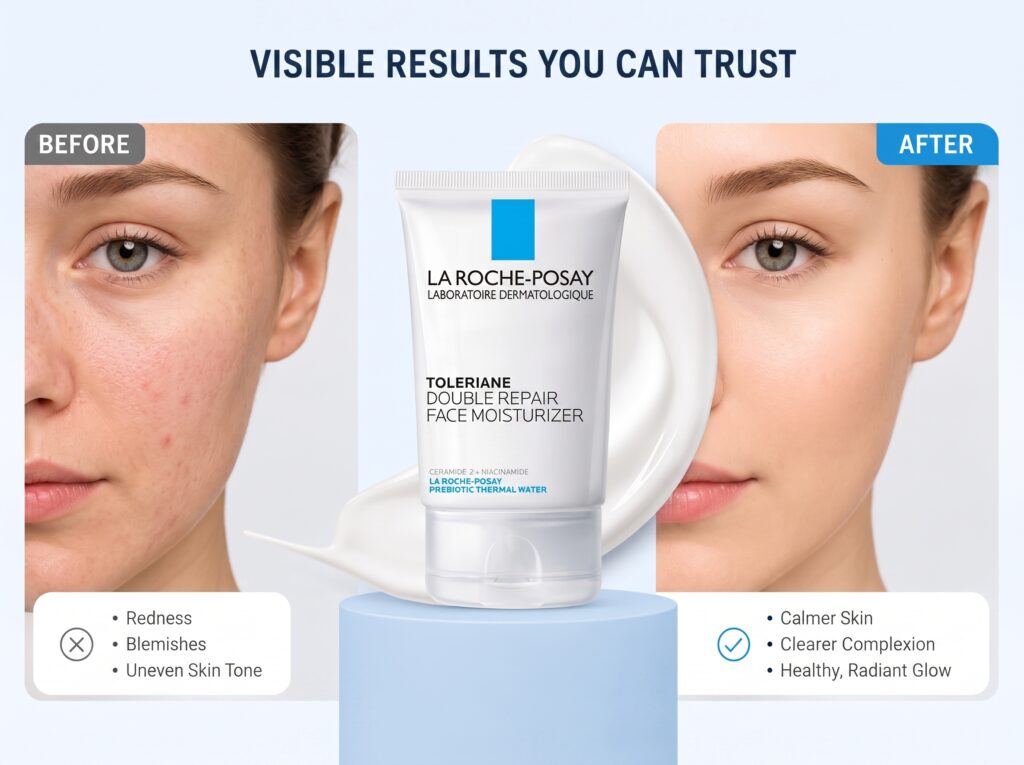
What Even Is the “Double Repair” Thing?
When I first heard the name, I thought it sounded like marketing fluff. “Double Repair” — okay, sure.
But when I actually looked into what the product does, the name started making sense.
The moisturizer works in two ways at the same time. First, it starts repairing your skin’s natural protective barrier within one hour of application. Second, it keeps your skin hydrated for up to 48 hours. Those are the two “repairs” — barrier repair and moisture repair.
For someone like me whose barrier was basically destroyed from over-exfoliation, this was exactly what I needed.
The Ingredients That Actually Matter
I am a bit of a skincare ingredient nerd, so the first thing I did before even opening the tube was check the ingredient list.
Here is what stood out to me:
Ceramide-3 is the one I was most excited about. Ceramides are basically the building blocks of your skin barrier. Think of your skin like a brick wall — ceramides are the mortar holding everything together. When your barrier is damaged, the mortar cracks and things fall apart. Ceramide-3 helps rebuild that mortar.
Niacinamide at around 5% concentration. This is the ingredient that convinced me the product was worth trying. Niacinamide at this concentration is not just a hydration ingredient — it actively fades dark spots, reduces redness, and helps control oil production. For a moisturizer at this price point, 5% niacinamide is genuinely impressive.
Glycerin is the workhorse of the formula. It pulls moisture from the air into your skin and keeps it there. Boring ingredient, incredible results.
Squalane is one of my personal favorites in any skincare product. It mimics your skin’s natural oils, absorbs without any greasiness, and is suitable for literally every skin type. Even acne-prone skin handles squalane beautifully.
La Roche-Posay Prebiotic Thermal Water — this is the brand’s signature ingredient and it shows up in almost every product they make. It is mineral-rich water sourced from a specific region in France, and it has calming, antioxidant properties. Whether this one ingredient justifies the brand premium is debatable, but it does seem to make a difference in how soothing the product feels on irritated skin.
No fragrance, no parabens, no alcohol. For sensitive skin, that clean ingredient list matters a lot.
My Actual Experience Using It
Week one was honestly underwhelming. My skin felt hydrated enough, but I was expecting some dramatic change and it did not come. If you are the kind of person who expects overnight miracles, you will be disappointed.
What I did notice in week one was that my skin stopped stinging. That constant tight, sensitive feeling I had been dealing with for weeks started to calm down within the first few days. That alone was worth it.
By week two, the flaky patches around my nose had significantly improved. Not gone, but visibly better. I was applying the moisturizer morning and night — a pea-sized amount each time.
One mistake I made early on was using too much product. I piled it on thinking more would equal more hydration. What actually happened was pilling — that annoying thing where moisturizer rolls up into little balls on your skin. Less is more with this one. A small pea-sized amount is genuinely enough to cover your entire face.
By week four, the redness around my chin was almost gone. My skin texture felt smoother — not dramatically, but noticeably. The kind of improvement where you touch your face and think “huh, this feels different.”
Week six is where I am now. My barrier feels fully recovered. I have slowly reintroduced my AHA toner — just once a week to start — and my skin is handling it fine. I credit a lot of that to consistently using this moisturizer while my skin was healing.
How I Use It in My Routine
Morning routine:
Start with a gentle cleanser — I use La Roche-Posay Toleriane Purifying Foaming Cleanser because it pairs well, but any gentle non-stripping cleanser works. Then I apply a vitamin C serum, wait about 60 seconds for it to absorb, and then apply the Double Repair moisturizer. I finish with a mineral sunscreen on top. The moisturizer layers under sunscreen without pilling, which was a pleasant surprise.
Night routine:
Cleanse, apply any actives if I am using them that night — currently just a low-percentage retinol twice a week — and then the Double Repair as the final step. On retinol nights especially, this moisturizer has been great at buffering any irritation.
The key thing I learned: always apply it to slightly damp skin. I pat my face dry but leave it a little damp, and the moisturizer sinks in much better that way.
Who Will Get the Most Out of This
If your skin is recovering from anything — over-exfoliation, a harsh prescription, a bad reaction to a product, a long flight, cold dry weather — this moisturizer is going to do a lot of heavy lifting for you.
It works really well for normal, combination, and oily skin types. The lightweight texture means oily skin will not feel suffocated or greasy.
Sensitive skin and rosacea-prone skin will appreciate the zero-fragrance formula and the calming thermal water.
Where it is less impressive is for very dry skin, especially in winter. If your skin is truly dry and tight even after moisturizing, you might want something richer at night. Some people with dry skin layer a face oil on top of the Double Repair at night and that seems to work well.
Mistakes I See People Make With This Product
Using too much. I already mentioned this but it is worth repeating. A pea-sized amount is all you need. More product does not mean more hydration — it just means more pilling and product waste.
Expecting it to be a treatment product. This is a moisturizer. It will not clear your acne by itself, it will not remove your hyperpigmentation overnight, it will not replace your retinol. What it will do is keep your skin hydrated and support your barrier so that your other products can actually work.
Skipping sunscreen because the skin feels great. The Double Repair does not contain SPF in the standard version. Your skin feeling moisturized and healthy does not mean it is protected from UV damage. Always follow with sunscreen in the morning.
Applying it right on top of a fresh serum. Wait at least 60 seconds after your serum before applying this. Layering them too quickly is the main cause of the pilling issue people complain about in reviews.
The One Thing I Would Change
Honestly? The packaging.
The flat, wide tube is fine when it is full. But once you get past the halfway mark, squeezing product out becomes a minor daily frustration. You end up cutting the tube open eventually and realizing there is a surprising amount of product left inside that you could not get out.
Not a dealbreaker at all, but if La Roche-Posay ever redesigns this, a rounder or taller tube would make a real difference.
What I Compared It Against
Before landing on the Double Repair, I had also tried CeraVe Moisturizing Cream and the Vanicream Daily Facial Moisturizer. Both are excellent products that I would genuinely recommend.
The CeraVe cream is richer and better for dry skin but a bit too heavy for my combination skin during the day. The Vanicream is incredibly gentle and great for very reactive skin, but it does not have the niacinamide that I was looking for.
The Double Repair hits a sweet spot — lightweight enough for daytime use, ingredient-rich enough to actually do something meaningful, and gentle enough for recovering or sensitive skin.
The Price Question
At around $20 for a 2.5 oz tube, it is not the cheapest moisturizer out there. CeraVe and Vanicream both undercut it on price.
But when I think about what I was spending on fancy moisturizers that were either doing nothing or actively irritating my skin, twenty dollars for something that actually works feels like a bargain.
A tube lasts me about two months with daily morning and night use. That works out to roughly 33 cents a day for a dermatologist-recommended moisturizer with ceramides and 5% niacinamide. I have spent more than that on a single matcha latte that did nothing for my skin.
Where to Get It
Amazon almost always has the best price and it is usually Prime-eligible so you get it fast. Make sure you are buying from the official La Roche-Posay storefront or a trusted seller to avoid getting a counterfeit — unfortunately it does happen with popular skincare products on Amazon.
The 2.5 oz size is worth it over the 1.69 oz if you know you want to commit to using it for a while.
My Final Thoughts
Six weeks ago I had damaged, reactive, unhappy skin. Right now it is the calmest and most balanced it has been in years.
Is the Double Repair the only reason? Probably not — I also simplified my routine and stopped touching my face every five minutes. But this moisturizer was the foundation that everything else was built on during that recovery period.
If you are someone whose skin is going through it right now — whether from over-exfoliation, a harsh winter, or just general skincare confusion — I would genuinely start here before buying anything more complicated or more expensive.
Sometimes the boring, science-backed, dermatologist-recommended product really is the answer.