
There are very few products that make it onto practically every dermatologist’s recommended list, every skincare Reddit thread, and every “holy grail” roundup at the same time.
Aquaphor Healing Ointment is one of them.
It has been around for decades. It costs less than $15 for a large jar. The ingredient list is so short you can memorize it in thirty seconds. And yet somehow, it keeps showing up as the answer to problems that $80 serums and $60 creams could not solve.
We wanted to understand why. So we dug deep — ingredient by ingredient, use case by use case, and through hundreds of real customer reviews — to give you the most complete, honest breakdown of what Aquaphor actually does, who it works for, and where it falls short.
Here is everything we found.
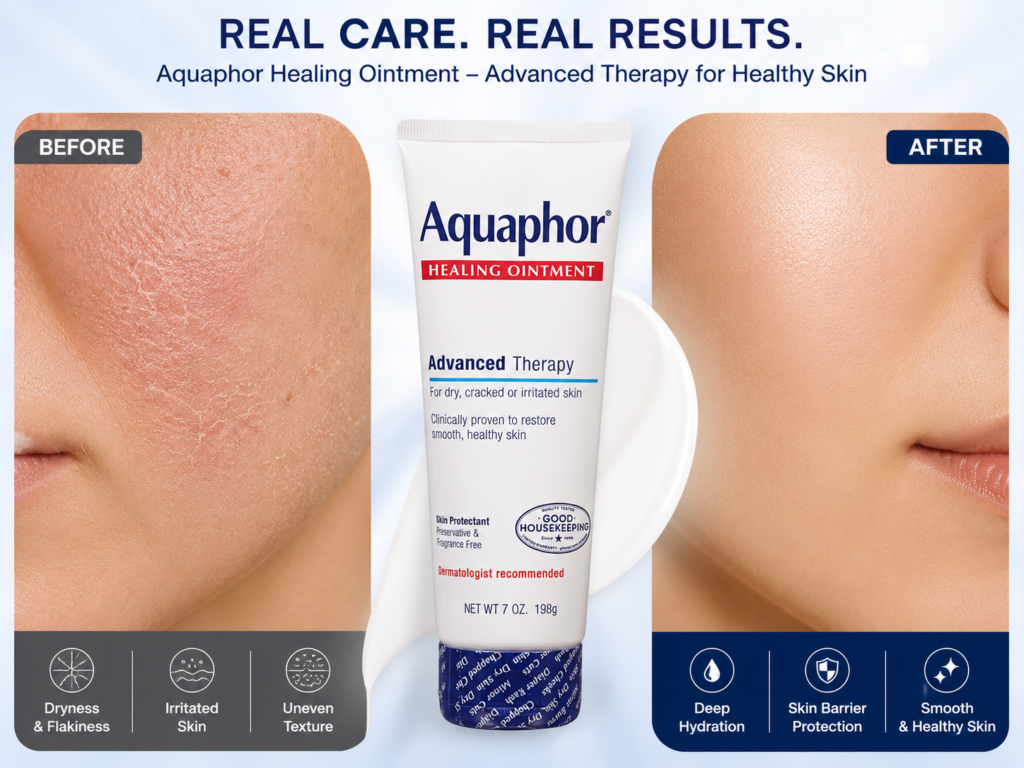
What Is Aquaphor Healing Ointment, Exactly?
Aquaphor Advanced Therapy Healing Ointment is a multi-purpose skin protectant made by Beiersdorf, a German skincare company that also makes Eucerin. It has been a staple in dermatology offices and hospital wards for years — used for everything from post-procedure wound care to cracked heels to protecting newborn skin.
It is not a lotion. It is not a cream. It is an ointment — which means it is water-free, thicker, and far more occlusive than your average moisturizer. That distinction is important and we will come back to it.
The product is available in multiple sizes, from a small travel tube to a large 14-ounce jar. It is fragrance-free, dye-free, and preservative-free. And it is the number one dermatologist-recommended brand for dry, cracked skin and minor wound care in the United States.
The Ingredients Only 7, But Each One Earns Its Place
One of the most refreshing things about Aquaphor is its simplicity. Seven ingredients total. No filler, no fragrance, no unnecessary additions.
Here is what is inside and what each ingredient actually does:
Petrolatum 41% |Active Ingredient|
This is the star of the show. Petrolatum — also known as petroleum jelly — is the most effective occlusive ingredient known to skincare science. It sits on top of the skin and creates a semi-permeable barrier that dramatically reduces transepidermal water loss (TEWL), which is the technical term for moisture evaporating out of your skin.
What makes petrolatum special is that unlike a plastic wrap barrier, it still allows some oxygen and fluid exchange — which is critical for wound healing. That is why surgeons and dermatologists have used it for post-procedure care for decades.
It is also non-comedogenic at the concentrations used here, meaning it does not clog pores the way many people assume.
Mineral Oil |Paraffinum Liquidum|
Mineral oil is one of the most misunderstood ingredients in skincare, largely because of unfounded internet rumors from the early 2000s. The reality is that cosmetic-grade mineral oil is one of the safest and most well-studied emollient ingredients available. It softens the skin surface, helps fill in microscopic cracks, and enhances the occlusive effect of petrolatum.
Ceresin
A naturally derived wax that gives the ointment its thick, semi-solid texture. It helps stabilize the formula and contributes to the protective barrier.
Lanolin Alcohol
This is where Aquaphor separates itself most clearly from plain Vaseline. Lanolin alcohol is derived from sheep’s wool and acts as both an emollient and a humectant — meaning it attracts moisture to the skin while also softening it. According to board-certified dermatologist Dr. Hadley King, Aquaphor tends to be a better moisturizer than plain Vaseline largely because of the humectant properties of glycerin and the additional occlusive properties of lanolin.
One important note: a small percentage of people have a lanolin allergy. If you have ever reacted to wool clothing or lanolin-containing products, patch test before using Aquaphor on your face.
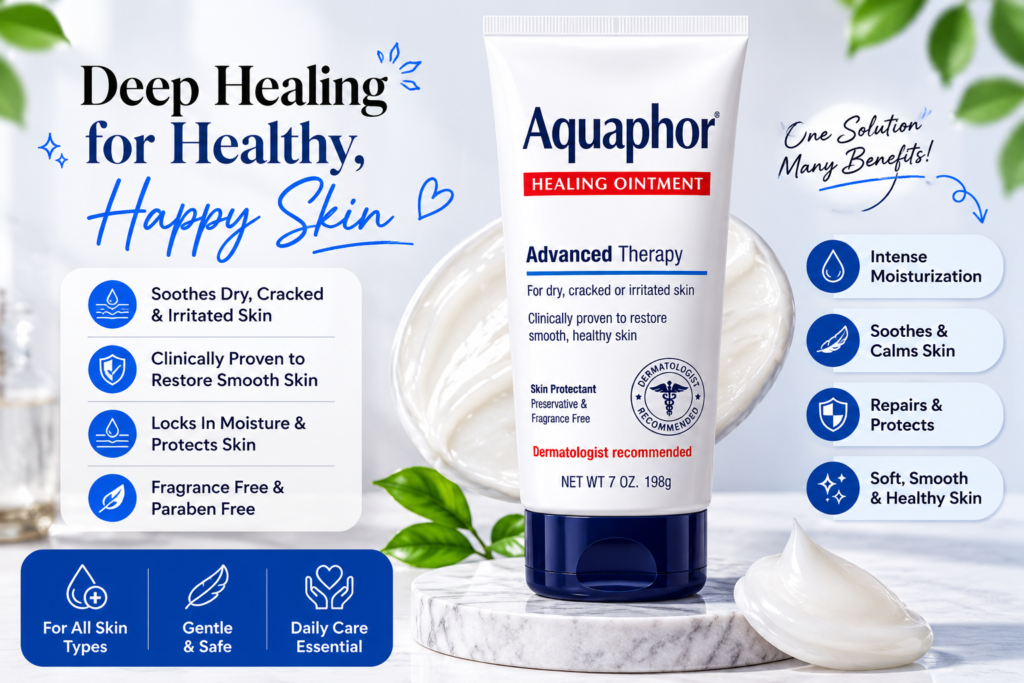
Panthenol |Pro-Vitamin B5| approximately 3% to 4.6%
Panthenol is the ingredient that elevates Aquaphor from a simple barrier product to something more therapeutic. At the concentration used here, panthenol has been shown to strengthen the skin barrier, improve hydration, and reduce inflammation. It also speeds up wound healing and skin regeneration. This is why Aquaphor works so well after procedures like tattoos, laser treatments, and chemical peels.
Glycerin
A classic humectant that pulls moisture from the environment into the upper layers of the skin. Glycerin is gentle, non-irritating, and works synergistically with the occlusive ingredients to both attract and lock in moisture.
Bisabolol
Derived from chamomile, bisabolol has antioxidant, soothing, and anti-irritant properties. It helps calm reactive or inflamed skin and adds a layer of protection against environmental damage. It is one of the gentler actives in skincare and is well-tolerated even by very sensitive skin.
The bottom line on ingredients: This formula covers all three pillars of moisturization — humectants to attract water (glycerin, panthenol), emollients to soften skin (mineral oil, lanolin alcohol), and occlusives to seal everything in (petrolatum, ceresin). Very few products at any price point do all three this effectively.
The 10 Ways People Actually Use Aquaphor
This is where things get interesting. What started as a wound care product has become one of the most versatile items in skincare. Here are the most common and well-documented uses from real people and dermatologists:
1. Dry, cracked hands and feet The most classic use. Applied at night with socks or cotton gloves, it transforms severely cracked heels and rough hands within a few days. People who work with their hands in healthcare, retail, construction swear by it.
2. Chapped and cracked lips Aquaphor is frequently recommended by dermatologists as a lip treatment, especially for people on Accutane where extreme lip dryness is almost universal. Multiple users describe it as the only thing that kept their lips intact during isotretinoin treatment.
3. Post-tattoo care Many tattoo artists recommend Aquaphor as the aftercare ointment of choice because it protects the skin while allowing the healing process to proceed without interference. It keeps the area moisturized without suffocating new ink.
4. After laser treatments, chemical peels, and microneedling Dermatologists frequently recommend Aquaphor for the first few days after procedures that compromise the skin barrier. It creates a protective environment that reduces scabbing and speeds recovery.
5. Eczema and very dry skin flares Applied over a prescription treatment or on its own, Aquaphor locks in medication and moisture while protecting irritated skin from further damage. Many eczema patients keep a jar in every room.
6. Under-eye area at night One of the most beloved uses in the skincare community. The under-eye area has extremely thin, delicate skin that loses moisture rapidly. A tiny amount of Aquaphor applied before bed has replaced $90 eye creams for a surprising number of people.
7. Tretinoin and retinol buffer People using prescription retinoids apply a thin layer of Aquaphor either before or after their retinoid to reduce the dryness and peeling that comes with adjustment. This is sometimes called “slugging” in skincare communities.
8. Minor cuts, burns, and scrapes The original intended use. Creating a moist healing environment significantly speeds up wound closure compared to letting a cut dry out and scab. This is well-supported by clinical research.
9. Angular cheilitis prevention One user described getting recurring angular cheilitis — painful infections at the corners of the mouth — until a medical professional suggested applying Aquaphor to the lip corners after every face wash. Three years later, no recurrence.
10. Slugging (overnight face occlusion) The viral skincare trend of applying a thin layer of Aquaphor as the very last step of a nighttime routine to seal in all previous layers. Works particularly well for dry and combination skin types.
What Real Customers Are Saying
With tens of thousands of reviews across Amazon and other platforms, the feedback pattern on Aquaphor is unusually consistent. Here is a summary of what real people report:
What people love: Someone who works in retail described their hands getting so dry they were blistering from handling hundreds of hangers daily Aquaphor had them healing almost instantly, and their nails and cuticles also improved. They described it as a product you should never skip.
A person with super sensitive skin said they use it for everything and called it life-changing for its simplicity and gentleness.
Someone managing dry patches that appeared after their skin type shifted from oily to combination described applying Aquaphor to an itchy, painful dry patch and feeling immediate relief — with visible healing within 24 hours and complete resolution within two days.
An Accutane patient called it their saving grace, saying it was the only thing that kept their lips from bleeding throughout treatment.
What some people do not love: The greasiness is the most common complaint. Aquaphor does not fully absorb into the skin it sits on top and creates that protective barrier. If you apply too much, it will feel heavy and may transfer onto your pillow. The key is using a very thin layer.
Some users report a slight tacky or sticky feeling that they find uncomfortable, especially if they apply it during the day.
A small number of users report not tolerating it well — likely due to the lanolin alcohol content, which is the one ingredient with a known allergy potential.
Aquaphor vs. Vaseline Which One Should You Use?
This is one of the most common questions, so here is the honest answer.
Vaseline is 100% petrolatum. It is purely occlusive it seals moisture in but does not add any active ingredients or humectants. It is slightly better for post-surgical wound care because it causes less redness at wound sites in some studies.
Aquaphor contains petrolatum at 41% plus six additional ingredients – including glycerin and lanolin as humectants, and panthenol for barrier repair. This makes it a more complete moisturizer that both attracts moisture and seals it in.
For general dry skin, eczema, chapped lips, and skincare layering purposes – Aquaphor is the stronger choice. For purely occlusive use after surgery or on very sensitive reactive skin – Vaseline may be slightly preferable.
Both are excellent. Aquaphor is simply doing more.
Who Should Use Aquaphor – And Who Should Be Careful
Ideal for:
- Dry, very dry, or eczema-prone skin
- Sensitive skin that reacts to fragranced or complex formulas
- Post-procedure recovery (laser, peels, tattoos, microneedling)
- Anyone on Accutane, retinoids, or other drying treatments
- People with cracked hands, feet, or lips
- Babies and young children — the formula is gentle enough
- Anyone who wants one product that genuinely works for 10 different problems
Use with caution if:
- You have oily or acne-prone skin – using Aquaphor all over your face, especially during the day, may feel too heavy and potentially contribute to congestion in some people
- You have a known lanolin allergy – patch test on your inner arm first
- You are looking for a lightweight daily moisturizer – this is not that product
Common Mistakes People Make With Aquaphor
Using too much A little goes a very long way. Most people use far more than necessary, which leads to the greasy complaint. For the face, a rice-grain sized amount is enough. For lips, a thin coat. For hands and feet overnight, slightly more – but not a thick glob.
Expecting it to work like a regular moisturizer Aquaphor is not a standalone moisturizer for most skin types. It works best as the final step in a routine after you have applied a water-based moisturizer where it seals everything in. If you apply it to completely dry skin with no other hydration underneath, it is sealing in dryness.
Buying from unverified third-party sellers There have been reports of counterfeit or diluted versions sold through unauthorized marketplace sellers. Buy from Amazon directly or from a pharmacy to ensure you are getting the real product.
Skipping the patch test if you have sensitive skin Despite being fragrance-free and gentle, the lanolin alcohol can cause reactions in people with specific sensitivities. Test on a small area before using it on your face.
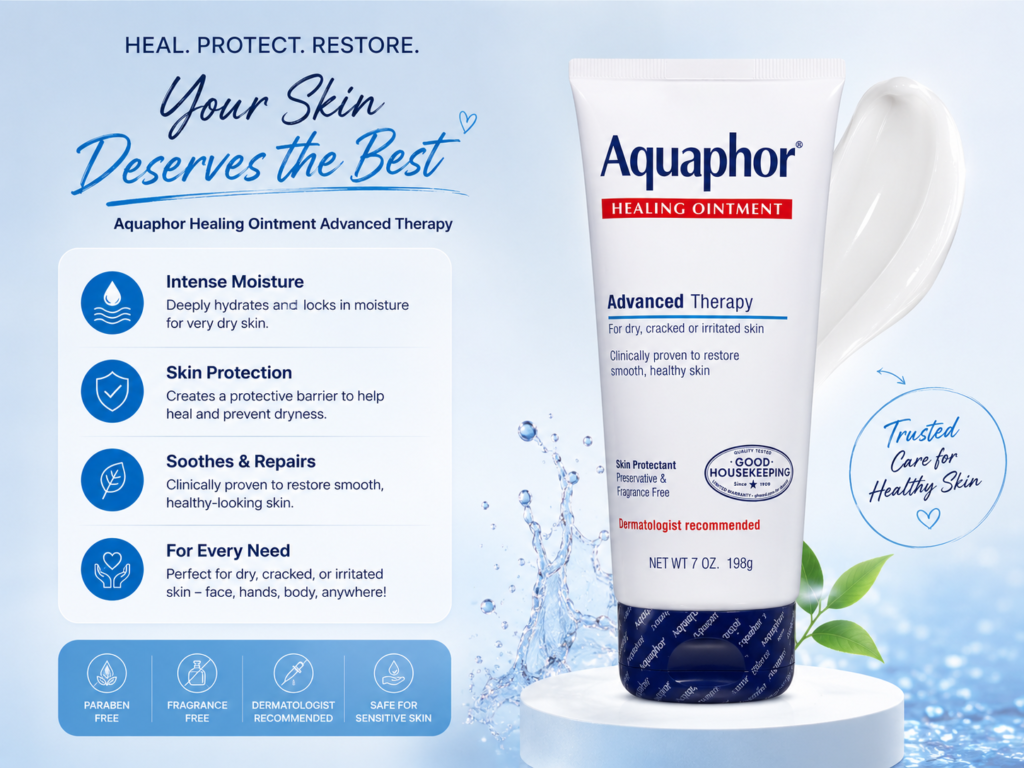
Pros and Cons – The Honest Summary
Pros:
- Only 7 ingredients – clean, simple, well-researched formula
- Fragrance-free, dye-free, preservative-free
- Works for genuinely dry, cracked, or compromised skin
- Clinically proven and dermatologist recommended
- Extremely versatile – lips, hands, face, body, wounds, post-procedure
- Affordable – large jar costs less than most single-use serums
- Gentle enough for babies and very sensitive skin
- Long shelf life
Cons:
- Greasy texture — not suitable for daytime use for most people
- Not a standalone moisturizer — works best over another hydrating layer
- Lanolin content may cause reactions in people with lanolin sensitivity
- Heavy feeling if overapplied
- Jar packaging means you have to dip fingers in, which some people find unhygienic
Final Thoughts – Is Aquaphor Worth It?
Here is our honest conclusion after all the research:
Aquaphor Healing Ointment is one of the most legitimately useful skincare products available at any price point. It does not promise miracles. It does not contain trendy ingredients or exotic extracts. What it does is provide a scientifically sound, dermatologist-backed barrier that protects skin, locks in moisture, and creates the conditions your skin needs to heal itself.
For anyone dealing with severely dry skin, post-treatment recovery, chronic lip chapping, or sensitive skin that reacts to most products – Aquaphor is not just worth trying. It is likely to become something you keep buying without even thinking about it.
The people who are disappointed by it are usually those who expected it to be something it is not — a lightweight daytime moisturizer or a single product that replaces an entire routine. Use it correctly, as a final sealing step or a targeted treatment, and it almost always delivers.
Our rating: 4.5 out of 5
Half a point deducted purely for the greasiness that makes daytime or all-over use impractical for many skin types. Everything else about this product earns its reputation.
Quick Reference
| Details | |
|---|---|
| Product type | Occlusive healing ointment |
| Key ingredients | Petrolatum 41%, Panthenol, Glycerin, Lanolin Alcohol, Bisabolol |
| Fragrance | Fragrance-free |
| Best for | Dry, cracked, sensitive, post-procedure skin |
| Not ideal for | Oily skin, daytime standalone moisturizer |
| Price range | $10–$20 depending on size |
| Amazon rating | 4.8/5 stars — tens of thousands of reviews |
| Dermatologist recommended | Yes — #1 recommended brand for dry skin |
Frequently Asked Questions
Can I use Aquaphor on my face every night? Yes, as the final step of your nighttime routine. Apply a very thin layer over your regular moisturizer. This is called slugging and works particularly well for dry and combination skin.
Is Aquaphor safe during pregnancy? Generally considered safe for topical use. Consult your doctor if you have concerns.
Can I use it on my baby? Yes. Aquaphor is widely used for diaper rash, dry baby skin, and minor irritations. It is gentle enough for newborn skin.
Does Aquaphor expire? It has a shelf life of approximately three years. Check the packaging for the expiration date.
Will Aquaphor clog my pores? Petrolatum is non-comedogenic in most people at the concentrations used here. If you have very acne-prone skin, start with a small patch test area before applying to your whole face.