
If you’re dealing with a fresh sunburn right now, the fastest relief comes from cooling the skin immediately, rehydrating from the inside and outside, and calming inflammation with the right products — not ice, not butter, and not scrubbing. Get out of the sun, take a cool (not cold) shower or apply cool compresses, drink water, apply pure aloe vera or a fragrance-free moisturizer, and take an anti-inflammatory like ibuprofen if you can. The steps below walk through exactly how to do each of these correctly, plus how to spot the difference between a burn you can treat at home and one that needs medical attention.
Quick Summary Box
- Who this guide is for: Anyone with a mild-to-moderate sunburn looking for fast, safe relief at home.
- Main benefit: Step-by-step relief protocol you can start using in the next five minutes.
- Best recommendation: Cool compresses + pure aloe vera gel + oral anti-inflammatory (if safe for you).
- Reading time: ~9 minutes.
- Key takeaway: The first 2–4 hours after sunburn matter most — cooling and hydrating early reduces both pain and peeling later.
Who Should Read This Guide
This guide is for you if:
- You have red, warm, or tender skin from sun exposure within the last 24–48 hours.
- You’re looking for at-home relief and want to avoid common sunburn mistakes.
- You want to know what’s safe to use — and what to avoid — on burned skin.
This guide may not fully apply if:
- You have large blisters, fever, chills, confusion, or signs of heat exhaustion — this points to a more serious burn or heat illness (covered in the “When to See a Doctor” section below).
- You’re treating a sunburn on an infant under 12 months — infant skin needs pediatric medical guidance, not home treatment.
Understanding What’s Actually Happening to Your Skin
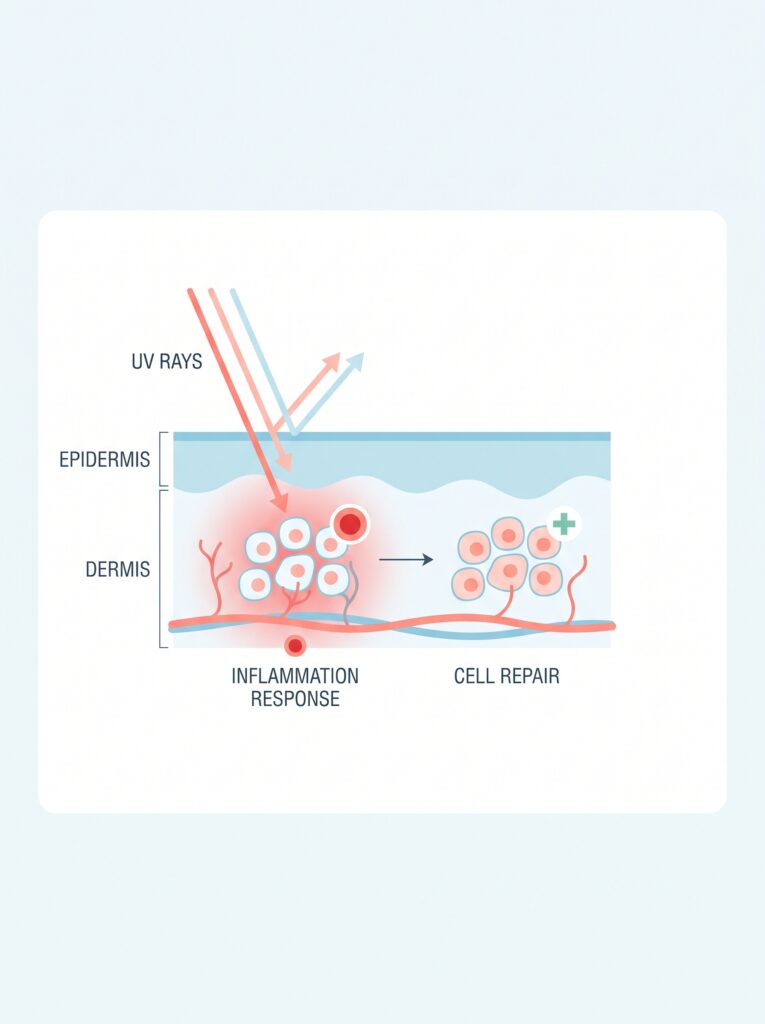
Sunburn is a radiation injury. Ultraviolet (UV) rays damage the DNA in your skin cells, and your body responds with inflammation — that’s the redness, heat, and swelling you feel. Peeling that shows up a few days later is your body clearing out the damaged cells.
This matters because it explains why certain treatments work: anything that reduces inflammation and keeps skin hydrated speeds up comfort and recovery, while anything that traps heat or dries out the skin makes it worse.
Quick Answer: Sunburn pain typically peaks 6–48 hours after exposure and starts improving on its own within 3–5 days with proper care.
Immediate Steps to Treat Sunburn Fast (Do This First)
Follow these in order for the fastest relief:
- Get out of the sun immediately. Move indoors or into full shade — continued UV exposure worsens the burn even if you don’t feel it happening.
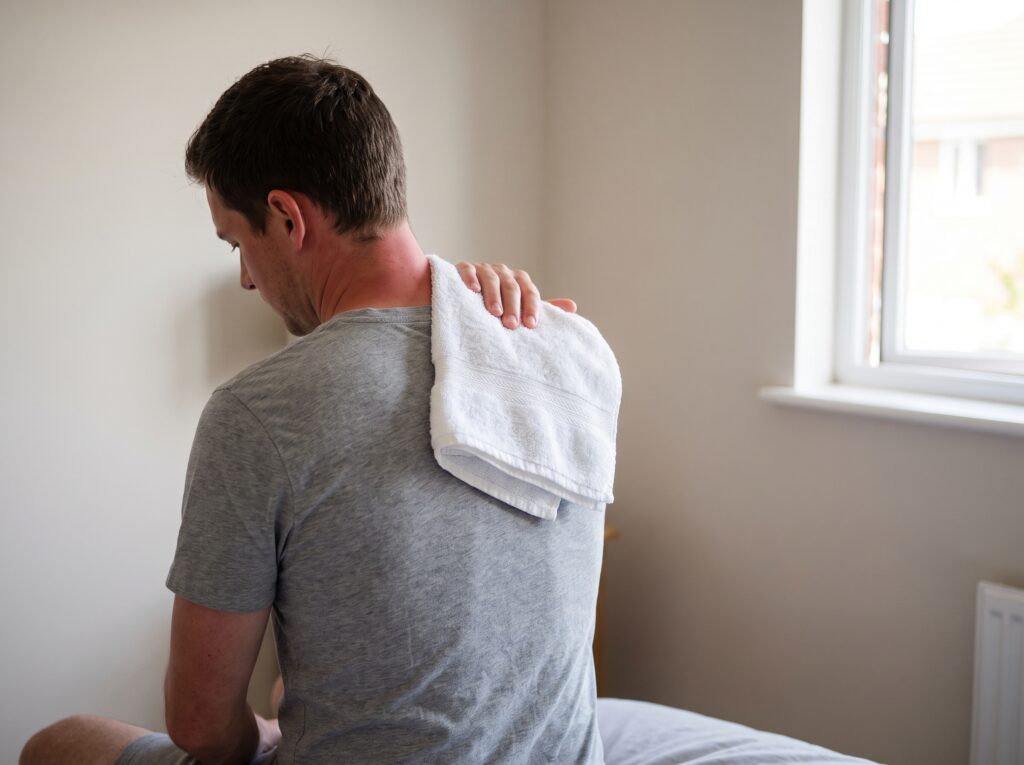
- Cool the skin. Take a cool (not cold) shower or bath, or apply a cool, damp cloth to the area for 10–15 minutes. Avoid ice or ice water — extreme cold can shock already-damaged skin and slow healing.
- Hydrate from the inside. Sunburn draws fluid to the skin’s surface and away from the rest of your body, which is why sunburned people often feel dehydrated or lightheaded. Drink water steadily for the next several hours.
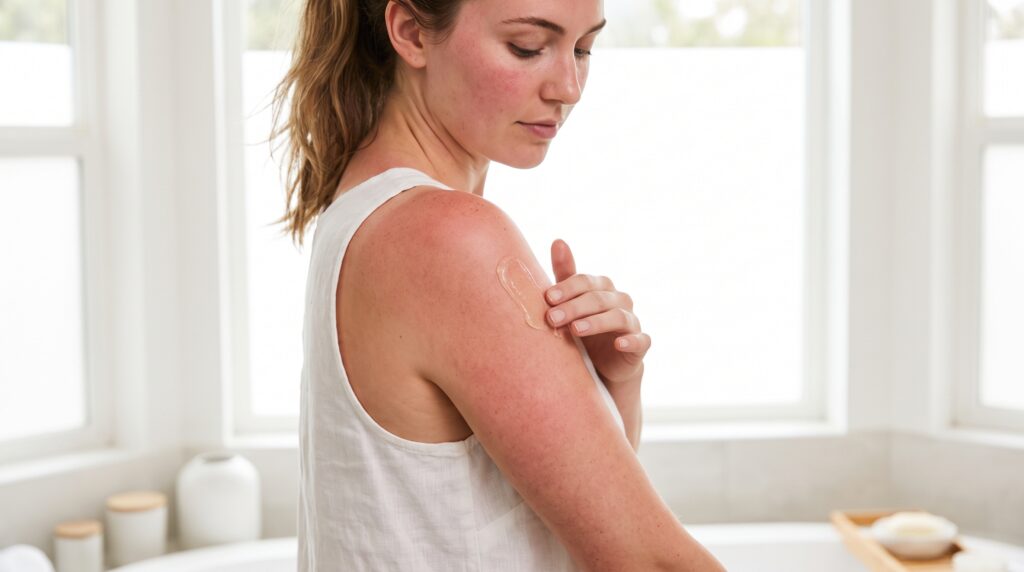
- Apply a soothing, fragrance-free moisturizer or pure aloe vera gel while skin is still slightly damp — this helps lock in moisture.
- Take an oral anti-inflammatory like ibuprofen (if it’s safe for you to take), which reduces both pain and swelling from the inside.
- Leave blisters alone. Don’t pop them — intact blisters protect the skin underneath from infection.
Expert Tip: Apply your moisturizer or aloe within the first hour after cooling the skin, while it’s still damp. This traps water in the outer skin layer and noticeably reduces the tight, stinging feeling.
Pain and Inflammation Relief That Actually Works
Once you’ve done the immediate steps, here’s how to manage discomfort over the next 24–48 hours.
- Cool compresses, repeated: Reapply a cool, damp cloth for 10–15 minutes, several times a day, especially in the first 24 hours.
- Over-the-counter pain relief: Ibuprofen or naproxen (NSAIDs) reduce both pain and the inflammatory response, which can also lessen peeling later. Acetaminophen helps with pain but doesn’t reduce inflammation the same way.
- Topical hydrocortisone cream (1%): Can be used on non-blistered areas to calm redness and itching, typically for a few days at most.
- Pure aloe vera gel: Look for products where aloe is listed as one of the first ingredients, with no added alcohol or fragrance, which can sting damaged skin.
- Fragrance-free, oat-based, or ceramide moisturizers: Help rebuild the skin barrier while it heals.
Quick Answer: Aloe vera doesn’t “heal” sunburn faster on its own, but it does meaningfully improve comfort by keeping skin hydrated and reducing that tight, stretched feeling.
Hydration and Aftercare for the Next Few Days
Sunburn recovery doesn’t stop after the first few hours. What you do over the next 3–5 days affects how much you peel and how fast your skin fully recovers.
- Keep drinking extra water for at least 24–48 hours after the burn.
- Moisturize twice daily, even after redness fades, to support the skin barrier.
- Avoid further sun exposure on the burned area until it’s fully healed — burned skin sunburns again far more easily.
- Wear loose, breathable clothing over the area to avoid friction and heat buildup.
- Skip hot showers and exfoliation until peeling has finished naturally.
Expert Tip: Resist the urge to peel loose skin manually. Let it shed on its own — picking at it can leave uneven pigmentation or slow healing.
Blister Care: What’s Safe and What’s Not
⚠️ Warning Box — Blistered Sunburn
If your sunburn has blistered, it’s classified as a second-degree burn and needs gentler handling:
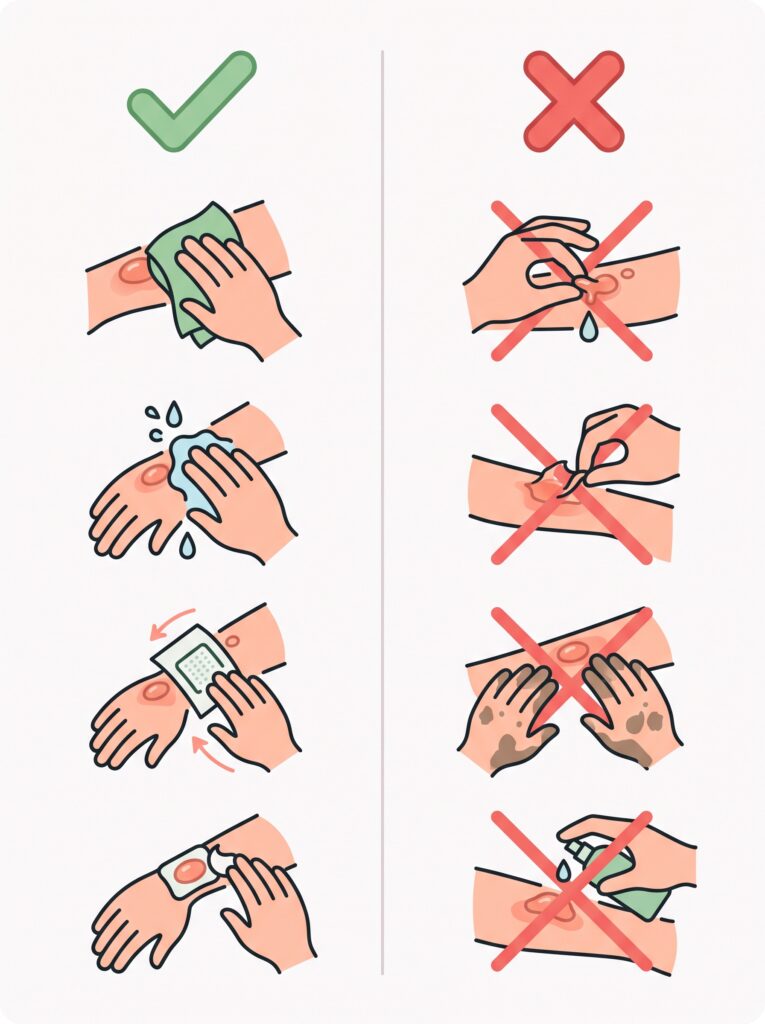
- Do not pop blisters. The fluid-filled skin is a natural barrier against infection.
- If a blister breaks on its own, gently clean the area with mild soap and water, apply an antibiotic ointment, and cover loosely with a non-stick bandage.
- Avoid tight clothing rubbing over blistered areas.
- Watch for signs of infection: increasing redness, warmth, pus, or worsening pain after day 2–3, which warrants a call to a healthcare provider.
Common Myths & Facts About Sunburn Treatment
Myth: Butter or oil soothes sunburn. Fact: Butter and oily products trap heat in the skin and can worsen the burn. Stick to water-based aloe or lightweight moisturizers.
Myth: Ice is the fastest way to cool a burn. Fact: Ice or ice water can cause additional damage to already-injured skin. Cool (not cold) water is safer and just as effective.
Myth: A base tan protects you from getting sunburned. Fact: A tan is itself a sign of UV damage and offers only minimal, unreliable protection — roughly equivalent to a very low SPF.
Myth: You can’t get sunburned on a cloudy day. Fact: Up to 80% of UV rays pass through clouds, which is why cloudy-day sunburns are so common.
Myth: Sunburn only needs treatment while it’s red. Fact: Skin continues repairing itself for days after the redness fades, so moisturizing and sun protection should continue through the peeling phase.
Common Mistakes That Slow Down Sunburn Recovery
- Taking a hot shower right after sun exposure, which intensifies inflammation.
- Applying alcohol-based sprays or heavily fragranced lotions that sting and dry out the skin further.
- Skipping water intake because you don’t feel thirsty.
- Popping blisters to “relieve pressure.”
- Going back out in the sun the next day because the worst pain has passed.
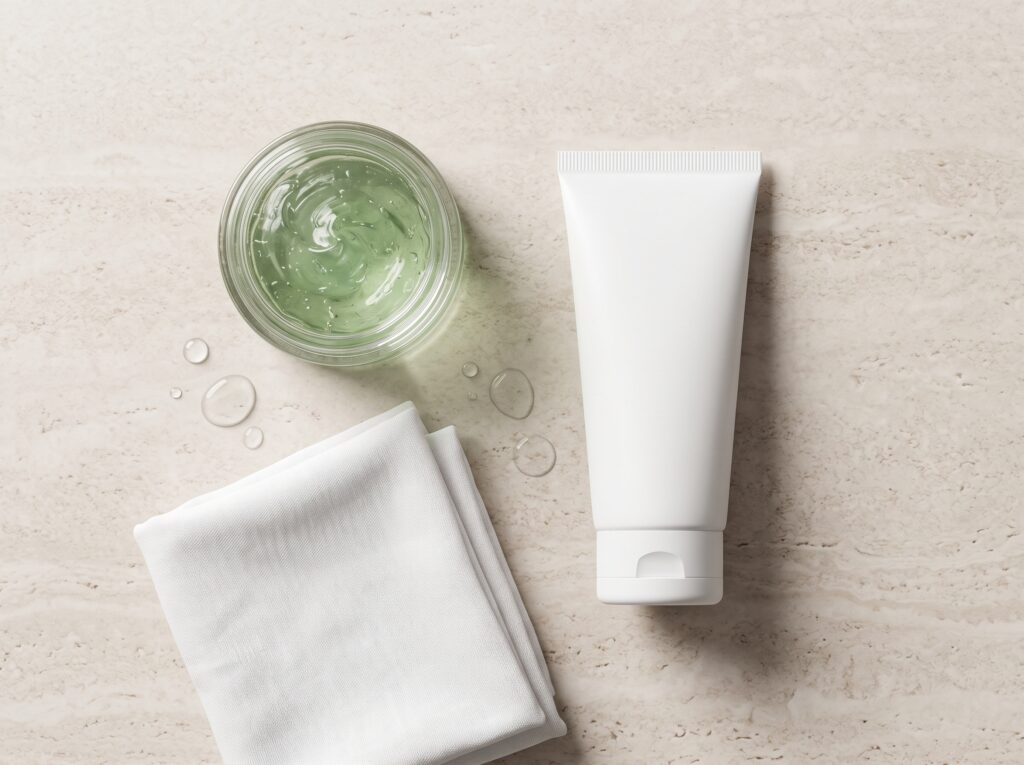
Sunburn Relief Product Comparison
| Product Type | Best For | Skin Type | Key Ingredients | Fragrance-Free | Price Range | Overall Rating |
|---|---|---|---|---|---|---|
| Pure Aloe Vera Gel | Immediate cooling & hydration | All skin types | Aloe barbadensis leaf juice | Usually yes (check label) | $ | ⭐⭐⭐⭐⭐ |
| 1% Hydrocortisone Cream | Redness & itching (non-blistered skin) | Sensitive, inflamed skin | Hydrocortisone | Yes | $ | ⭐⭐⭐⭐ |
| Ceramide/Oat Moisturizer | Barrier repair & peeling prevention | Dry, sensitive, recovering skin | Ceramides, colloidal oatmeal | Yes | $$ | ⭐⭐⭐⭐⭐ |
| Cooling Gel Spray | Quick, hands-free relief | Larger burned areas | Aloe, menthol (light) | Varies | $ | ⭐⭐⭐⭐ |
| Antibiotic Ointment | Broken blister care | Any (broken skin only) | Bacitracin or similar | Yes | $ | ⭐⭐⭐⭐ |
Ratings reflect general suitability for sunburn relief based on ingredient function, not a specific tested brand.
When to See a Doctor for Sunburn
⚠️ Warning Box — Seek Medical Care If You Notice:
- Fever, chills, or a headache along with the burn
- Nausea, vomiting, or dizziness (possible sun poisoning or heat exhaustion)
- Large areas of blistering, especially on the face, hands, or genitals
- Signs of infection: increasing pain, warmth, swelling, or pus after the first couple of days
- Sunburn covering a large percentage of the body, especially in young children or older adults
- Confusion or fainting, which can signal heat stroke and requires emergency care
Quick Answer: If pain, fever, or blistering feels severe or is getting worse instead of better after 48 hours, it’s time to see a healthcare provider rather than continuing home treatment.
Preventing Sunburn Next Time
- Apply a broad-spectrum SPF 30+ sunscreen 15–30 minutes before sun exposure, and reapply every two hours.
- Seek shade during peak UV hours, generally 10 a.m. to 4 p.m.
- Wear UPF-rated clothing, a wide-brim hat, and sunglasses for extended outdoor time.
- Reapply sunscreen after swimming or heavy sweating, even if labeled water-resistant.
- Remember that reflective surfaces like water, sand, and snow intensify UV exposure.

Key Takeaways
- Cool the skin with a cool (not cold) shower or damp cloth as soon as possible after sun exposure.
- Hydrate from the inside with steady water intake for at least 24–48 hours.
- Apply pure aloe vera or a fragrance-free moisturizer while skin is still slightly damp.
- Avoid ice, butter, oils, and alcohol-based products on burned skin.
- Leave blisters intact and watch for signs of infection.
- Take an NSAID like ibuprofen if safe for you, to reduce pain and inflammation.
- Continue moisturizing and avoid sun exposure through the full peeling process.
- Seek medical care for fever, severe blistering, dizziness, or worsening symptoms.
Trust Signals
- Last Updated: July 2026
- Fact Checked: Yes
- Research Based: Compiled from established dermatological and public health guidance
- Reviewed for Accuracy: Cross-checked against multiple authoritative medical sources
Frequently Asked Questions
How long does sunburn usually last? Most mild-to-moderate sunburn improves within 3–5 days, with peeling continuing for up to a week as damaged skin sheds.
Does toothpaste help sunburn? No. Toothpaste can irritate and dry out burned skin further and isn’t recommended for sunburn treatment.
Can I put moisturizer on sunburn right away? Yes — a fragrance-free, gentle moisturizer applied after cooling the skin is one of the most effective comfort measures.
Is it safe to shower with sunburn? Yes, but use cool or lukewarm water, avoid harsh soap directly on the burn, and pat skin dry gently instead of rubbing.
When does sunburn become sun poisoning? When symptoms extend beyond the skin — fever, chills, nausea, dizziness, or widespread blistering — it’s considered sun poisoning and warrants medical attention.
Sources & References
- American Academy of Dermatology (AAD)
- Mayo Clinic
- Cleveland Clinic
- Centers for Disease Control and Prevention (CDC)
- National Institutes of Health (NIH)