
Introduction
If your skin suddenly broke out in small, itchy, prickly bumps after a hot, sweaty day, you’re probably dealing with heat rash — and yes, it’s uncomfortable, but it’s almost always fixable at home within a few days.
Heat rash (also called prickly heat or miliaria) happens when sweat gets trapped under your skin because sweat ducts are blocked. It’s extremely common in hot, humid weather, in babies with developing sweat glands, and in anyone wearing tight or non-breathable clothing during heavy sweating.
The good news: most cases clear up in 24–72 hours once you cool the skin down and stop the sweat trapping. This guide walks through exactly how to treat it fast, how to tell which type you have, and the specific signs that mean it’s time to call a doctor.
What Exactly Is Heat Rash?
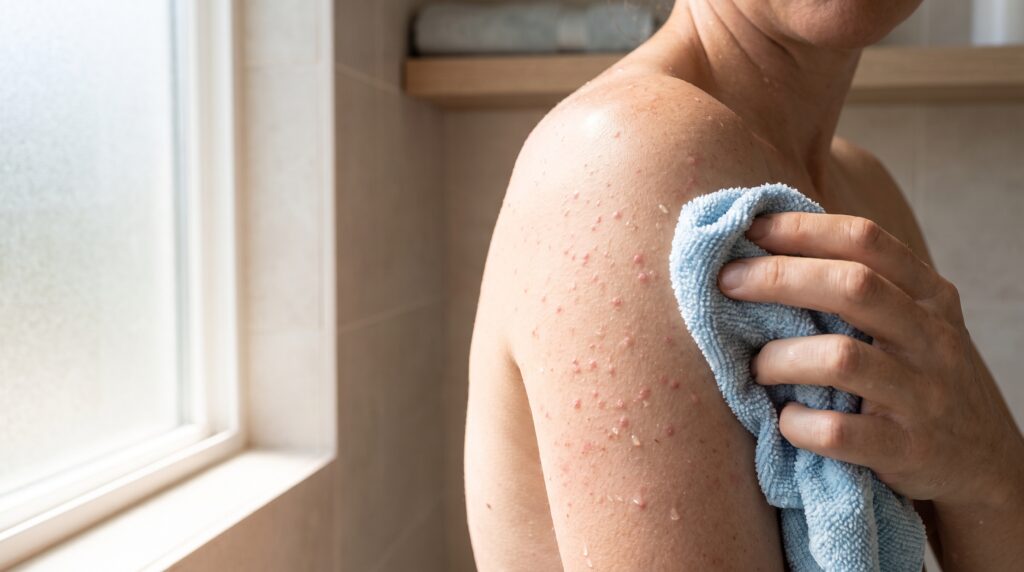
Heat rash forms when sweat ducts become blocked and trapped sweat leaks into the surrounding skin, causing inflammation, redness, and tiny bumps or blisters. It’s not an infection and it’s not contagious — it’s purely a mechanical blockage problem.
Quick Answer: Heat rash is treated by cooling the skin, keeping it dry, wearing loose breathable clothing, and avoiding heavy creams or ointments until the bumps clear.
Quick Summary Box
Who this guide is for: Anyone with new, itchy, prickly red bumps after heat/sweat exposure — adults, athletes, office workers in poor AC, and parents of infants. Main Benefit: Clear, step-by-step relief you can start in the next 5 minutes. Best First Action: Cool the skin immediately and switch to loose, breathable clothing. Key Takeaway: Most heat rash resolves in 1–3 days with simple cooling and drying — no medication needed in the vast majority of cases. Reading Time: 9–10 minutes
Types of Heat Rash (Know Which One You Have)
Not all heat rash looks the same, and the type affects how you should treat it.
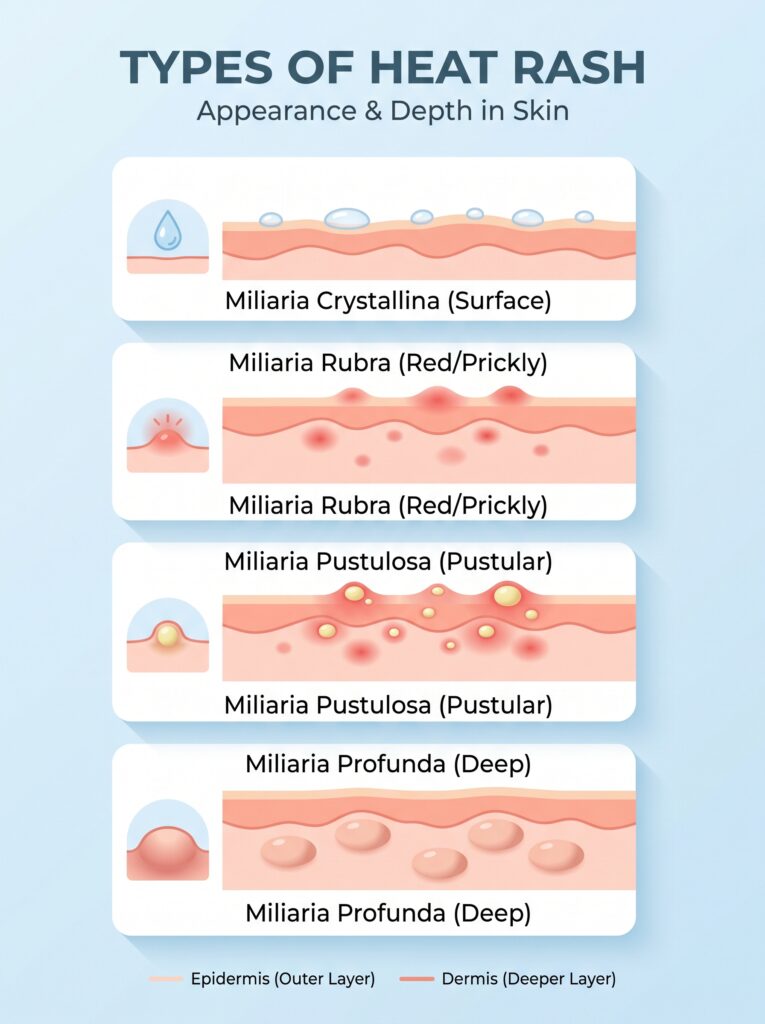
- Miliaria Crystallina — The mildest form. Tiny, clear, fluid-filled bumps that don’t itch or hurt. Common in newborns.
- Miliaria Rubra (“prickly heat”) — The most common type in adults. Red, itchy, prickly bumps, often in skin folds, the back, or under tight clothing.
- Miliaria Pustulosa — Similar to rubra but the bumps fill with pus, usually because the area was already irritated or inflamed.
- Miliaria Profunda — The deepest and least common type. Firm, flesh-colored bumps that form after repeated episodes of rubra; can reduce the skin’s ability to sweat in that area.
Expert Tip: If bumps are firm, deep, and don’t itch, but you feel overheated without being able to sweat in that spot, that’s a sign of miliaria profunda — this type benefits from medical evaluation rather than home care alone. <br>
What Causes Heat Rash?
- Heat and humidity that make sweat production heavy and evaporation slow.
- Tight or non-breathable clothing (synthetic fabrics, tight waistbands, heavy uniforms).
- Excessive bundling of babies, who have immature sweat ducts.
- Prolonged bed rest or fever, especially with heavy blankets.
- Strenuous exercise in hot conditions without moisture-wicking gear.
- Occlusive skin products like thick lotions or ointments that trap sweat.
Quick Answer: Anything that traps sweat against the skin for an extended period can trigger heat rash — heat itself is only half the equation; blocked evaporation is the other half.
Step-by-Step: How to Treat Heat Rash at Home
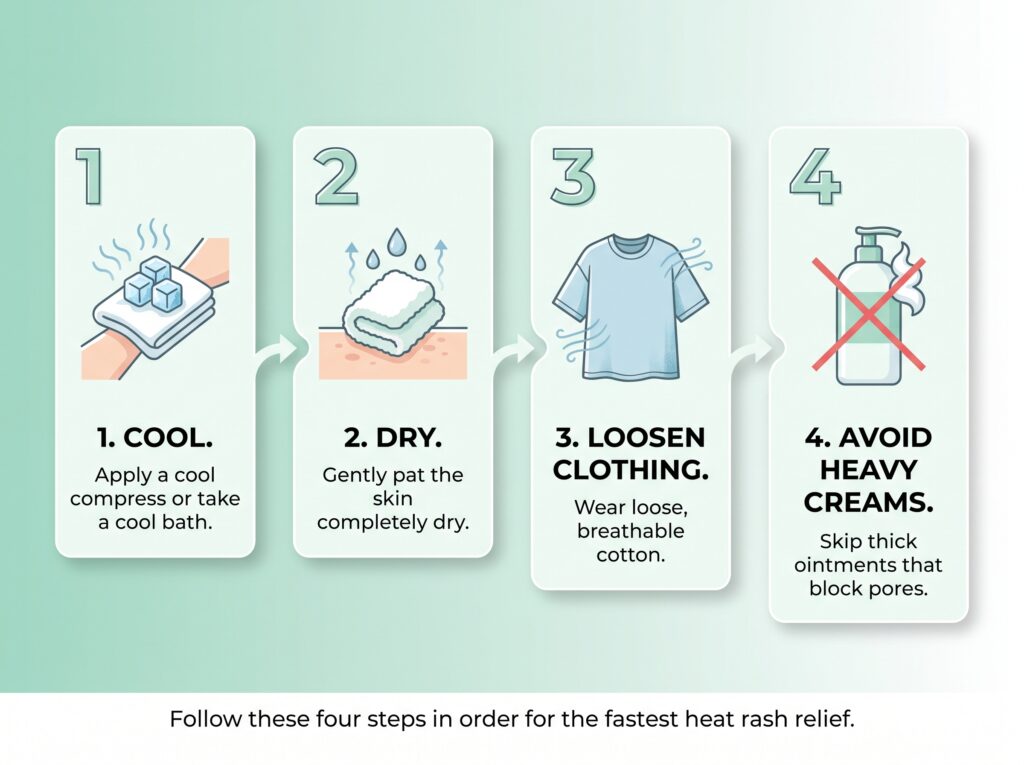
- Move to a cooler environment immediately. Air conditioning or shade stops the sweating that’s feeding the problem.
- Cool the skin with a damp cloth or cool shower. Avoid ice directly on skin — it can cause additional irritation.
- Pat dry — don’t rub. Rubbing irritates already-inflamed skin.
- Switch to loose, breathable cotton clothing. Let the affected area stay uncovered when possible.
- Skip heavy creams, oils, and thick moisturizers until the rash clears — these can re-block the ducts you’re trying to unblock.
- Use calamine lotion or a thin layer of hydrocortisone cream if itching is significant (check with a pharmacist or doctor for infants).
- Keep the area dry between cooling sessions — trapped moisture, even from treatment, can prolong the rash.
Pro Tip: A cool compress works faster than a cool bath for localized rash, because you’re not re-wetting the entire body and creating new friction points. <br>
Heat Rash in Babies: What’s Different
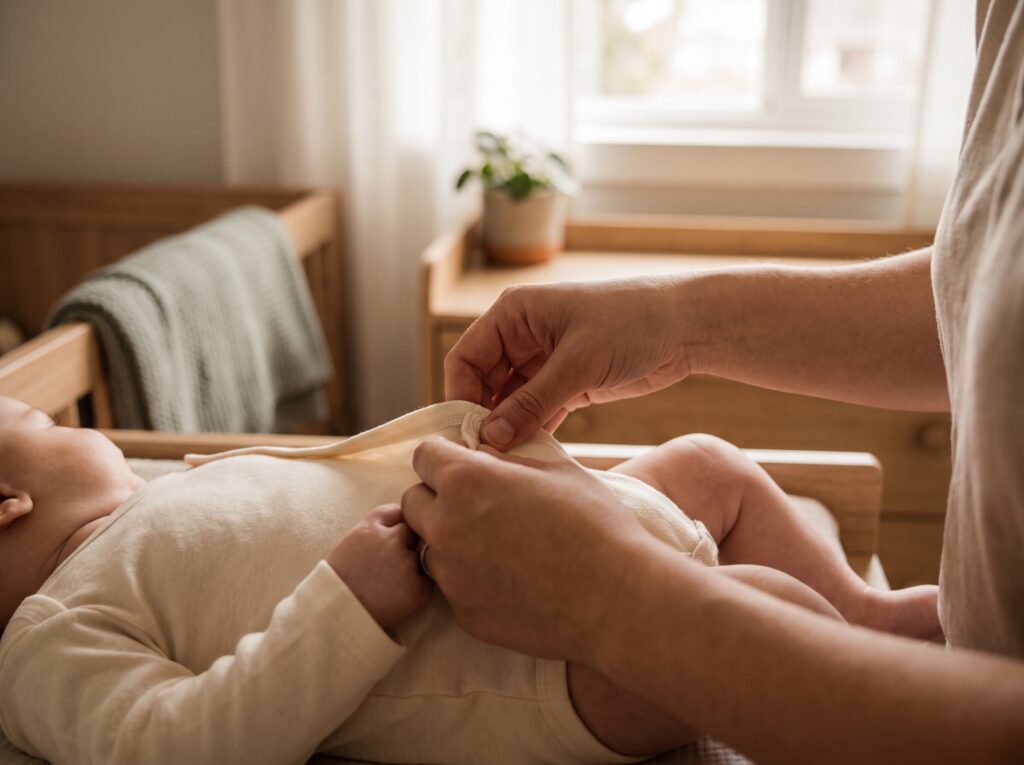
Babies are far more prone to heat rash because their sweat ducts are still developing and they’re often over-bundled. Treatment is largely the same, but with extra caution:
- Dress baby in one layer fewer than you’d wear yourself.
- Avoid heavy diaper creams over rash-prone skin folds during a flare-up.
- Never use hydrocortisone or medicated creams on an infant without a pediatrician’s guidance.
- Keep the nursery cool and avoid tight swaddling in hot weather.
When to call the pediatrician: fever, the rash spreading rapidly, pus-filled bumps, or your baby seeming unusually fussy or lethargic alongside the rash.
Heat Rash Types Comparison Table
| Type | Appearance | Depth in Skin | Itch Level | Typical Cause | Home Treatment Effective? |
|---|---|---|---|---|---|
| Miliaria Crystallina | Tiny clear blisters | Surface layer | None | Newborn sweat ducts, mild overheating | Yes — resolves quickly |
| Miliaria Rubra | Red, itchy, prickly bumps | Mid-epidermis | Moderate–High | Heat, sweat, tight clothing | Yes — usually 1–3 days |
| Miliaria Pustulosa | Pus-filled bumps | Mid-epidermis | Moderate | Irritated/inflamed rubra | Often, but may need medical check |
| Miliaria Profunda | Firm, flesh-colored bumps | Deeper dermis | Low (but overheating discomfort) | Repeated rubra episodes | Limited — see a doctor |
Common Myths & Facts
Myth: Heat rash means you’re not clean enough. Fact: Heat rash is caused by blocked sweat ducts, not hygiene — it can happen to anyone, regardless of how often they shower.
Myth: You should apply thick moisturizer to soothe it. Fact: Heavy creams and oils can worsen heat rash by further blocking sweat ducts. Lightweight, non-occlusive care works better.
Myth: Heat rash always needs antibiotics. Fact: Most heat rash isn’t infected. Antibiotics are only needed if a secondary bacterial infection develops — a doctor would confirm this.
When to See a Doctor
Home care is enough for most cases, but seek medical attention if you notice:
- Signs of infection: increasing pain, warmth, swelling, or pus
- Fever alongside the rash
- Rash that worsens or spreads after 3–4 days of home care
- Recurrent heat rash in the same spot (possible miliaria profunda)
- Any rash in an infant under 1 month old
<br>
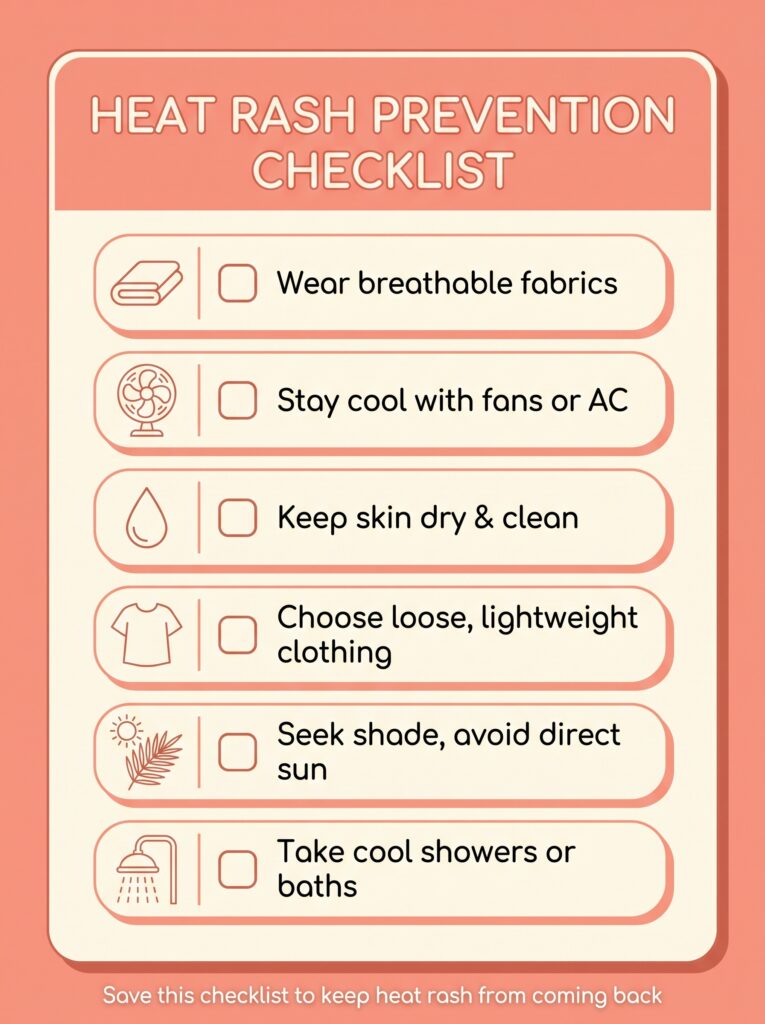
Expert Tips for Preventing Heat Rash
- Choose moisture-wicking, breathable fabrics over synthetic blends during hot weather or workouts.
- Take a cool shower soon after heavy sweating instead of letting sweat sit on skin.
- Use fans or air conditioning in sleeping areas during heat waves.
- Avoid heavy sunscreens or lotions in areas that already tend to break out — look for “non-comedogenic” or “gel-based” formulas.
- Change out of sweaty clothes as soon as possible after exercise.
Pro Tip: If you’re prone to recurring heat rash in the same area (like under a sports bra strap or waistband), that spot likely has reduced airflow — switching the fit or fabric there specifically, rather than your whole wardrobe, is often the fastest fix. <br>

Frequently Asked Questions
Q: How long does heat rash usually last? A: Most cases clear within 24–72 hours once the skin is cooled and kept dry.
Q: Can I pop the blisters? A: No — popping can introduce bacteria and increase infection risk. Let them resolve on their own.
Q: Is heat rash contagious? A: No. It’s caused by blocked sweat ducts, not a transmissible organism.
Q: Does sunscreen cause heat rash? A: Thick, occlusive sunscreens can contribute to it. Lightweight, gel-based, non-comedogenic sunscreens are less likely to trigger flare-ups.
Q: Can adults get heat rash, or is it just for babies? A: Adults get it too, especially in humid climates, during intense exercise, or with tight occupational clothing/uniforms.
Key Takeaways
- Heat rash is caused by blocked sweat ducts, not poor hygiene or infection.
- Cooling and drying the skin is the single most effective first step.
- Avoid thick creams and lotions until the rash clears.
- Babies need extra caution — one layer fewer than adults and no medicated creams without pediatrician guidance.
- Most cases resolve in 1–3 days with simple home care.
- Recurrent or deep, firm bumps may signal miliaria profunda and warrant a doctor’s visit.
- Prevention centers on breathable fabric, prompt post-sweat showers, and airflow to trouble spots.
Trust Signals
- Last Updated: July 2026
- Fact Checked: Yes
- Research Based: Sourced from established dermatology and public health references
- Reviewed for Accuracy: Content cross-checked against authoritative medical sources listed below
Sources & References
- American Academy of Dermatology (AAD) — Heat Rash: Overview and Treatment
- Mayo Clinic — Heat Rash: Symptoms and Causes
- Cleveland Clinic — Miliaria (Heat Rash)
- National Institutes of Health (NIH) / MedlinePlus — Prickly Heat