
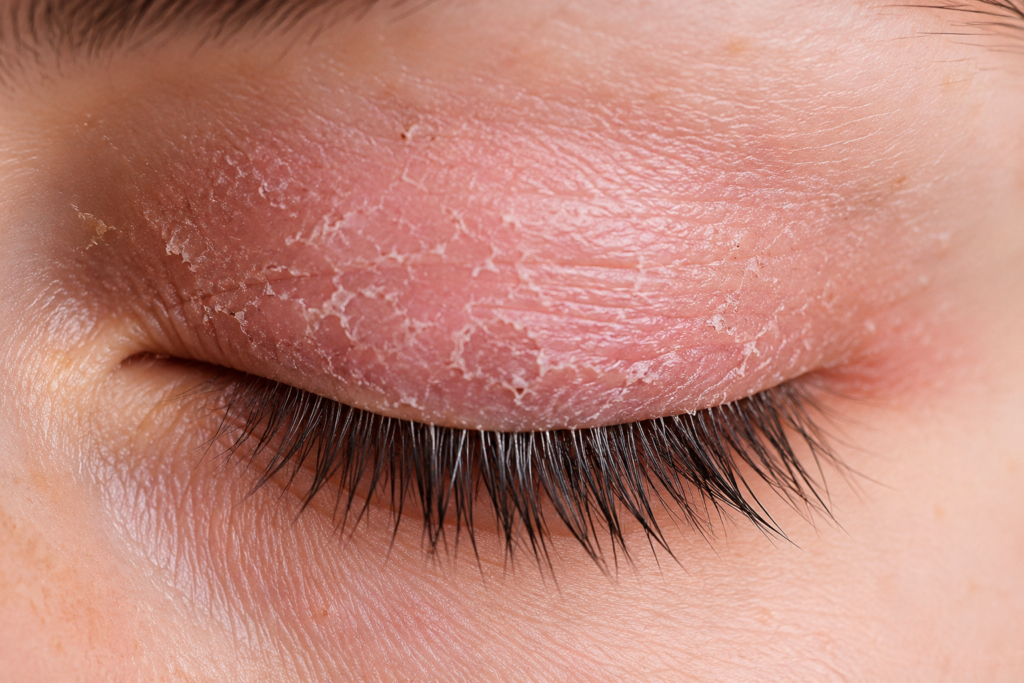
I still remember the morning I looked in the mirror and the skin on my eyelids was flaking off like a dry leaf. It stung when I blinked. It itched the second I forgot about it. And no amount of my usual moisturizer seemed to touch it.
I’m someone who’s tried a lot of skincare (you’ve probably seen my other reviews here), so I figured I’d fix it in a day or two. I was wrong. It took me a few weeks of trial, error, and a couple of dumb mistakes before the skin around my eyes finally calmed down.
So here’s everything I learned what caused it, what actually helped, what made it worse, and when I finally accepted I needed a professional. If you’re dealing with dry, itchy, flaky skin around your eyes right now, I hope this saves you the weeks of guessing I went through.
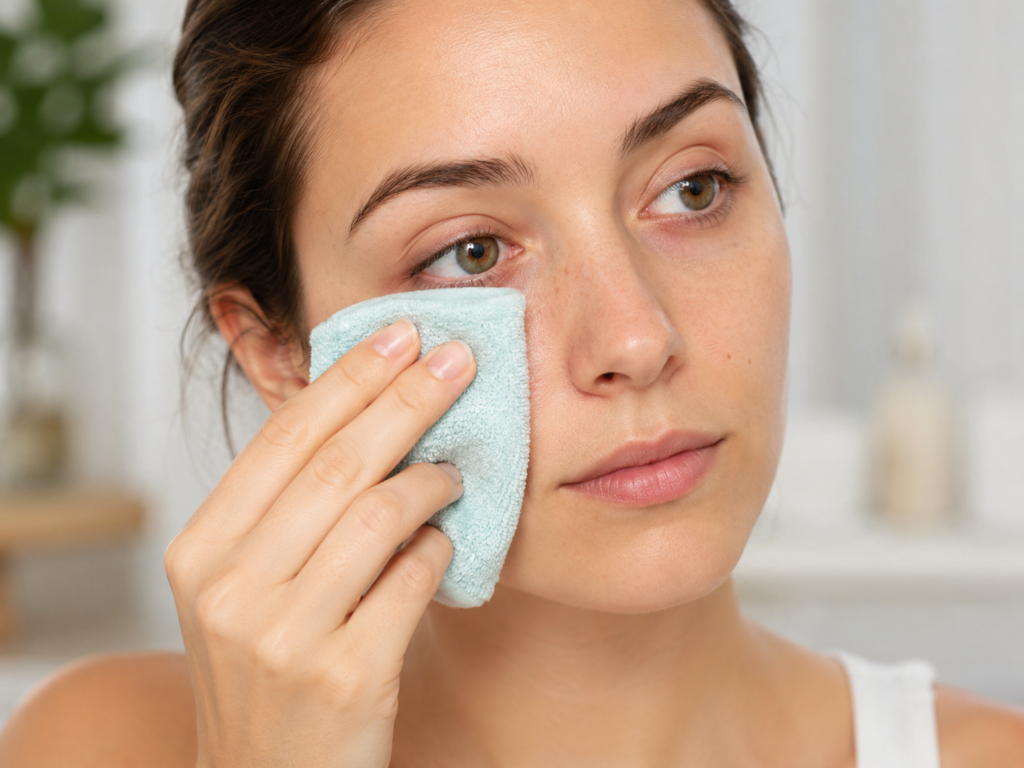
First, what’s actually going on
The skin around your eyes is the thinnest on your whole body. It has barely any oil glands, so it dries out faster and reacts harder than anywhere else. When it gets red, scaly, and itchy, there’s a good chance it’s something called eyelid dermatitis (you might also hear it called eyelid eczema or periorbital dermatitis).
It’s basically inflammation. Your skin barrier in that area gets compromised, and then everything irritates it your makeup, the weather, even the water in your shower.
The annoying part? It can look the same whether it’s caused by an allergy, an irritant, or just dry winter air. That’s why figuring out your trigger matters more than buying ten new products.
What was triggering mine (and what might trigger yours)
When I started paying attention, I realized a few things were stacking up at once:
- Cold, dry air. This started in winter when the heater was running all day. Dry air pulls moisture straight out of that thin skin.
- My products. I’d recently started a new eye cream with retinol and was using a fragranced cleanser. Both are classic irritants for the eye area.
- Rubbing. Once it itched, I rubbed it. Rubbing made it worse. Worse made me rub more. You see the trap.
From what I researched and confirmed with what dermatologists say, the most common causes fall into a few buckets:
- Contact dermatitis a reaction to something touching your skin. Fragrances, nail polish (yes, from touching your face), metals in jewelry or eyeshadow, and certain cosmetics are big ones.
- Irritant reactions soaps, detergents, and eye creams with strong actives like retinol.
- Atopic dermatitis (eczema) if you’re already eczema-prone, your eyelids can flare with weather and humidity changes.
- Seborrheic dermatitis basically dandruff, which can show up around the lashes.
And sometimes it’s just aging or dry climate. As we get older, skin holds less oil and moisture, so the eye area dries out more easily.
What actually worked for me (step by step)
Here’s the routine that finally turned things around. I kept it simple on purpose the more stuff you pile on inflamed skin, the worse it usually gets.
1. I stripped my routine back to almost nothing
The first thing I did was stop. I cut out the retinol eye cream, the fragranced cleanser, and any actives near my eyes. For about a week, I touched that area as little as possible. Think of it like letting a scab heal you can’t keep picking at it.
2. I switched to a gentle, fragrance-free cleanser
I started washing with a mild, fragrance-free cleanser and lukewarm water only. Hot water felt nice but dried everything out more, so I forced myself to turn the temperature down. Tip: if your shower is hot enough to fog the mirror, it’s too hot for your face.
3. A cool compress for the itch
When the itching got bad, a cool, damp washcloth pressed gently over my closed eyes for a few minutes was genuinely the fastest relief. No rubbing, just light pressure. It calmed the heat and stopped me from scratching.
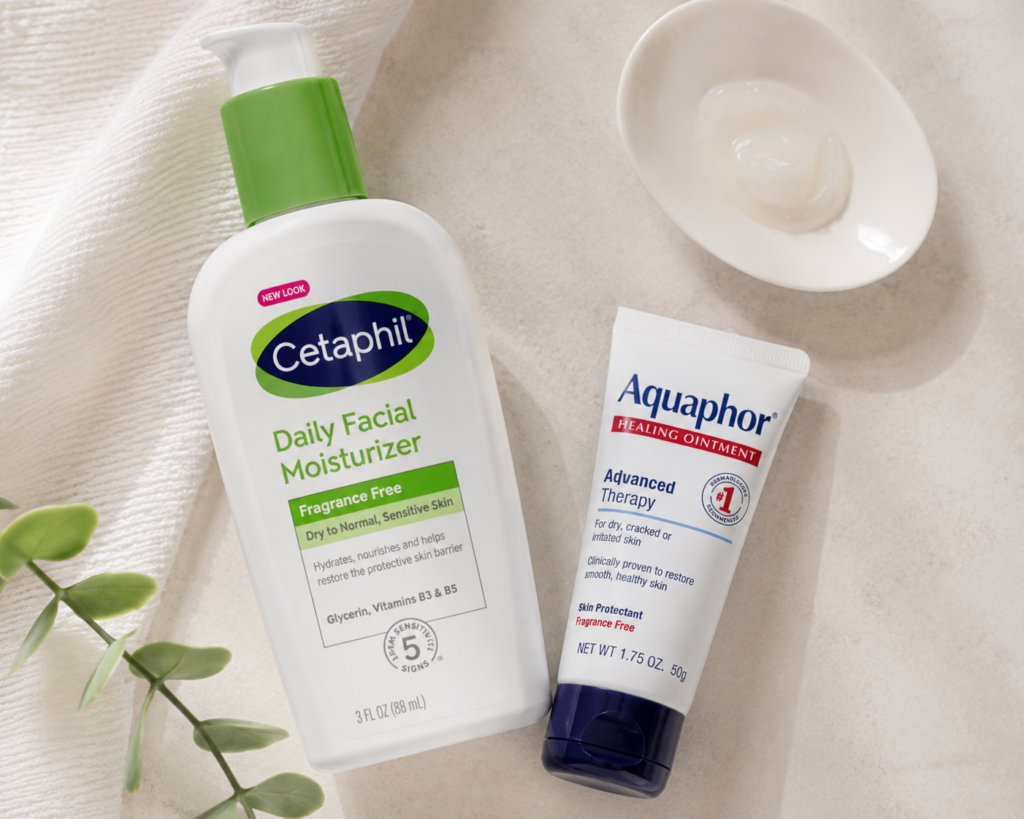
4. A simple, fragrance-free moisturizer — used often
This was the real game-changer. I moisturized the area two to three times a day with a basic, fragrance-free option. Gentle drugstore picks like a fragrance-free restoring lotion work well, and for the really raw patches I dabbed on a thin layer of a plain healing ointment (think Aquaphor or even plain Vaseline) to lock moisture in overnight. That occlusive layer at night made a visible difference by morning.
5. A humidifier at night
I grabbed a small bedside humidifier and ran it while I slept. Since dry air was a big trigger for me, adding moisture back into the room meant I wasn’t waking up with tight, flaky skin. If you live somewhere dry or run heating/AC a lot, this is worth it.

6. Antihistamines when it was clearly allergy-driven
On the days my eyes were watery and itchy in a way that screamed “allergy,” an over-the-counter antihistamine helped take the edge off. If allergies are your root cause, treating the allergy treats the skin.
The mistakes I made (so you don’t have to)
- I kept using my actives too long. I told myself the retinol would “fix” the dryness. It was making it worse. If your eye area is irritated, pause the strong stuff.
- I over-moisturized with the wrong things. Slathering on a rich, fragranced cream felt productive but the fragrance was part of the problem. Plain and boring wins here.
- I rubbed and scratched. Every time I gave in, I reset my progress. Cool compress instead every time.
- I expected overnight results. This skin is delicate and slow to heal. Give any change a solid week or two before deciding it isn’t working.
A note on makeup while you heal
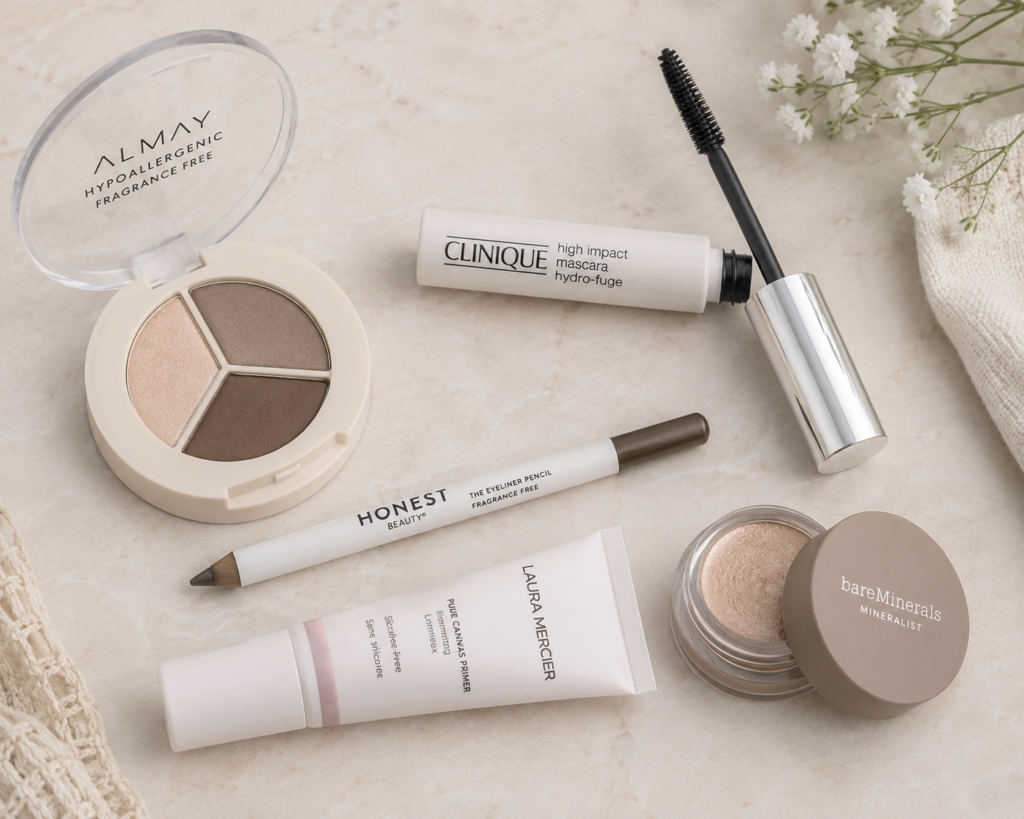
Honestly? The best thing is to skip eye makeup until the skin calms down. If you can’t, keep it minimal an eyeliner pencil instead of loose eyeshadow, and skip anything with glitter or metallic particles, which are common irritants. Look for fragrance-free, mineral-based formulas labeled for sensitive skin. And toss old mascara bacteria near already-irritated eyes is asking for trouble.
When to stop DIY-ing and see a doctor
I’m all for fixing things at home, but there’s a line. See a dermatologist if:
- It’s been a couple of weeks and home care isn’t helping.
- It’s getting worse, spreading, or weeping/oozing.
- Your vision or the eye itself feels affected.
- You suspect an infection.
A dermatologist can do patch testing to find your exact allergen, or prescribe a mild topical treatment that’s safe for the eye area. Don’t grab a random strong steroid cream and use it near your eyes on your own — that area is too sensitive to guess with.
Final thoughts
If there’s one thing I wish I’d known sooner, it’s that less is more with eye-area irritation. I wasted weeks adding products when what my skin actually needed was for me to stop, simplify, and protect the barrier while it healed.
Strip it back. Go fragrance-free. Moisturize gently and often. Add humidity. Keep your hands off it. That combination is what finally gave me calm, comfortable skin around my eyes again and it’s cheap and doable for almost anyone.
If you try this and it’s still not budging after two weeks, please see a derm. Your eyes are worth it.
⭐ My Top 5 Picks for Dry, Itchy Eye Skin
La Roche-Posay Toleriane Dermallergo Eye Cream
Glo Skin Beauty Precision Eye Pencil
——————————————————————————–