
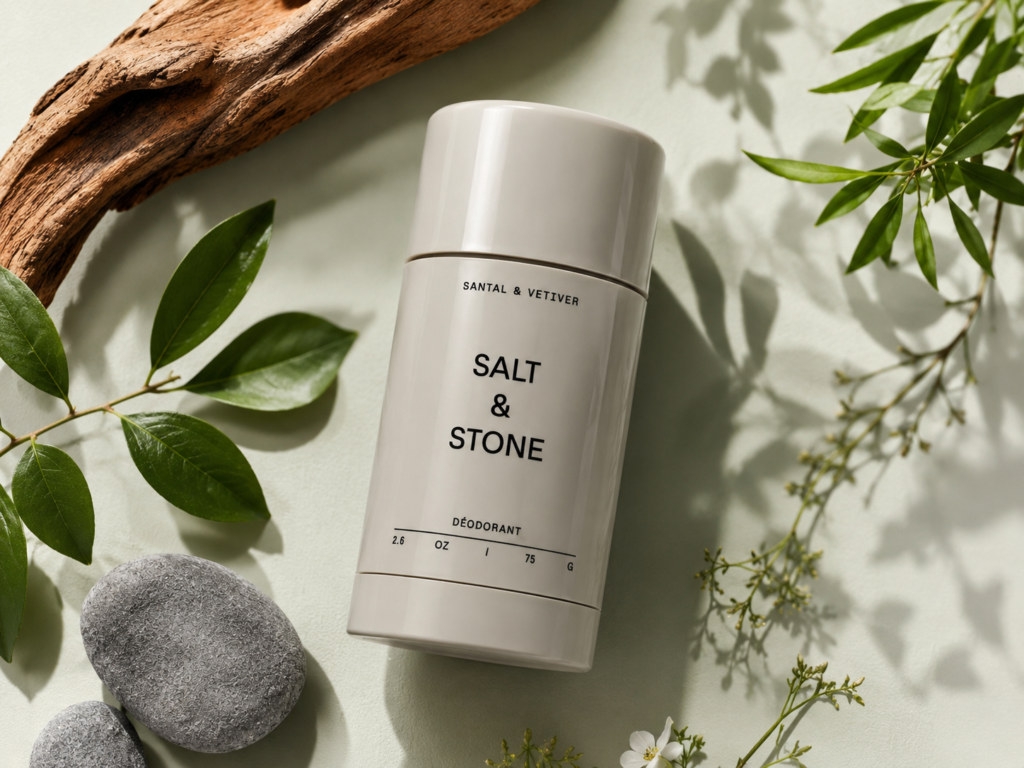
There is a conversation happening right now in millions of bathroom cabinets across America.
On one side: the old reliable. The aluminum antiperspirant you have used for years. Works. No drama. Gets the job done.
On the other side: the growing pile of natural deodorants you have tried the ones that lasted four hours, left white marks on your black shirt, caused a rash, or made you smell like a very expensive candle for forty minutes before everything went wrong.
The switch to aluminum-free deodorant is one of the most talked-about beauty transitions of the last five years. And it is one of the most frustrating, because most natural deodorants genuinely do not work as well as the conventional ones they just smell better while they fail.
Salt & Stone keeps showing up as the exception.
We researched this product thoroughly, went through hundreds of real reviews from Amazon, Sephora, Reddit, and beauty publications, and spoke with people who have been using it daily. Some for months. Some for years.
Here is the complete, honest picture including the part about the transition period that most reviews skip.
Why Are People Switching Away From Aluminum in the First Place?
Before getting into the product, this question deserves a direct answer because the reason you are considering this switch affects whether this product is right for you.
Aluminum salts are the active ingredient in antiperspirants. They work by physically blocking sweat glands, preventing perspiration. They are highly effective at keeping you dry.
The concern around aluminum in deodorant has been circulating for years primarily around a potential link to breast cancer and Alzheimer’s disease. Here is the honest scientific position: current research does not establish a definitive causal link between aluminum-based antiperspirants and either condition. Major health organizations have not issued warnings against their use.
However, a separate and legitimate reason to switch is skin health. Aluminum salts can cause irritation, blocked pores in the underarm area, and sensitivity reactions in some people. For those with reactive skin, switching to an aluminum-free formula can reduce chronic underarm irritation even if the cancer concern is not the primary driver.
A third reason and the most common one we encountered is simply a preference for cleaner, simpler formulas. People want to know what they are putting on their body every day, and aluminum-based formulas come with a list of synthetic ingredients that many people increasingly prefer to avoid.
Whatever your reason, the question is whether an aluminum-free option can actually deliver reliable protection. Salt & Stone’s answer to that question is more compelling than most.
La Roche-Posay Toleriane Purifying Foaming Cleanser
What Is Salt & Stone Aluminum Free Deodorant?
Salt & Stone is a California-based clean beauty brand founded on the belief that personal care products should perform as well as conventional options while using cleaner, more transparent ingredients.
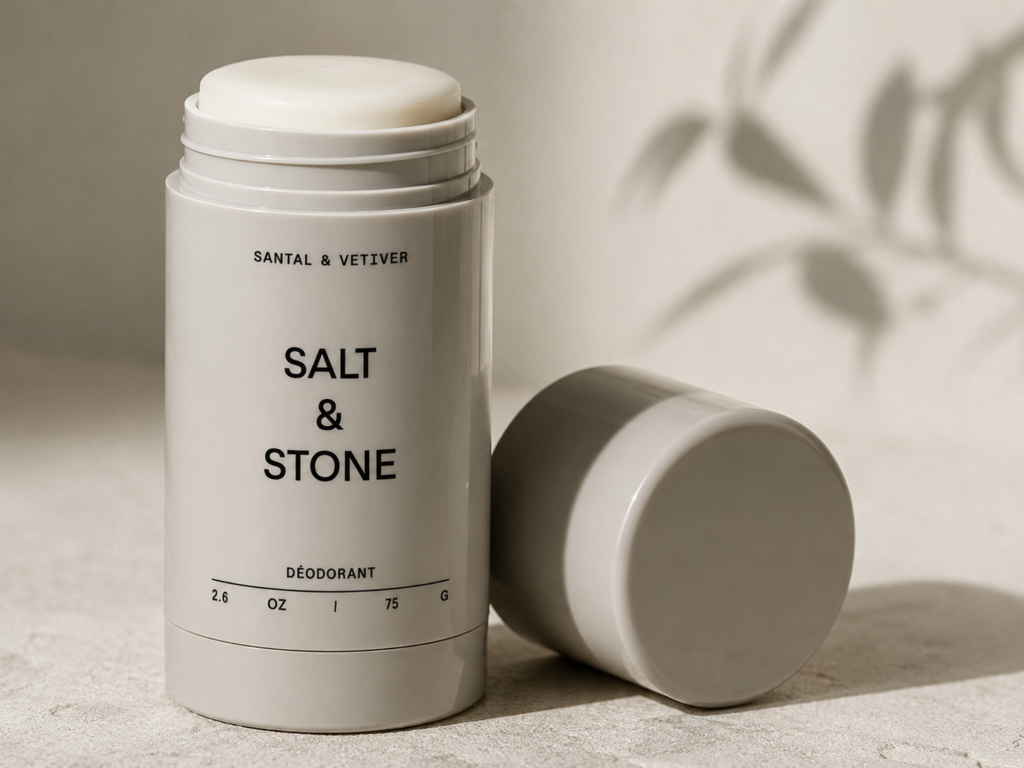
Their Aluminum-Free Extra Strength Deodorant is their flagship product an award-winning, aluminum-free deodorant formulated for 48-hour protection, made without alcohol, parabens, or phthalates, and certified vegan and cruelty-free by the Leaping Bunny program.
The Santal & Vetiver scent is their best-seller. The description is accurate: it is warm, woody, and creamy Australian sandalwood, cedar, vetiver, with a gentle wave of cardamom and amber. Like an open fire in the heart of the woods. It is gender-neutral, sophisticated, and crucially not overwhelming.
It is available in five gender-neutral scents total: Santal & Vetiver, Black Rose & Oud, Bergamot & Hinoki, Neroli & Basil, and Saffron & Cedar. Each scent has its own personality, which allows you to choose based on your personal fragrance preferences rather than being stuck with one option.
At $20 for 2.6 oz on Amazon, it sits in the premium end of the natural deodorant market significantly more than drugstore options, but less than some of its luxury competitors.
The Ingredients What Actually Fights Odor Without Aluminum
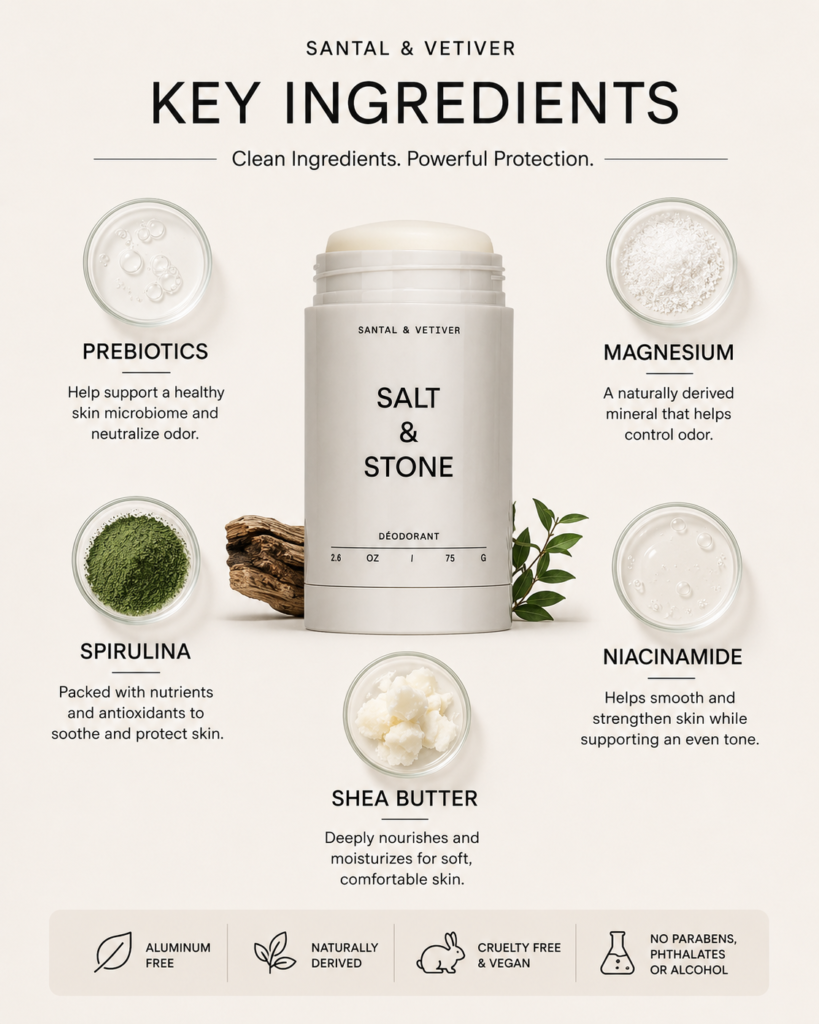
The formula is built around a specific combination of odor-fighting and skin-supporting ingredients. Here is what each key ingredient does:
Magnesium Hydroxide
The primary odor-fighting ingredient. Magnesium hydroxide works by creating an alkaline environment on the skin surface where odor-causing bacteria struggle to survive. Unlike aluminum, it does not block sweat glands — it neutralizes the bacteria that cause odor when they interact with sweat.
This is the critical difference between a deodorant and an antiperspirant. Salt & Stone is a deodorant only — you will still sweat. The magnesium hydroxide ensures that sweat does not smell.
Sodium Bicarbonate |Baking Soda|
A second odor neutralizer that also absorbs moisture and helps keep the underarm area dry. Effective, but the ingredient most commonly associated with skin reactions in natural deodorant users. Baking soda is alkaline it can disrupt the skin’s natural pH, leading to redness, itching, and rash in sensitive users.
Salt & Stone does offer a baking-soda-free sensitive formula for those who react. If you have had rashes from natural deodorants before, this is important to know.
Prebiotics |Lactobacillus Ferment|
This is genuinely innovative for a deodorant formula. Prebiotics help balance skin’s microbiome after sweating and activity. Rather than simply killing all bacteria on the skin surface, the prebiotic approach supports the growth of beneficial bacteria while creating conditions that discourage odor-causing bacteria. This is a more sophisticated approach to odor management and it is part of why the formula continues working even after you sweat, rather than just masking odor.
Seaweed Extract |Spirulina|
Spirulina helps soothe and restore skin after exposure to the elements. It also has antioxidant properties that protect the underarm skin from environmental stressors. This is particularly relevant for an area of skin that is frequently shaved, occluded by clothing, and subjected to friction.
Niacinamide |Vitamin B3|
An unusual and genuinely thoughtful addition to a deodorant formula. Niacinamide promotes a healthy skin barrier important for the underarm area which is frequently compromised by shaving, friction, and product sensitivity. It helps reduce irritation and supports the skin’s natural protective function.
Shea Butter and Coconut Oil
Emollients that provide a smooth, conditioning application experience and help protect the skin surface. Shea butter in particular is soothing for freshly shaved underarm skin.
Tapioca Starch
Provides some moisture absorption to help manage sweat a plant-based alternative to the talc-based powders used in older formulas.
Tocopherol |Vitamin E| and Sunflower Seed Oil
Antioxidants that protect skin cells and contribute to the smooth, non-irritating application feel.
What is notably absent: Aluminum, alcohol, parabens, phthalates, mineral oil, synthetic sulfates. It is also Leaping Bunny certified cruelty-free and vegan. Clean at Sephora certified meaning it meets Sephora’s specific clean formula standards.
The Transition Period The Part Nobody Warns You About
This is the section that could save you from giving up too soon.
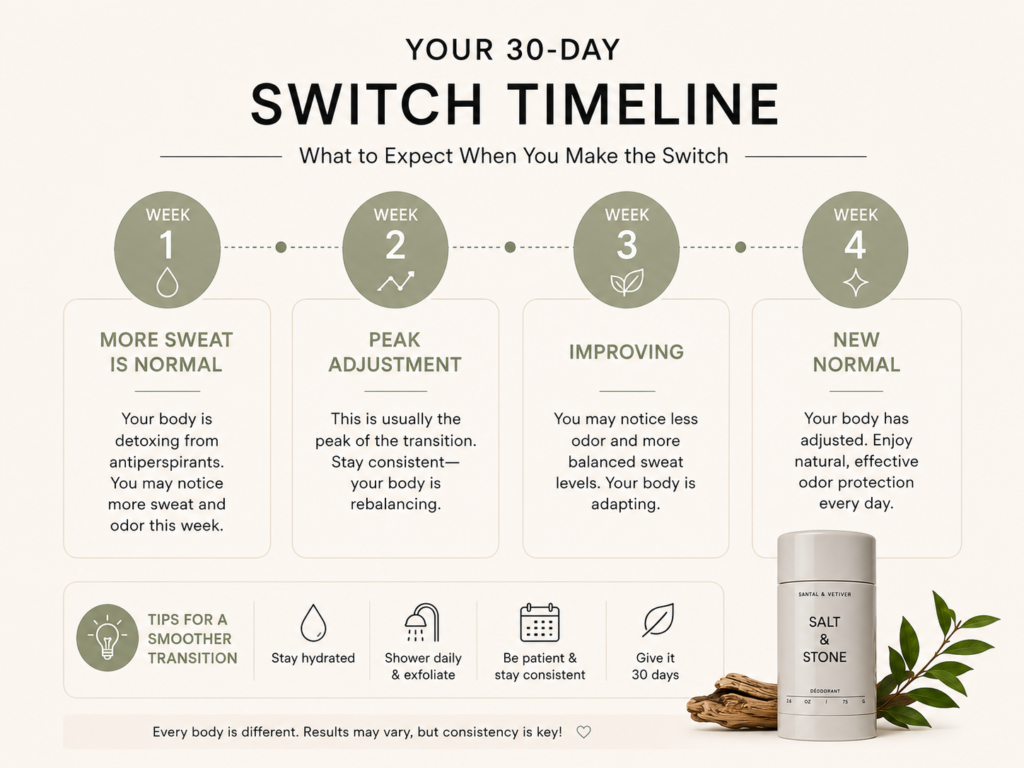
When you switch from an aluminum antiperspirant to an aluminum-free deodorant, your body goes through an adjustment period. This is real, it is common, and it usually lasts two to four weeks.
Here is what happens biologically: aluminum antiperspirants physically block your sweat glands. When you stop using them, those glands need time to normalize. During this period, you may sweat more than usual. Your underarm microbiome also needs time to rebalance the bacteria populations that have been suppressed by years of antiperspirant use need to reach a new equilibrium.
During this transition, you may notice more odor and more sweat than usual even if the natural deodorant is working correctly. This is not product failure. It is your body adjusting.
Most people who give up on natural deodorants do so in week two or three exactly when the transition is most obvious. If you stop at this point, you will conclude that natural deodorant does not work. If you push through to week four or five, the vast majority of people find that their body normalizes and the deodorant works as advertised.
How to manage the transition:
- Wash underarms twice daily during the first two weeks
- Apply a gentle baking soda paste once or twice during the week to deep-clean the underarm area and help rebalance bacteria
- Wear natural fabrics during the transition synthetic fabrics trap bacteria more aggressively
- Give it at least 30 days before making a final judgment
La Roche-Posay Cicaplast Baume B5
What Real People Are Saying 6 Months of Reviews Analyzed
The People Who Made the Permanent Switch
One reviewer who had used the same conventional deodorant for over ten years described finally making the natural leap and being so glad she did. The deodorant kept her smelling amazing all day over twelve hours. She kept catching whiffs of herself and was impressed. The Santal and Vetiver scent she described as a beautiful blend of warm, woody sandalwood with fresh, earthy vetiver luxurious and sophisticated.
A beauty editor who writes about personal care professionally described Salt & Stone as the first natural deodorant to earn a permanent spot in her routine after trying many alternatives. She specifically praised that it is smooth and not chalky, non-toxic, aluminum-free, and actually works. She described 48-hour coverage through meeting marathons, weightlifting gym sessions, and rush hour traffic.
One user who reviewed it across six months of consistent daily use noted that their underarm skin felt softer over time attributing this to the shea butter and niacinamide in the formula. The probiotic formula also appeared to reduce body odor frequency over time as the microbiome rebalanced.
Multiple reviewers specifically note that the Santal and Vetiver scent is the best-smelling deodorant they have ever used not in the way that perfumed drugstore deodorants smell, but in the way that a genuine fragrance blends with your body chemistry.
The Honest Problems
Some users with sensitive skin report rashes and irritation most commonly attributed to the baking soda content. For people who have reacted to natural deodorants before, the sensitive formula without baking soda is the recommended option rather than the extra strength version.
It is easy to assume that natural equals safe but that is not always true. Essential oils, baking soda, and even plant extracts can trigger reactions. The Salt & Stone extra strength formula contains both baking soda and fragrance two common irritants for sensitive skin.
Some reviewers report that the formula does not hold up to high-intensity physical activity or hot humid weather without reapplication. A 2024 Vogue review praised its efficacy for moderate sweaters but noted that heavy sweaters might need touch-ups. If you live in a hot, humid climate or work out intensely, realistic expectations matter.
A small number of users report clothing staining natural oils and waxes can sometimes leave marks on clothing, especially if applied too heavily. Allowing the product to dry completely before dressing minimizes this.
Some users also found minor itchy bumps appearing months into use making it hard to pinpoint the exact cause. Fragrance can be a common culprit, and reactions sometimes do not appear immediately but develop after extended use.
How to Use It for Best Results
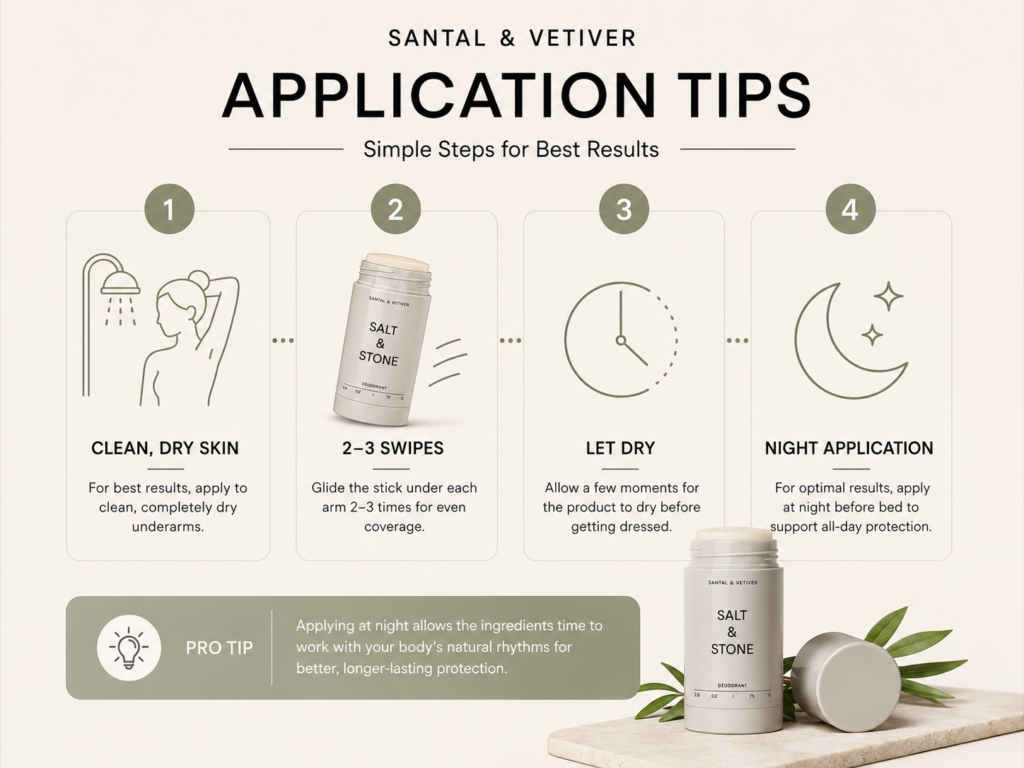
Apply to completely clean, dry underarms Moisture dilutes the formula and reduces effectiveness. Apply after a shower, after skin has dried fully.
Use minimal product Two to three swipes per underarm is sufficient. Over-application is the main cause of staining and increased irritation risk. Natural deodorant does not require the heavy application that conventional antiperspirant sometimes does.
Apply at night as well as morning Applying at night allows the formula to work with your skin’s natural overnight repair cycle. Many users find applying before bed especially during the first few weeks significantly improves daytime performance.
Allow to dry before dressing Give it thirty seconds to set before putting on clothing. This minimizes staining and ensures even coverage.
For gym days — plan ahead Apply at least thirty minutes before intense exercise. On very intense workout days, carry the stick for a quick post-workout reapplication if needed.
Salt & Stone vs. Native vs. Schmidt’s The Comparison
| Points | Salt & Stone | Native | Schmidt’s |
|---|---|---|---|
| Price | ~$20 | ~$12–$14 | ~$10–$12 |
| Aluminum free | Yes | Yes | Yes |
| Baking soda | Yes (sensitive version available) | Yes (some scents) | Yes (sensitive version available) |
| Prebiotics | Yes | No | No |
| Niacinamide | Yes | No | No |
| Seaweed/Spirulina | Yes | No | No |
| Scent quality | Premium, sophisticated | Pleasant, mainstream | Pleasant, herbal |
| Texture | Smooth, non-chalky | Smooth | Slightly chalky |
| Best for | Normal skin, premium scent preference | Budget-conscious switchers | Budget-conscious, wide scent range |
| Cruelty-free | Yes (Leaping Bunny) | Yes | Yes |
Salt & Stone wins on: Formula sophistication, scent quality, skin-supporting ingredients, texture.
Salt & Stone loses on: Price per ounce, availability (less widely stocked than Native or Schmidt’s in physical stores).
Our recommendation: If budget allows, Salt & Stone’s more sophisticated formula and significantly better scent quality justify the premium over Native and Schmidt’s for most users.
Who Should Buy This And Who Should Not
Strong fit:
- People switching from conventional antiperspirant who want the best chance of success with a natural formula
- Normal to dry skin types
- People who care about scent quality and want a deodorant that smells genuinely luxurious
- Those living in moderate climates or with moderate activity levels
- Anyone who prefers clean, Leaping Bunny certified, vegan formulas
- People who have used natural deodorants before without baking soda reactions
Not the ideal fit:
- Very sensitive skin prone to baking soda reactions choose the sensitive formula instead
- Heavy sweaters or people in very hot, humid climates may need frequent reapplication
- Anyone with fragrance sensitivity the formula contains fragrance
- Those who need clinical-strength antiperspirant protection for medical or professional reasons
- People expecting zero sweat this is a deodorant, not an antiperspirant
Common Mistakes That Reduce Your Results
Mistake 1: Judging it before week four The transition period is real. Two to three weeks is when most people give up and it is exactly when the body is at peak adjustment. Four weeks minimum before making a final judgment.
Mistake 2: Applying to damp skin Moisture prevents even adhesion and reduces the formula’s contact time with the skin. Always apply to completely dry underarms.
Mistake 3: Using too much More product does not mean more protection. Two to three swipes is the standard. Over-applying increases staining risk and does not improve odor protection.
Mistake 4: Expecting it to prevent sweating This is a deodorant it neutralizes odor-causing bacteria. It is not an antiperspirant and will not stop you from perspiring. Managing this expectation upfront prevents disappointment.
Mistake 5: Not patch testing for sensitive skin If you have a history of reactions to natural deodorants, apply a small amount to the inner arm for two to three days before full underarm use. This identifies a potential baking soda or fragrance sensitivity before it becomes a rash.
Pros and Cons The Complete Honest List
Pros:
- Genuinely sophisticated scent Santal & Vetiver is one of the best-smelling deodorants available at any price point
- Prebiotics actively rebalance underarm microbiome not just masking odor
- Niacinamide and seaweed extracts support skin health unusual in a deodorant
- Smooth, non-chalky texture no white residue
- 48-hour protection claim holds for moderate activity levels and climates
- Aluminum-free, alcohol-free, paraben-free, phthalate-free
- Vegan and Leaping Bunny cruelty-free certified
- Clean at Sephora certified
- Gender-neutral works for any gender
- Five distinct scent options for different preferences
- Sensitive formula available without baking soda
Cons:
- Baking soda in the extra strength formula reactions possible for sensitive skin
- More expensive than most natural deodorant alternatives
- Does not prevent sweating deodorant only, not antiperspirant
- May require reapplication on high-activity or hot weather days
- Contains fragrance potential irritant for fragrance-sensitive users
- Clothing staining possible if over-applied or not allowed to dry
- Transition period of two to four weeks can be challenging
Final Verdict Is It Worth the Switch?
After everything we researched and analyzed, here is the honest conclusion:
Salt & Stone Aluminum Free Deodorant in Santal & Vetiver is one of the best natural deodorants available. The combination of prebiotics for microbiome rebalancing, magnesium hydroxide and baking soda for odor neutralization, niacinamide for skin barrier support, and spirulina for soothing makes it a genuinely more sophisticated formula than most of its competitors.
The scent is exceptional not in a synthetic, overpowering way, but in the way that a real fragrance blends with your skin and stays with you throughout the day. Multiple reviewers describe catching pleasant whiffs of themselves hours after application. That is not nothing.
But the product requires realistic expectations and, most importantly, patience through the transition period. People who fail with this deodorant almost always quit in week two or three right in the middle of the adjustment window. Give it four weeks, apply correctly to dry skin, and for normal skin types in moderate climates, it consistently delivers on its promise.
If you have very sensitive skin that has reacted to baking soda before start with the sensitive formula, not this one.
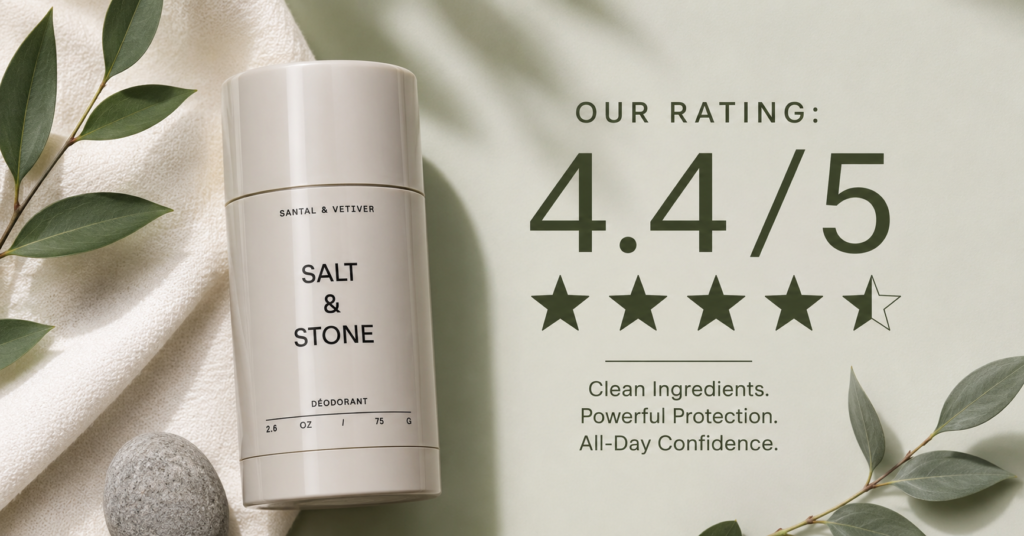
Our rating: 4.4 out of 5
Points deducted for the transition period challenge that catches many buyers off guard, the baking soda content that limits it for sensitive skin, and the premium price point. For the right user it is as good as natural deodorant gets.
Quick Reference Table
| Points | Details |
|---|---|
| Best for | Normal skin, moderate activity, clean beauty preference |
| Key ingredients | Prebiotics, Magnesium Hydroxide, Baking Soda, Niacinamide, Spirulina, Shea Butter |
| Free from | Aluminum, alcohol, parabens, phthalates, mineral oil |
| Contains | Baking soda + Fragrance (potential irritants for sensitive skin) |
| Sensitive option | Yes — baking soda-free sensitive formula available |
| Scents available | 5 gender-neutral options |
| Certifications | Vegan, Leaping Bunny, Clean at Sephora |
| Protection claim | 48-hour odor protection |
| Price | ~$20 (2.6 oz) |
| Our rating | 4.4 / 5 |
| 🛒 Buy on Amazon | 👉 Check current price here |
Frequently Asked Questions
Does it leave white marks on clothing? Less than most natural deodorants when applied correctly. Apply a thin layer, allow thirty seconds to dry before dressing, and over-application is the main cause of any marking. Dark fabrics may show residue if too much product is used.
Can I use it right after shaving? Wait at least 30 minutes after shaving before applying. Freshly shaved skin has micro-cuts that make it more susceptible to irritation from any deodorant formula, natural or conventional.
Is it safe during pregnancy? The formula is aluminum-free and paraben-free. However, some of the essential oils in the fragrance are generally advised to be avoided in pregnancy. Consult your OB-GYN if you want to use it during pregnancy.
How long does one stick last? With standard twice-daily use two to three swipes each application most people find one stick lasts six to eight weeks.
Does the Santal & Vetiver scent work for men as well as women? Yes the scent is gender-neutral and explicitly marketed as such. The woody, sandalwood-forward profile is typically associated with traditionally masculine fragrance notes and works equally well regardless of gender.
What if I react to this deodorant? Stop using it immediately. Wash the area gently with a mild fragrance-free cleanser. Apply a soothing balm. Most reactions clear up within three to five days once the product is removed. If symptoms persist beyond a week, consult a dermatologist. Then try the sensitive formula without baking soda.