
Nizoral Anti-Dandruff Shampoo Review Does It Really Work?
Hair Care Review
Last winter I was at a friend’s birthday dinner, wearing my favorite dark navy blazer, and my buddy literally brushed my shoulder and went “bro, you good?” pointing at the white flakes raining down the back of my jacket. That was my rock bottom dandruff moment. I’d tried Head & Shoulders, Selsun Blue, every “moisturizing” shampoo with pretty packaging. Nothing really stuck. Then a dermatologist I follow on YouTube mentioned Nizoral, specifically the ketoconazole version. So I grabbed the 7 oz bottle off Amazon, committed to 8 weeks, and here’s my completely honest take.
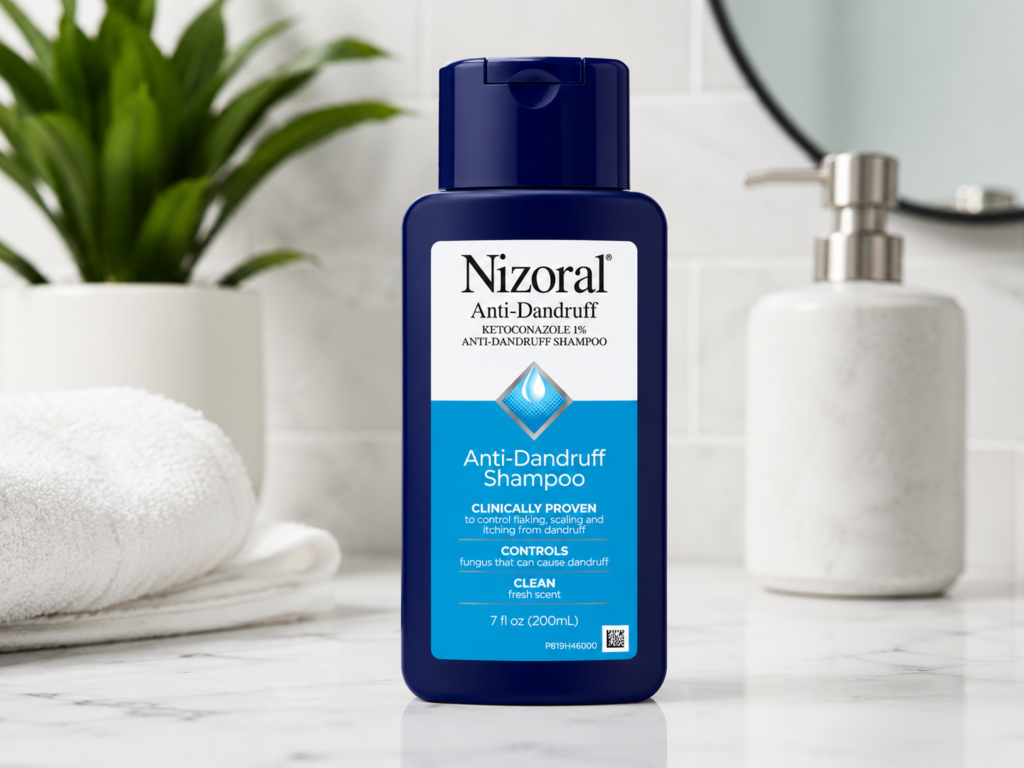
The 7 fl oz bottle small but lasts longer than you’d think when used correctly.
What Even Is Nizoral?
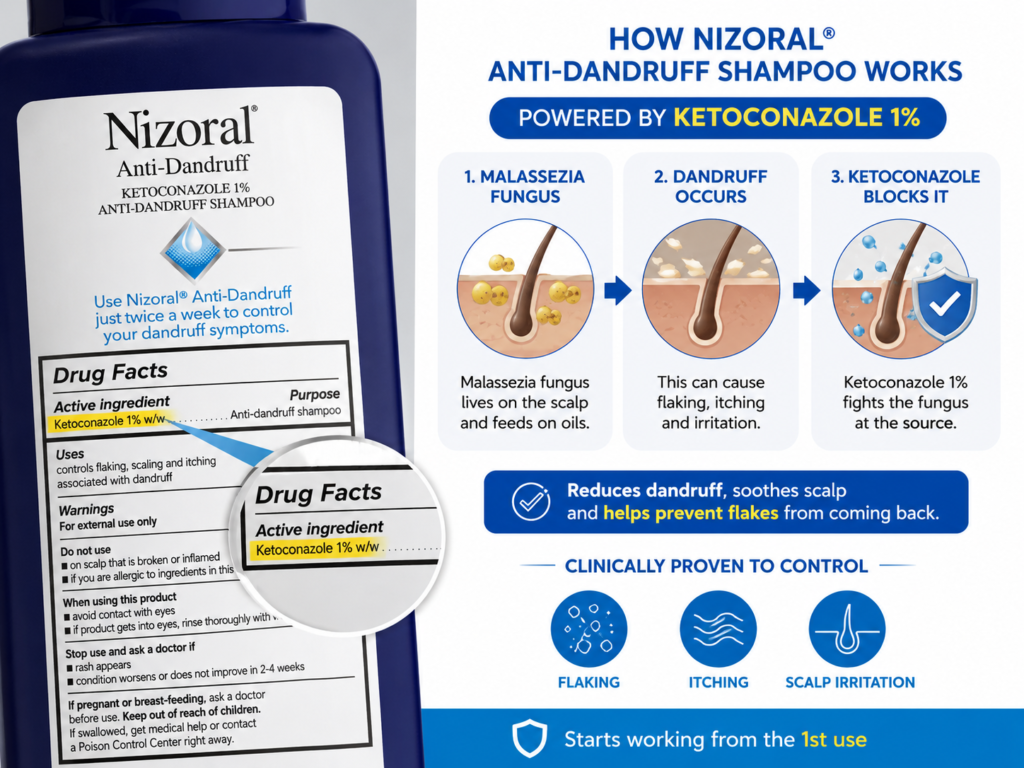
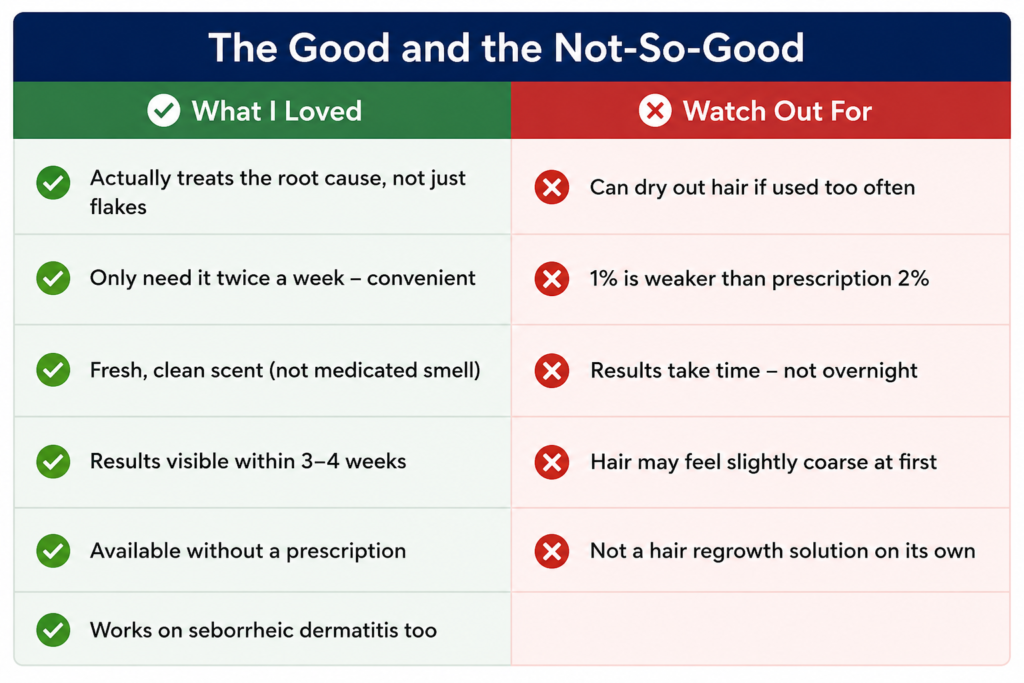
Let me keep it simple. Nizoral is an antifungal shampoo. Its active ingredient is Ketoconazole at 1% which is the OTC (over-the-counter) version. There’s also a 2% prescription version, but we’re talking about the one you can grab off Amazon without seeing a doctor.
Most regular dandruff shampoos fight the symptoms the flakes, the itch. They scrub your scalp clean for a day or two. Nizoral works differently. It targets a fungus called Malassezia, which lives on every human scalp but goes haywire in some people, causing that classic flaking, redness, and itch. By controlling the fungus at the source, the symptoms stop coming back as quickly.
It’s not just a shampoo it’s more like a scalp medication disguised as a shampoo.
That’s the best way I’ve heard it described, and after using it myself, I’d agree with that completely.
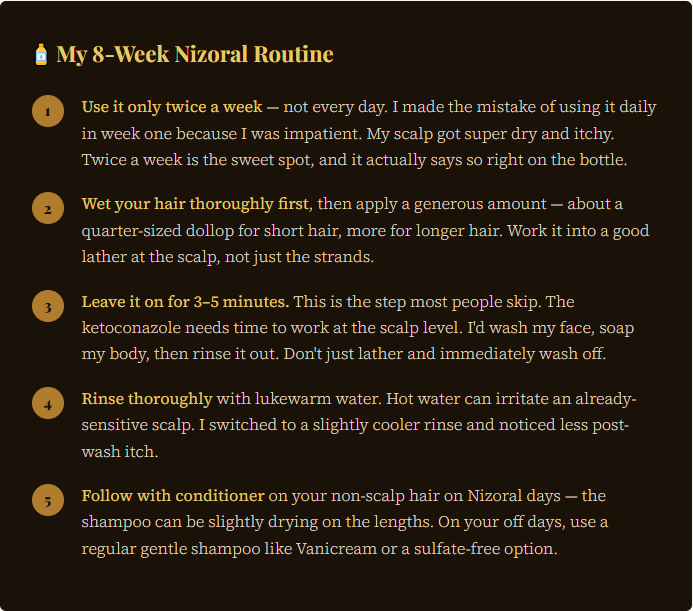
How I Actually Used It (Step-by-Step)
The instructions on the bottle are pretty straightforward, but I learned a few things through trial and error that made a real difference. Here’s exactly what worked for me:
Week-by-Week: What I Actually Noticed
I kept notes on my phone (yes, I’m that person) and here’s the honest breakdown:
Week 1–2: Honestly? Not much. The itching felt slightly less intense by the end of week two, but flaking was still happening. I almost gave up here. Don’t. This is where most people quit and miss the results.
Week 3–4: This is when things shifted. The big flakes the embarrassing ones basically stopped. I still had some fine, dusty flakiness when I scratched my scalp, but nothing was falling onto my shoulders anymore. The itch went down maybe 70%.
Week 5–6: My scalp felt noticeably calmer. Less oily too, weirdly. I didn’t need to wash my hair as often because my scalp wasn’t overproducing oil the way it used to. I genuinely think that’s connected to the fungal balance being restored.
Week 7–8: Pretty much dandruff-free at this point. I wore a black t-shirt to a meeting something I’d been avoiding for months without even thinking about it. That’s the win right there.
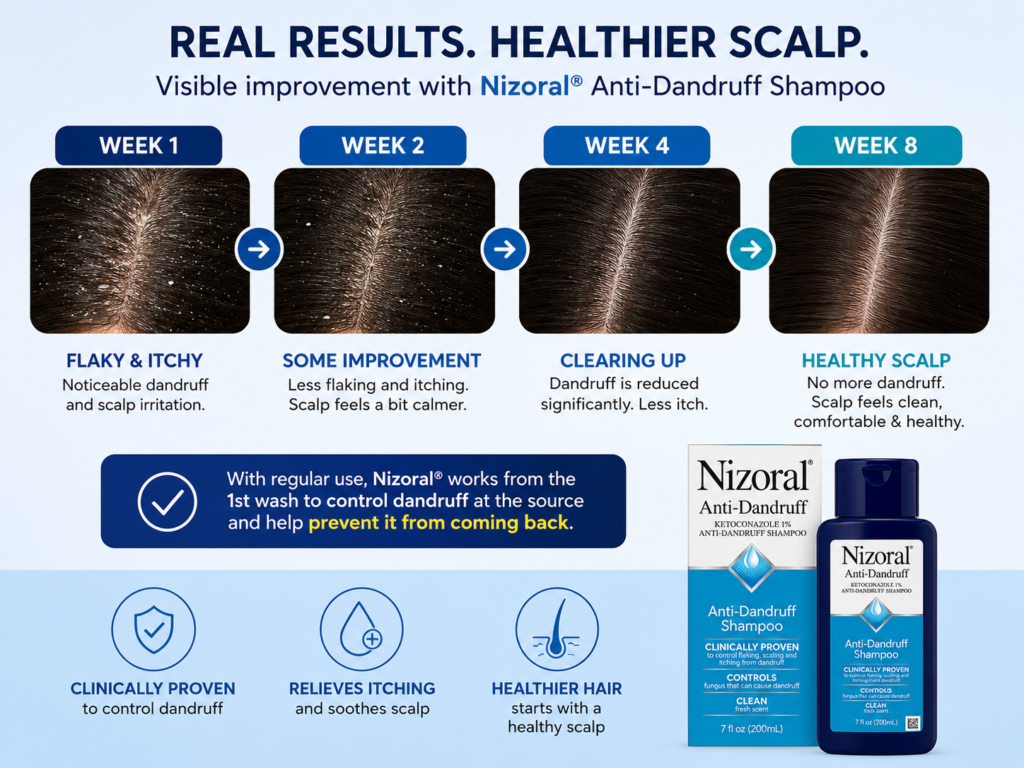
Results aren’t overnight but by weeks 5–6, the difference is hard to ignore.
The Science |Without the Lecture|
I’m not a doctor, but I did fall down a research rabbit hole so you don’t have to. Here’s the stuff that actually matters:
Ketoconazole works by disrupting the cell membranes of the Malassezia fungus basically punching holes in the fungus’s walls until it dies off. Without the fungal overgrowth, your scalp’s inflammatory response calms down, and the flaking stops.
There’s also some interesting research around hair loss. Ketoconazole appears to mildly block an enzyme called 5-alpha reductase, which converts testosterone to DHT — the hormone that miniaturizes hair follicles in people with pattern hair loss. So some people use Nizoral as a supportive treatment alongside things like minoxidil. It’s not a standalone hair loss cure, but it may help create a healthier scalp environment for your existing treatments to work better.
Buy Hare: Click
Mistakes I Made (So You Don’t Have To)
🚫 Common Nizoral Mistakes
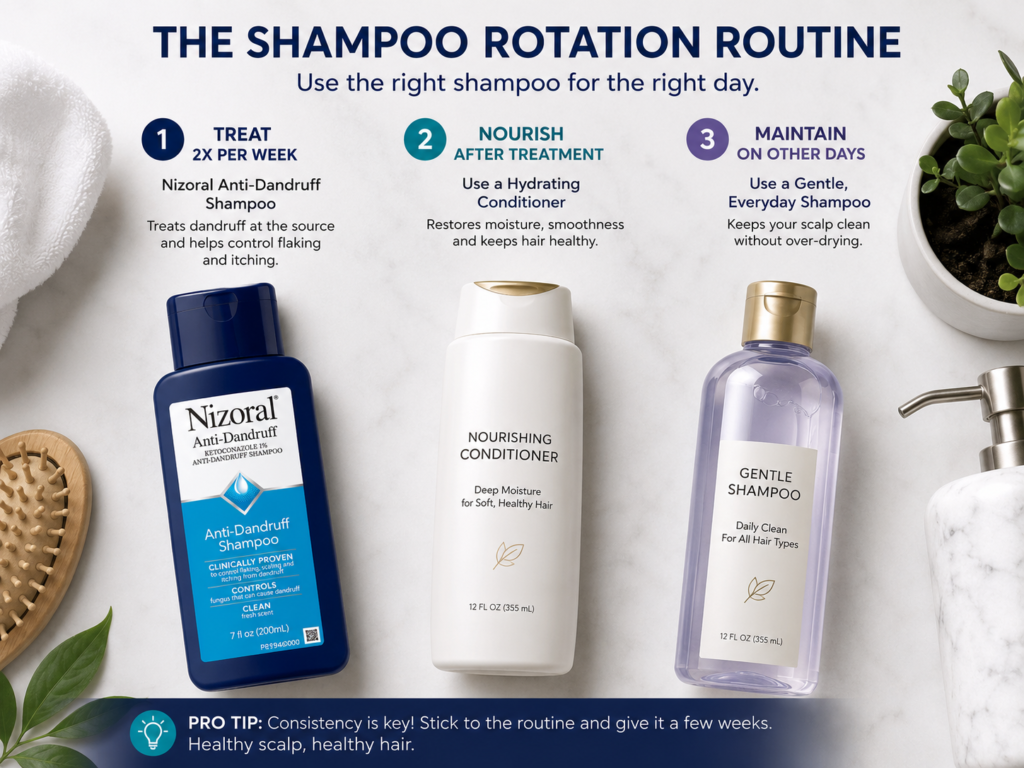
Using it daily. This was my first error. More is not better here. Using it every day dries out your scalp and can actually worsen irritation. Stick to two times a week maximum.
Rinsing too fast. Applying and immediately washing off is basically wasting the product. The 3–5 minute contact time is what allows the antifungal to actually do its job.
Quitting too early. If you stop at week two because “it’s not working,” you’re about two weeks away from seeing real results. Be patient this is not a Head & Shoulders situation.
Skipping conditioner. Nizoral can make your hair feel a bit dry and rough, especially the lengths. Using a conditioner on your non-scalp hair on Nizoral days makes a huge difference in how your hair feels and looks.
Using it if your scalp is broken or irritated. The label says this clearly do not use on broken or inflamed skin. I once used it right after aggressively scratching and it burned like crazy. Learn from me.
Who Should Actually Use This?
Nizoral is genuinely great if you deal with:
– Persistent dandruff that doesn’t respond to regular shampoos
– Seborrheic dermatitis (red, scaly, itchy patches on scalp)
– Oily scalp with chronic flaking
– Hair thinning combined with a flaky scalp
– Tinea versicolor (a fungal skin condition — though check with a doctor first)
It’s probably overkill if you just have mild, occasional flaking from a dry scalp — in that case, a moisturizing shampoo or a gentle zinc pyrithione formula might be enough. But for stubborn, recurring dandruff? This is the real deal.
Final Verdict
9/10
Nizoral 1% Ketoconazole is the most effective OTC dandruff shampoo I’ve ever used. It’s not magic and it’s not instant — but if you’re consistent and patient, it genuinely works where other shampoos fail.
Final Thoughts
Look, I spent years cycling through dandruff shampoos thinking they were all basically the same. They’re not. Nizoral is genuinely in a different category because it’s not just cosmetically cleaning your scalp it’s treating the underlying fungal imbalance that’s causing the problem in the first place.
Will it work for everyone? No. Some people’s dandruff is caused by different things dryness, psoriasis, contact dermatitis and for those, ketoconazole isn’t the answer. But if your dandruff is the classic “yeast-related, keeps coming back” type, which is honestly most people? Give this 6–8 weeks. Be consistent. Use conditioner. And please, stop using it daily thinking it’ll work faster.
The navy blazer is back in regular rotation. That’s enough for me to recommend it.

📎 Keep Reading
La Roche-Posay Cicaplast Baume B5